


-RATED BY




Built in Canada
All Ecoline windows and doors are built in Ontario, Canada
- Top-of-the-line machinery (Forel, Gracco, Bottero) to produce the best products
- Over 60,000 sq. ft manufacturing plant
- Energy Star-rated and NAFS-11-tested
- Manufactured for local weather conditions
All You Need to Know Before Buying Faux Wood Window Blinds
Jul 17, 2026
12 min read
621
Faux wood blinds seem like a simple solution. They offer the look of timber, handle humidity better, and usually cost less than real wood. However, issues often show up after installation. Wide blinds can be heavy to lift, the slats may need more cleaning than you expect, and bedrooms might stay brighter than you want.
That’s why it is vital to understand the characteristics of this blind type and define your priorities before choosing to install it.
Faux wood blinds mimic the look of real timber and resist moisture, heat, and warping. These blinds work well in kitchens, bathrooms, laundry rooms, and street-facing areas where you want adjustable privacy. Tilting the slats lets you reduce glare or block views without fully covering the window.
In this guide, our experts explain where faux wood blinds work best, where they fall short, and how they compare to other popular window coverings.


What Are Faux Wood Blinds Made From?
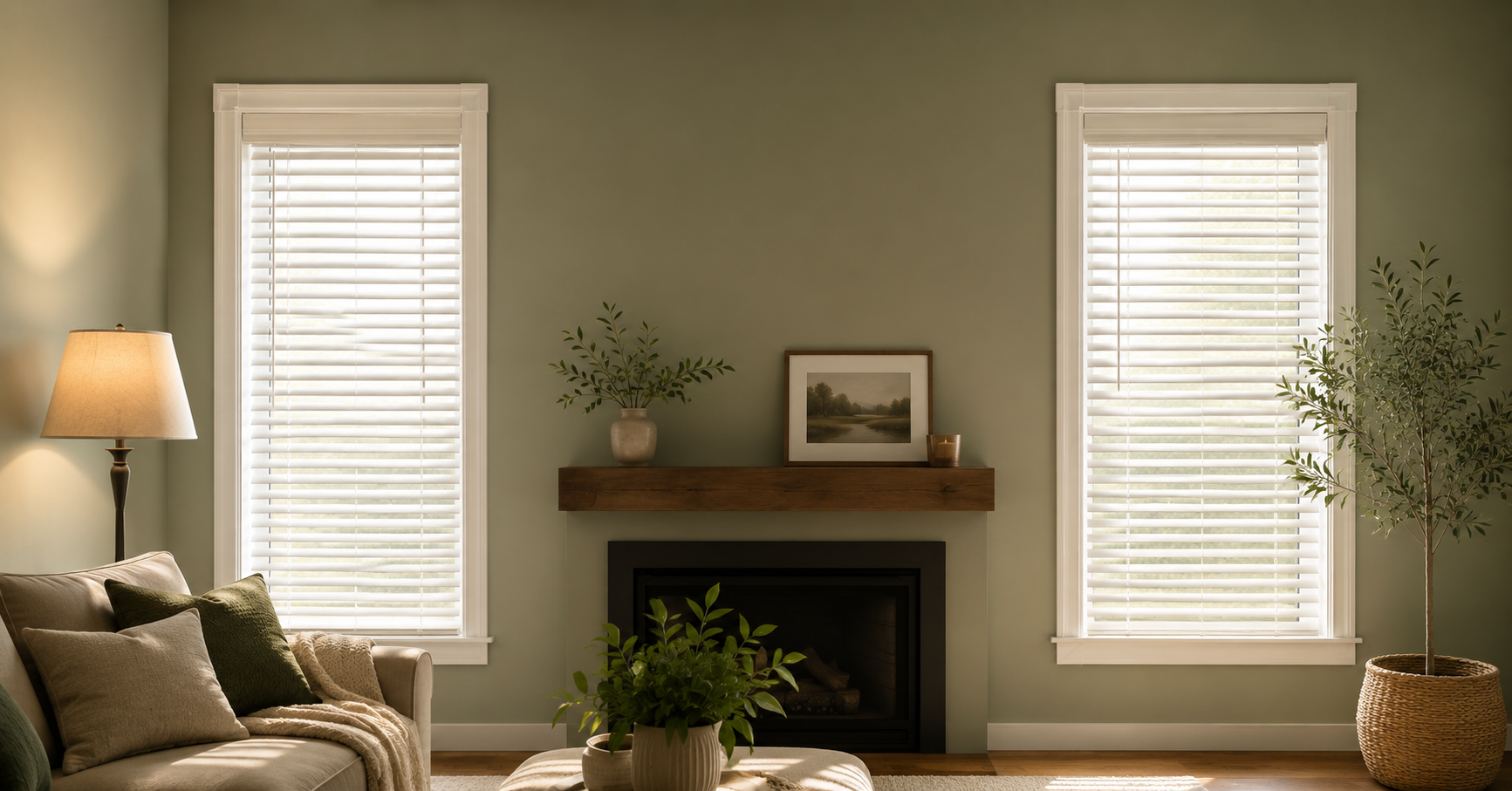
“Faux wood” describes several engineered materials rather than one standard product. Most blinds in this category use PVC or vinyl, while composite versions combine polymers with wood fibres or other wood byproducts. It’s a moisture-resistant alternative designed to imitate the appearance of natural wood.
The material matters for more than just looks. PVC and vinyl slats are often selected for rooms with steam, splashes, or frequent cleaning. Composite slats can feel heavier and look more like painted wood, but their weight and performance depend on the exact mix.
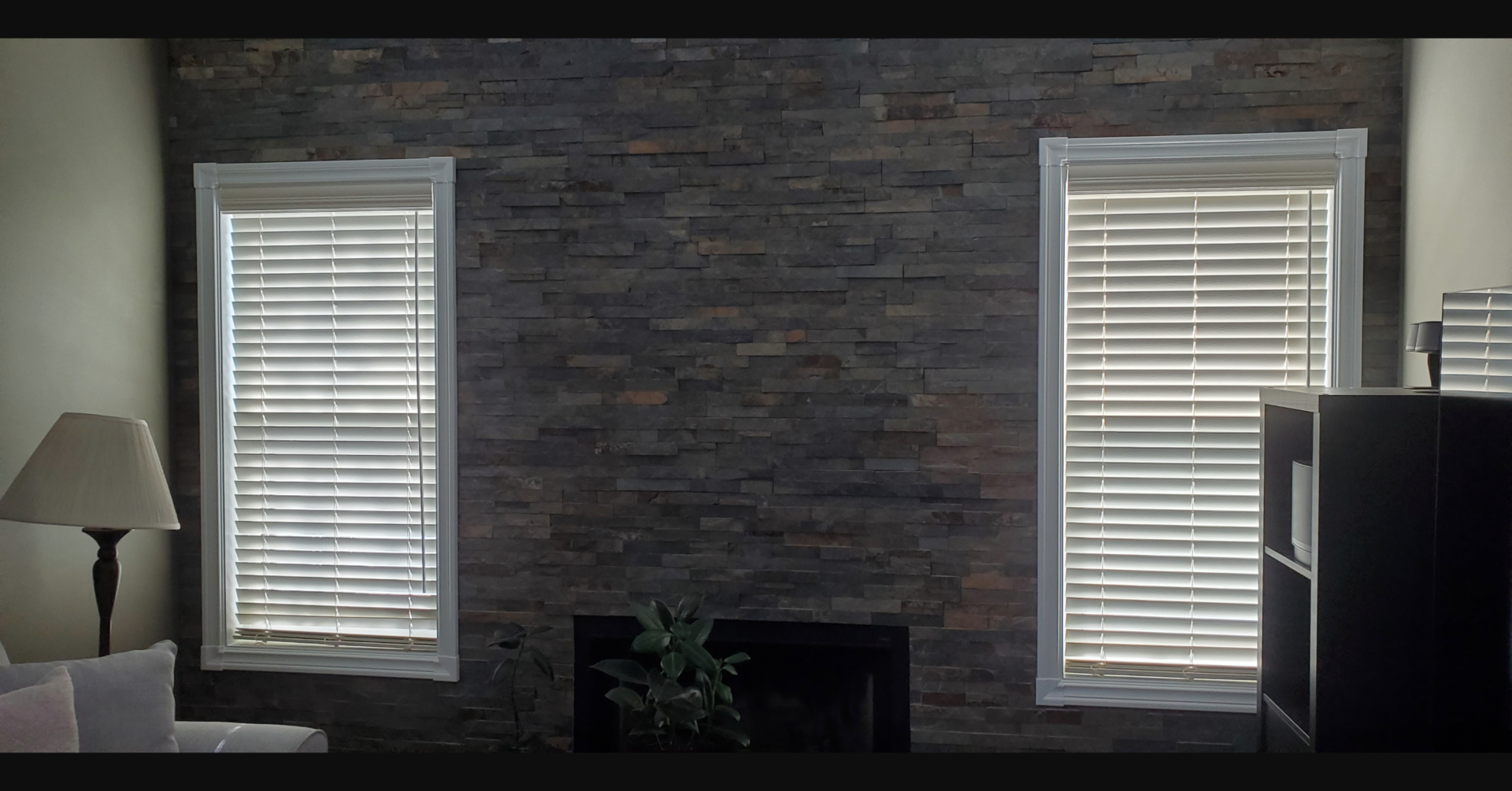
This difference is important when you compare samples. Two white faux-wood blinds might look the same online, but one could have a smooth plastic feel, while the other has deeper grain, a softer sheen, and thicker slats. That’s why it’s always recommended to visit a showroom to see a real sample before installation.
Moreover, moisture resistance is not the same as being fully waterproof. The slats can handle bathroom humidity, but you still need to take care of the headrail, brackets, and lifting parts.
Where Faux Wood Blinds Make the Most Sense
Faux wood blinds earn their place in rooms where real timber would need more careful handling. PVC, vinyl and composite slats are designed to withstand humidity and temperature fluctuations, making them particularly suitable for bathrooms, kitchens and laundry rooms.
A bathroom is an obvious example, but the reason goes beyond steam. Condensation can settle on a window during cold Canadian winters, while splashes from a sink may reach the lower slats. Faux wood can be wiped down without the same concern about swelling, cracking or peeling associated with natural wood.
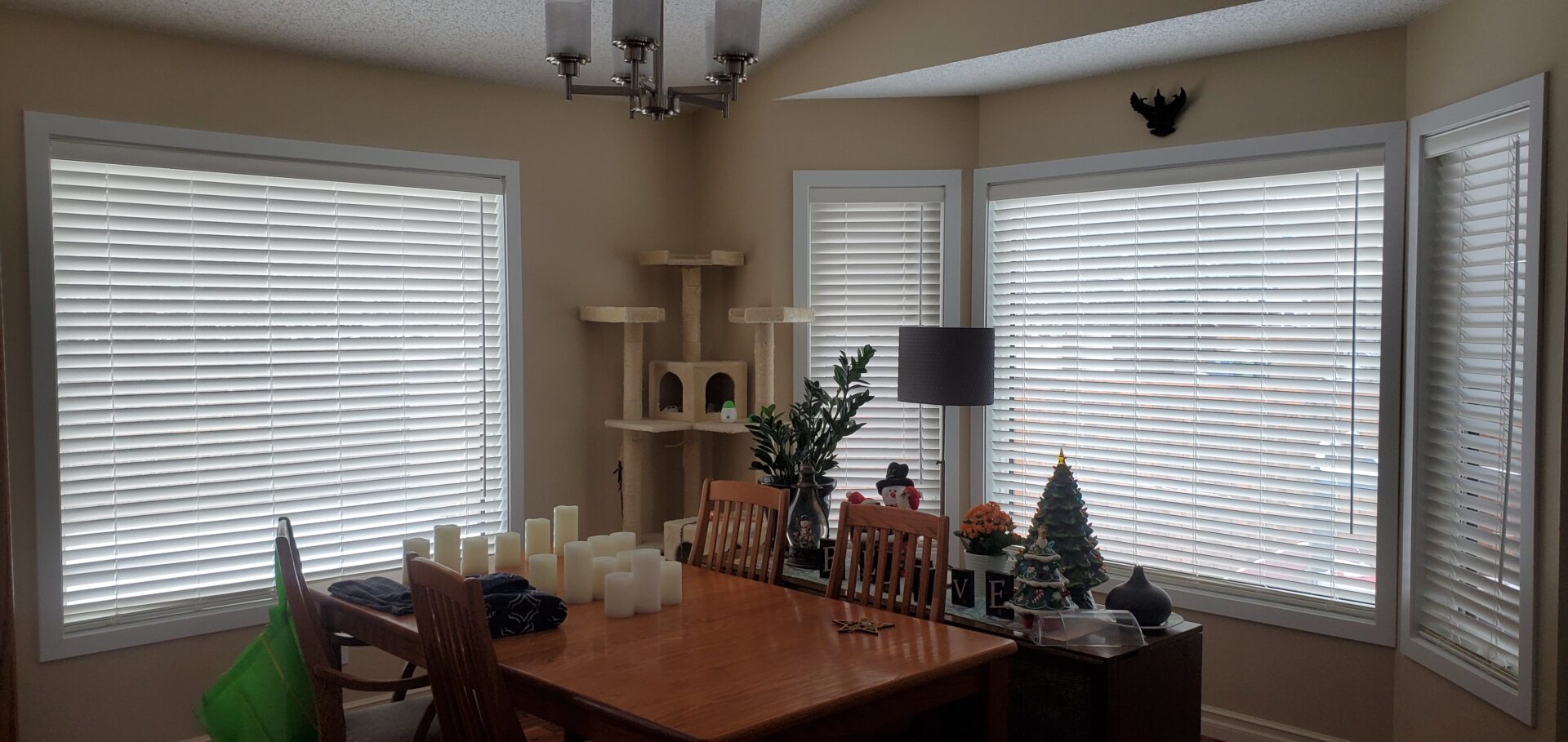
In kitchens, rigid slats are practical near sinks and food-preparation areas because fingerprints, cooking residue and occasional splashes can be removed with a damp cloth. They are less suitable directly above a stove, where grease and sustained heat can create a demanding cleaning routine.
Faux wood blinds also work well in street-facing rooms. Tilting the slats upward can restrict the view from outside while still allowing daylight into the room. This offers more flexible privacy than, for example, a roller shade can bring, which usually needs to cover a larger portion of the window to block the same sightline.
Other useful applications include:
- Basement windows exposed to changing humidity
- Home offices where screen glare shifts during the day
- Children’s rooms with a compliant cordless control
- Entryways where a wipeable surface is easier to maintain
- Rental properties where durability matters more than a premium natural-wood finish
Faux wood blinds work best on standard-sized windows where you often adjust privacy, need moisture resistance, and want easy cleaning. For wide windows, blackout bedrooms, or windows you rarely use, consider the trade-offs more carefully.
Where faux wood blinds become less practical
Faux wood blinds can be heavier than you might expect. Each slat adds weight, so a blind that works well on a small bathroom window might feel hard to lift on a wide living room window. Bigger blinds also put more stress on the lifting parts, especially if you raise them often.
Splitting a wide window into two or three blinds can make them easier to use, but it creates visible gaps between sections. These gaps might be fine in a family room but could be annoying in a bedroom or street-facing room where privacy is important.
When you raise faux wood blinds all the way, the slats stack up at the top of the window. This can block some of the glass and make small windows feel crowded. Cleaning is another thing to consider. Faux wood blinds resist moisture, but each slat collects dust. In kitchens, grease and residue can make cleaning take longer, since you may need to wipe each slat.
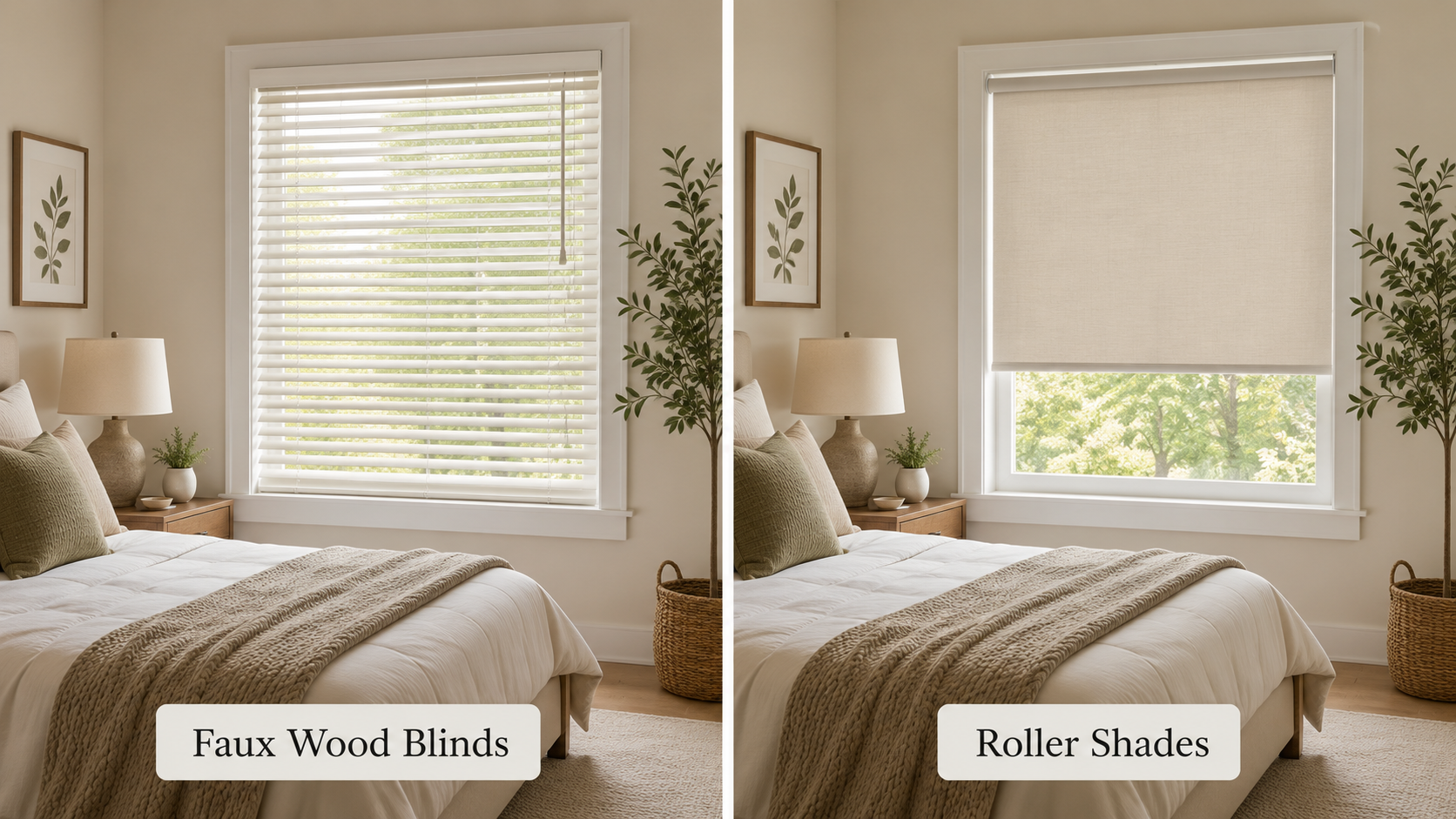
Faux Wood Blinds vs. Roller Shades
Faux wood blinds and roller shades each have their own strengths, even when used on the same window type. Faux wood lets you control the direction of sunlight, while roller shades offer a flat, simple way to cover the window.
With faux wood blinds, you can tilt the slats to cut down glare, block outside views, or let in daylight without opening the whole window. This is helpful in kitchens, home offices, and street-facing rooms where privacy needs change during the day.
Roller shades are usually made from polyester, PVC-coated polyester or composite fabrics. Their performance depends on the fabric category. Sheer and solar materials preserve more daylight, light-filtering fabrics soften it, and blackout fabrics provide stronger room darkening.
| Decision factor | Faux wood blinds | Roller shades |
| Light control | Slats redirect daylight at different angles | Coverage changes mainly by raising or lowering the shade |
| Privacy | Easy to adjust throughout the day | Depends on fabric opacity and shade position |
| Room darkening | Light may enter between slats and around the edges | Blackout fabrics provide stronger coverage |
| Maintenance | Each slat requires dusting or wiping | Flat fabric is faster to dust, but stains may be harder to remove |
| Moisture | PVC and vinyl slats suit humid rooms | Suitability depends on the fabric and coating |
| Wide windows | Weight can become noticeable | Usually lighter and easier to operate |
| Appearance | Structured, traditional | Clean, minimal and contemporary |
| Raised position | Slats create a visible stack | Fabric rolls into a compact headrail |
A street-facing kitchen may benefit from faux wood slats because they can block direct views while preserving daylight. In a bedroom, a blackout roller shade is often more practical because darkness matters more than directional light control.
There is no one-size-fits-all answer. Faux wood blinds are good if you want to adjust privacy often and like the look of wood. Roller shades are better if you want a simple look, need to cover large windows, or want to darken a room.
Faux Wood Blinds vs. Real Wood Blinds
Both options create the structured look of horizontal timber slats, but they suit different rooms and priorities.
- Material: Faux wood blinds use PVC, vinyl or wood-polymer composites. Real wood blinds are made from natural timber, often basswood, pine or similar lightweight materials.
- Moisture resistance: Faux wood handles bathroom steam, kitchen splashes and changing humidity more reliably. Natural wood can swell, crack, fade or warp when repeatedly exposed to moisture.
- Appearance: Real wood has natural grain variation, depth and warmth that printed or embossed finishes cannot fully reproduce. Faux wood provides a more consistent colour and pattern across multiple windows.
- Weight: Real wood is often lighter, making larger blinds easier to raise. Faux wood becomes noticeably heavier as the window width and drop increase.
- Maintenance: Faux wood slats can usually be wiped with a damp cloth and mild soap. Real wood requires gentler, drier cleaning to protect the finish.
- Cost: Faux wood is generally the more budget-conscious option. Real wood carries a premium for the natural material and finish.
As a general rule of thumb, homeowners choose faux wood for humid, high-use rooms, while real wood blinds make more sense in dry living spaces where authentic grain and a lighter window treatment model justify the higher cost.
Are faux wood blinds energy efficient?
Faux wood blinds help reduce glare and unwanted heat from the sun, but they do not insulate as well as cellular shades. Their main energy benefit comes from controlling sunlight and creating a thin layer of still air near the window.
According to several studies, light-coloured interior Venetian blinds, similar to horizontal faux wood blinds, can save between 4% and 15% on energy.
Light-coloured interior roller shades have a similar range, from 4% to 18%. These numbers are general estimates, not guaranteed savings on your utility bills. The actual results depend on factors like your windows, home orientation, climate, how well the blinds fit, and how you use them each day.
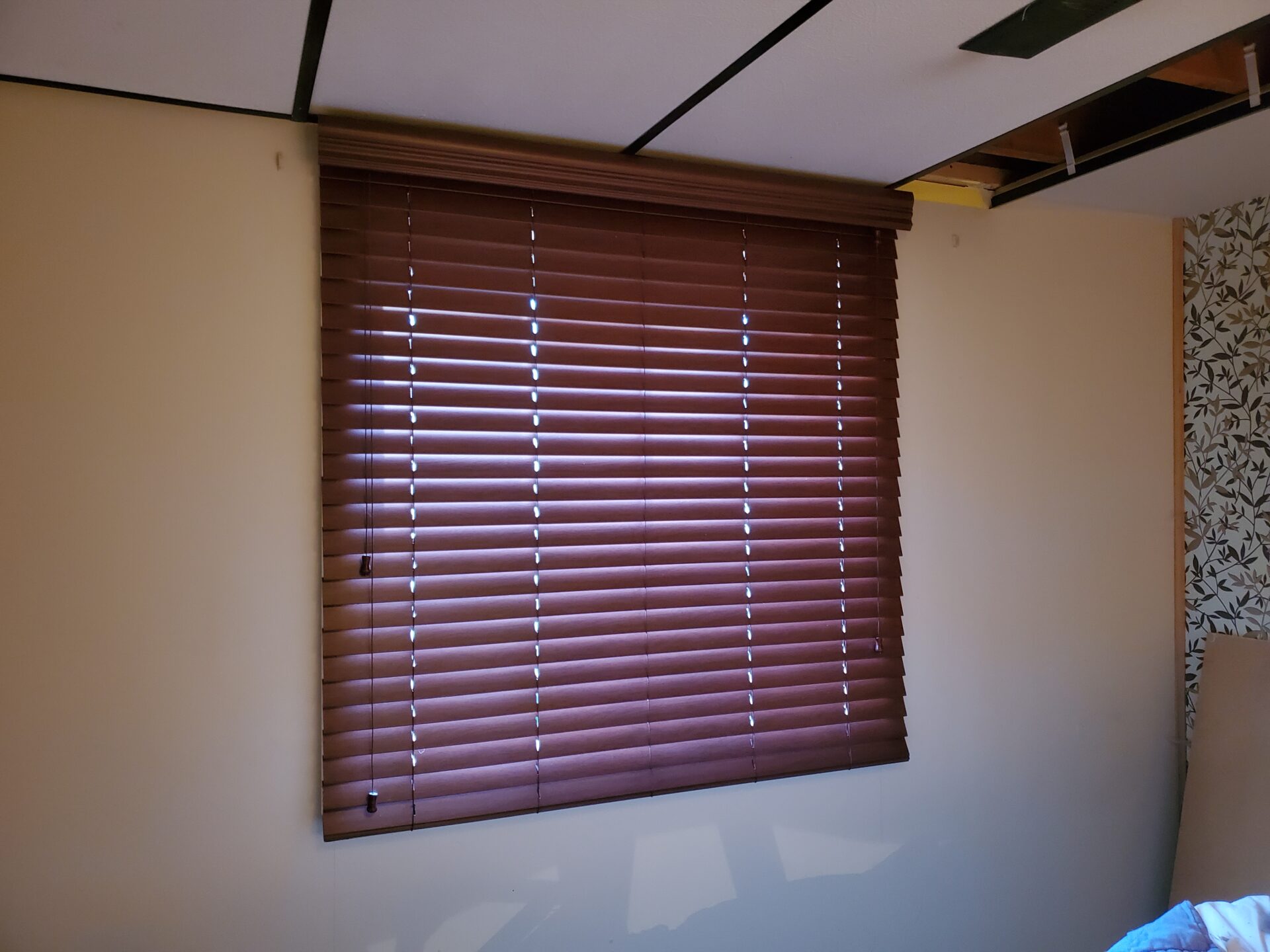
Homeowners can get more out of faux wood blinds by using them in specific ways:
- Close or tilt the slats to block direct sunlight in the summer and keep extra heat out of the room.
- Open the blinds on sunny winter days to let in warm sunlight.
- After sunset, close the blinds to make the area near the window a bit more comfortable.
- Let some air move around windows that often get condensation.
- Choose light-coloured slats if you want to reflect strong sunlight.
Will faux wood blinds fit your window type?
Even if a blind fits your window’s width and height, it might still be hard to use. Factors like window depth, hardware, where you mount the blinds, and how they stack when raised can all affect how well faux wood blinds work.
| Window type | General suitability | Main detail to check |
| Picture window | Usually suitable | Weight on wide openings |
| Casement window | Conditional | Clearance around the crank, lock and handle |
| Awning window | Conditional | Access to the lower handle |
| Sliding window | Usually suitable | Recess depth and raised stack |
| Bathroom window | Usually suitable | Condensation and ventilation |
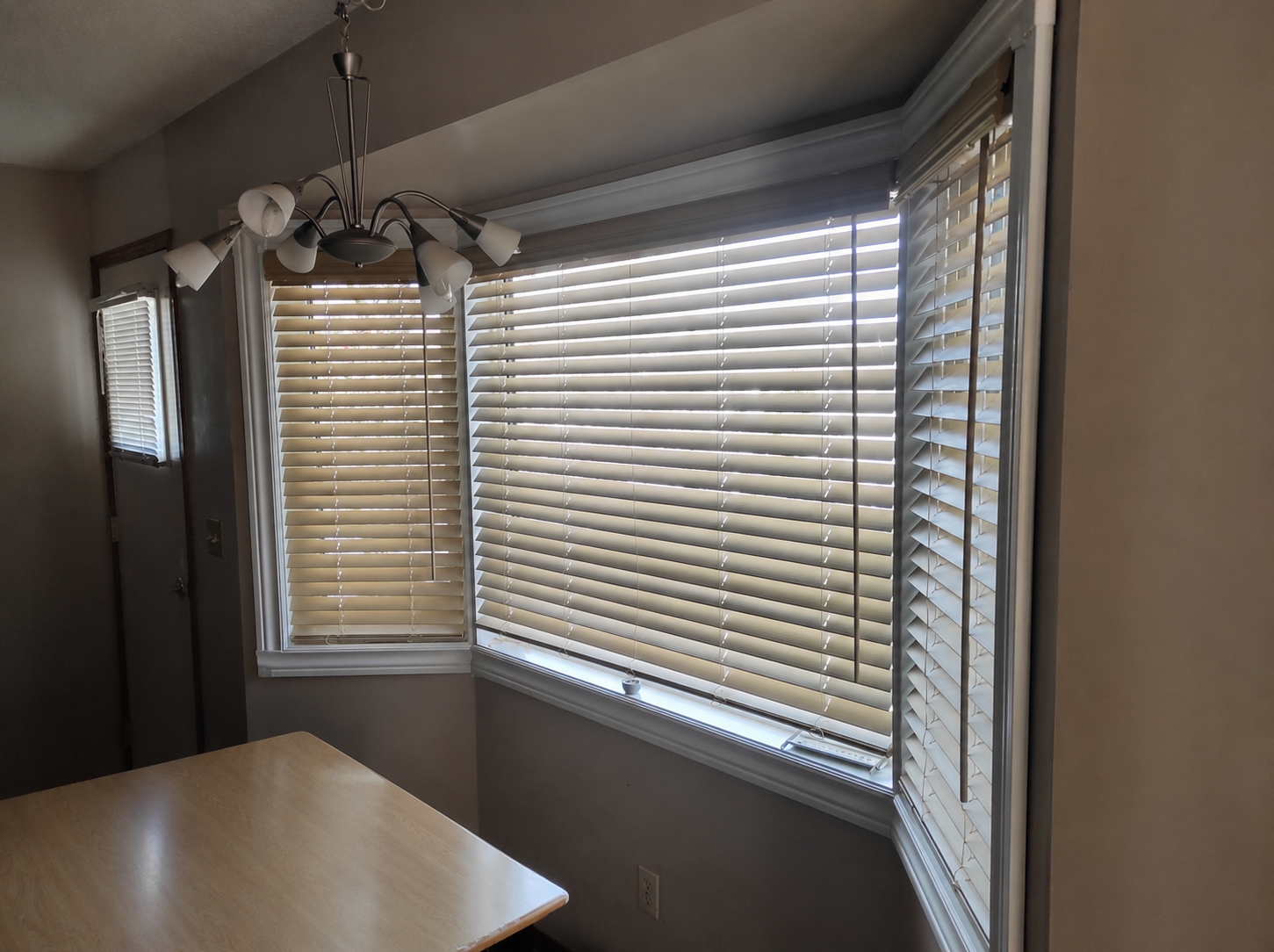
| Bay or bow window | Conditional | Headrails meeting at corners |
It’s a good idea to measure your windows with help from a professional installer, especially if you want custom faux wood blinds.
How to Maintain Faux Wood Blinds: A Step-by-Step Guide
Faux wood blinds handle moisture and regular cleaning better than real wood, but dust and kitchen grease can still build up on the slats. A simple cleaning routine keeps them looking good and working well.
- Remove loose dust regularly. Close the slats in one direction and wipe them with a dry microfibre cloth, a duster, or a vacuum fitted with a soft-bristled brush attachment. Reverse the slats and repeat on the other side.
- Wipe away fingerprints and light marks. Dampen a soft cloth with warm water and wring it out thoroughly. Wipe each affected slat, then dry it with a clean cloth to prevent streaks and water marks.
- Clean kitchen grease with mild soap. Add a small amount of gentle dish soap to warm water. Wipe the slats individually, paying extra attention to the area closest to cooking and food-preparation surfaces. Follow with a clean damp cloth to remove soap residue.
- Keep water away from the headrail. Do not spray cleaner directly onto the blinds or soak the upper mechanism. Moisture can enter the headrail and interfere with the tilt or lifting components, even when the slats are moisture-resistant.
- Avoid abrasive cleaning products. Skip bleach, solvents, scouring pads and stiff brushes. These may scratch the surface, dull the finish or damage the printed wood grain.
- Check the controls and brackets. Every few months, test whether the blinds raise, lower and tilt evenly. Tighten loose brackets and stop using the blind if the mechanism begins to catch or requires unusual force.
Keep in mind that light-coloured blinds usually hide dust better, while dark ones show lint, fingerprints, and water marks more quickly. Cleaning them lightly and often is easier than dealing with built-up dust and grease later.
Pick Blinds That Fit Your Window, Not Just Your Room
Faux wood blinds work well for standard windows if you want adjustable privacy, moisture resistance, and a wood-like look. They are less ideal for wide windows, shallow frames, or places where you need total darkness or easy access.
Before you order, check four things: the slat material, the blind’s weight, the space around your window hardware, and how much light control you need.
Interested in new window blinds? Visit our showrooms or book an appointment to see our faux wood blinds and other window covering collections and find the best option for your home.



1750 Coast Meridian Rd #102,
Port Coquitlam, BC V3C 6R8
100, 17866 106A Avenue,
Edmonton, AB, Canada,
T5S 1V3
3307 Dunmore Rd SE #12,
Medicine Hat, AB,
Canada, T1B 3R2
2081 Merivale Rd #201, Ottawa, ON, Canada, K2G 1G9
by appointment only
108, 55 Akerley Blvd, Dartmouth,
NS, Canada, ВЗВ 1M3