


-RATED BY




Built in Canada
All Ecoline windows and doors are built in Ontario, Canada
- Top-of-the-line machinery (Forel, Gracco, Bottero) to produce the best products
- Over 60,000 sq. ft manufacturing plant
- Energy Star-rated and NAFS-11-tested
- Manufactured for local weather conditions
Fibreglass vs. Vinyl Windows for Canadian Homes: Pros, Cons & Costs [2026]
Sep 4, 2026
16 min read
373
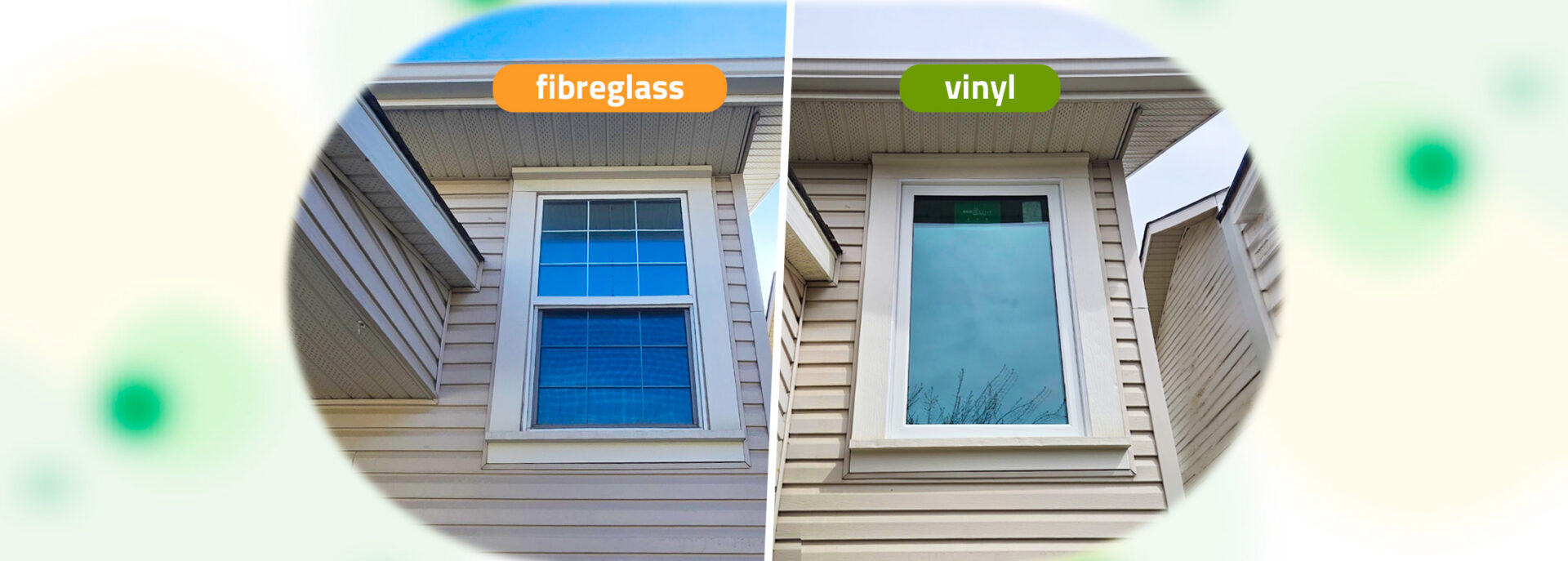
Fibreglass windows usually cost about 10 to 30 percent more than vinyl. This price difference really matters if you need to replace multiple or even all of your windows. Hence, the main question here is not if fibreglass is “better” in theory, but whether the extra money will actually give your home more comfort, better air tightness, greater durability, and better long-term value.
For most Canadian homeowners, good vinyl windows offer the best balance of energy efficiency, air tightness, ease of maintenance, and price. Fibreglass windows are worth considering for bigger window openings, darker colours, modern styles, or homes where frame strength or a slimmer look is more important than the initial cost.
The real answer is less about the frame material and more about the whole window system. A well-made triple-pane vinyl window with good air-leakage ratings and proper installation can perform better than a basic fibreglass window with lower-quality glass. Still, fibreglass is a good choice for projects that need extra stability, strength, or a long-lasting finish.
At Ecoline, we always strive to deliver what works best for real homes and installations, so our experts put together an ultimate comparison of fibreglass and vinyl windows based on energy performance, durability, cost, design options, and real-life value. The goal is to help you pick the best choice for your local weather, budget, and renovation plans.

Quick Answer: Which Window Material Makes More Sense?
Pick vinyl windows if you want good performance at a fair price. They are often the best choice for replacing all the windows in your home, for standard window sizes, bedrooms, basements, kitchens, and older houses, where you also need to pay for installation, trim, insulation, or repairs.
Vinyl is also a good choice if you want triple-pane glass but do not want to pay premium prices for every window. For many Canadian homes, this is the best way to get comfort without spending too much.
Go with fibreglass windows if your project needs bigger or stronger frames. They work well for large fixed windows, modern black frames, wide openings, custom homes, or places where you want slimmer frames and more glass showing.
| Homeowner’s priority | Better Choice | Why |
| Best overall value | Vinyl | Lower upfront cost with strong energy performance when properly specified |
| Lowest maintenance | Vinyl | Moisture-resistant, easy to clean, and does not need repainting |
| Large windows or wide openings | Fibreglass | Stronger frame material can support larger units |
| Cold-climate comfort | Depends on energy specs | Triple-pane glass, U-factor, ER, air leakage, and installation matter more than frame name |
| Dark exterior colours | Fibreglass | Better dimensional stability can help in high sun exposure |
| Slimmer frame appearance | Fibreglass | Often allows more visible glass and a cleaner modern look |
| Full-home replacement on a budget | Vinyl | Easier to keep the project within a realistic price range |
Here is a simple rule: if you are replacing standard windows and want good energy performance, start with high-quality vinyl. If you need special sizes, colours, sun exposure, or a specific look, consider upgrading to fibreglass.
Fibreglass vs. Vinyl Windows – Energy Performance
Many homeowners begin by asking which frame insulates better, fibreglass or vinyl. This seems like a good question, but it is not the best way to judge window performance in Canada.
A window is more than just the frame. The glass, spacers, coatings, gas fill, how it opens, air leakage rating, and installation often matter more for comfort than the frame material by itself.
In Canada, ENERGY STAR certified windows must meet a U-factor of 1.22 W/m²·K or lower, or an Energy Rating of 34 or higher. The lower the U-factor, the better the window resists heat loss. The higher the ER, the better the overall energy performance, because it accounts for heat loss, solar heat gain, and air leakage.
This is why a top-quality triple-pane vinyl window can be a better choice for cold climates than a basic fibreglass window. Even if the fibreglass frame is stronger and more stable, poor glass can still lower the window’s overall performance.
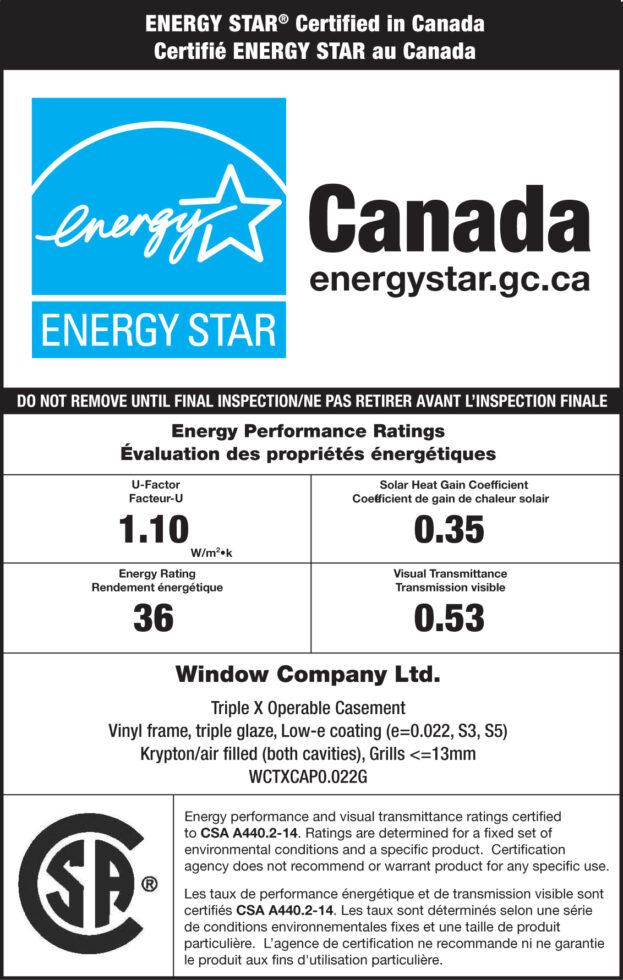
For most Canadian homes, especially in colder places like Alberta, Saskatchewan, Manitoba, Ottawa, and Northern Ontario, triple-pane glass is usually more important than switching from vinyl to fibreglass. A good vinyl window with Low-E coatings, argon gas, warm-edge spacers, and tight weatherstripping can give you great comfort without the extra cost of a fibreglass frame.
Fibreglass does have a technical edge in stability. It expands and contracts less than vinyl when temperatures change, helping keep the sash, frame, and weatherstripping aligned over time. This is helpful for large windows, dark frames, south-facing walls, and homes that get a lot of sun or cold.
The main point is simple: do not just compare “vinyl vs fibreglass.” Look at the whole window label. Before choosing, ask for:
- U-factor
- Energy Rating
- Air leakage rating
- Glass package: double-pane or triple-pane
- Low-E coating type
- Gas fill
- Spacer system
- ENERGY STAR certification
- Warranty on glass seals, frame, hardware, and labour
A window with better ratings, good installation, and the right glass for your local climate will usually work better than a pricier frame with average features.
Air tightness: a better frame will not fix a poor installation
Air tightness is often oversimplified in window comparisons. Fibreglass is more stable than vinyl, helping the sash and frame stay lined up through heat, cold, and seasonal changes. This is especially helpful for bigger windows or dark frames that get a lot of sun.
But the frame material alone does not decide if a window feels drafty in winter.
Natural Resources Canada includes air leakage in the Energy Rating calculation, along with U-factor and solar heat gain. CSA also defines ER as a rating that combines U-factor, SHGC, and heat losses from air leakage over an average heating season. In other words, air tightness is not a small detail. It directly affects how the window performs in real homes.
The most common problem is that homeowners buy a strong window, then lose performance at the opening. If the old frame has hidden rot, the rough opening is out of square, the insulation is rushed, or the exterior seal is weak, the window can still leak air. This is why installation type matters so much in older Canadian homes.
For example, a retrofit installation may work well when the existing frame is dry, square, and structurally sound. In a 40-year-old house with soft wood, past water damage, or poorly insulated cavities, a full-frame replacement may be the better long-term choice. It costs more, but it gives installers access to the rough opening, where many draft and moisture issues actually start.
Window style also affects air tightness. Casement and awning windows usually seal tighter than sliding or hung windows because the locking system pulls the sash firmly against compression weatherstripping. Sliders and hung windows can still perform well, but their moving tracks make them more dependent on precise manufacturing, drainage, and maintenance.
This is why the vinyl vs fibreglass debate needs context. A well-installed vinyl casement window can be tighter and warmer than a poorly installed fibreglass slider. The product is important, but so are the opening, window style, insulation, and sealing.
Before signing a quote, ask how the company will handle:
- Measuring and checking whether the opening is square
- Removing old frames and inspecting for moisture damage
- Insulating around the window
- Sealing the exterior against rain and wind
- Finishing interior trims
- Testing the operation after installation
- Explaining maintenance for weatherstripping, tracks, and drainage holes
The best window is not the one with the fanciest material label. It is the one that stays tight after installation, through seasonal changes, heavy rain, and freeze-thaw cycles.
Fibreglass or Vinyl Windows by Durability in Canadian Weather: Cold, Sun, Moisture
We all know that Canadian weather is tough on windows. One house can face freezing winters, hot summers, heavy rain, strong sun, and lots of freeze-thaw cycles. This is where fibreglass starts to prove its value.
Fibreglass is stiffer and more stable than vinyl. It does not expand or contract as much when temperatures change, so the frame keeps its shape longer. This is most important for big windows, black frames, south-facing walls, and homes with big temperature swings.
Vinyl has its own strengths. It resists moisture, does not rot, requires no repainting, and works well for most home window replacements. A well-made vinyl window with good welds, reinforced parts, strong hardware, and proper drainage can last for decades in Canada.
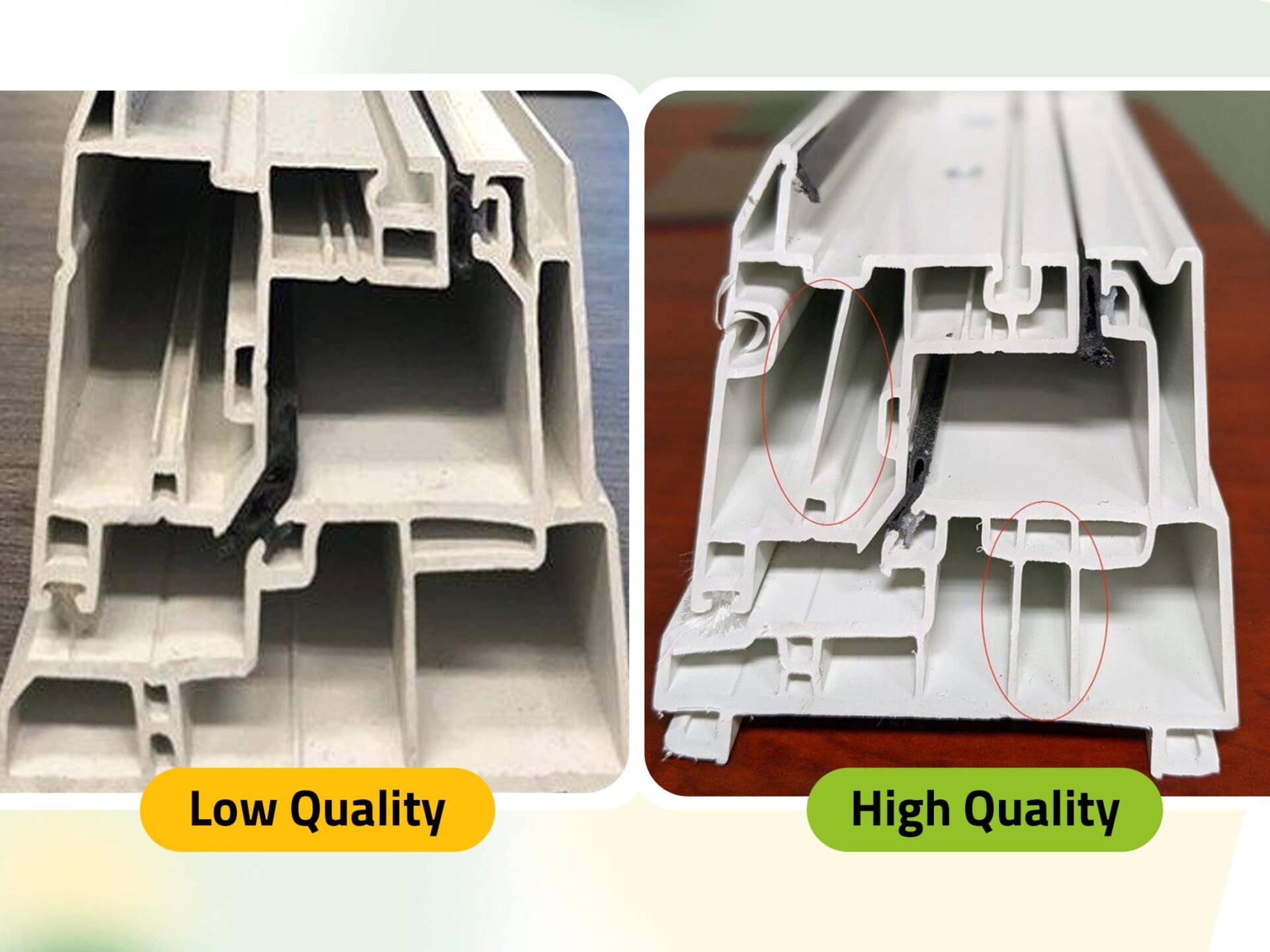
The problem is usually not vinyl itself, but low-quality vinyl.
Cheaper vinyl windows might have thin frames, weak corners, poor hardware, basic weatherstripping, and may not work as well on big or dark windows. In these cases, you might notice windows are harder to use, drafty, or the frames move sooner than you would like.
For example, a homeowner in Winnipeg replacing old wood bedroom windows might get great long-term value from triple-pane vinyl casement windows. The window sizes are standard, the colour is white, and the main goals are warmth, saving money, and low maintenance. Fibreglass would also work, but the extra cost may not bring enough extra comfort to be worth it.
Now consider a home in Vancouver, Calgary, or Ottawa with large black picture windows on a modern front. The glass areas are bigger, the frames get more sun, and the design needs slim, clean lines. In this case, fibreglass makes more sense because the project needs a stronger frame.
Moisture is also important to consider. Both vinyl and fibreglass resist rot, which is a big advantage over old wood windows in damp or poorly ventilated spaces. Bathrooms, basements, kitchens, and coastal homes still need good installation, flashing, drainage, and ventilation. No frame material can make up for water trapped around the window.
The best durability decision comes down to exposure and product quality:
- For standard-size windows in most homes, premium vinyl is usually durable enough.
- For large units, dark colours, and modern designs, fibreglass has a stronger technical case.
- For cold regions, glass package and installation remain just as important as the frame.
- For wet climates, drainage, flashing, caulking, and ventilation matter as much as material choice.
Durability is not just about how long the frame lasts. It is also about how well the window works, seals, drains, and stays, and how it looks after years of Canadian weather.
Fibreglass vs. Vinyl Windows: Cost Comparison
Vinyl is usually the more practical choice if you are replacing several windows at once. So it definitely wins on value. Custom medium-sized windows are often priced at about $850 to $1,300 per window installed. Bigger windows, triple-pane glass, colour upgrades, special shapes, and full-frame installation can all raise the price.
| Window | Typical Price Range | Best Fit |
| Standard vinyl window | $650 – $1,250+ | Budget-conscious replacements |
| Premium vinyl triple-pane | $820 – $1,430+ | Cold climates and full-home upgrades |
| Fibreglass window | $1,200 – $2,100+ | Large windows, dark frames, premium designs |
| Complex custom opening | $2,000 – $4,000+ | Oversized units or structural work |
Fibreglass usually costs more because it is stronger, more rigid, and often seen as a premium product. The extra cost can be worth it, but only if your project really needs those benefits.
A better question than ‘Which material is cheaper?’ is ‘Which window gives the best performance for the price?’ For many homes, high-quality vinyl is a better answer than basic fibreglass.
Where Fibreglass Feels More Premium: Design, Colour and Glass Area
This is where fibreglass can be worth the higher price. Fibreglass frames are stronger and stiffer, so they can have slimmer profiles and hold bigger glass panes. If you want black windows, large picture windows, or a modern look, this difference can really show.
Vinyl has improved a lot, especially for standard home replacements. Even though black vinyl windows are trendy nowadays, the majority of homeowners still choose white frames, common window sizes, traditional homes, and whole-house projects where budget and energy savings matter more than the thinnest frames.
The main design difference is not always clear in a quote. Thicker frames can reduce the area of glass you see, while slimmer frames can make the same window feel brighter and more stylish. This is most important for living rooms, front windows, patio doors, and big fixed windows.
If you want dark exterior colours, ask how the finish is applied and what the warranty covers. Fibreglass is often better for dark frames in sunny spots, while vinyl should be chosen from lines made for colour stability.
Vinyl vs. Wood vs. Fibreglass Replacement Windows: Which Is Best?
We’ve already looked closely at vinyl and fibreglass, but many homeowners also consider wood windows, especially for older, traditional, or upscale homes. Wood stands out mainly for its appearance and architectural style, not for being cheaper or easier to maintain.
| Material | Average cost per window | Maintenance | Main Advantage | Best fit |
| Vinyl | $520 – $730 | Low | Value and energy efficiency | Most residential replacements |
| Wood | $1,120 – $1,330 | High | Natural, traditional appearance | Heritage and traditional homes |
| Fibreglass | $710 – $945 | Low | Strength and frame stability | Large openings and modern designs |
For most window replacements, vinyl gives you the best mix of price, insulation, and easy upkeep. Fibreglass is a better choice if you want stronger windows, thinner frames, bigger openings, or dark finishes. Wood is still a great pick if keeping your home’s original look matters most, but it usually comes with a much higher price tag and needs more care.
What to Ask Before Buying Vinyl or Fibreglass Windows
A good quote should compare more than the frame material. Before choosing vinyl or fibreglass, ask for the full performance and installation details.
Start with these questions:
- What is the U-factor?
- What is the Energy Rating?
- Is the window ENERGY STAR certified for Canada?
- Is it double-pane or triple-pane?
- What Low-E coating and gas fill are used?
- What is the air leakage rating?
- Is the quote based on retrofit or full-frame installation?
- Are interior trims, exterior capping, insulation, and cleanup included?
- What warranty covers the frame, glass seals, hardware, labour, and installation?
Also, ask if the installers work directly for the company or are subcontractors. This is important because even the best window can perform poorly if it is not properly measured, insulated, or sealed.
The best companies will not recommend one material without seeing your home first. They should look at your climate, window sizes, wall condition, colour choice, budget, and long-term plans before suggesting vinyl or fibreglass.
F.A.Q
Are fibreglass windows better than vinyl windows?
Fibreglass windows are strong and stable, so they work well for large openings, slim frames, and dark exterior colours. Vinyl windows usually offer better value for most standard Canadian replacement projects. The best option depends on the whole window system, including the glass, U-factor, Energy Rating, air leakage, installation, and warranty.
Why are fibreglass windows more expensive than vinyl?
Fibreglass windows usually cost more because their frames are stronger and more rigid, and they are often part of premium window lines. They also allow for slimmer frames, larger glass areas, and darker colours. The higher price can be worth it for some projects, but many homes get better value from premium vinyl windows.
Which is better for black windows: fibreglass or vinyl?
Fibreglass is usually the best choice for large black windows or sunny areas because it expands and contracts less with temperature changes. Black vinyl windows are also popular in Canada and come with a clear finish warranty. Make sure to ask how the colour is applied and protected.
Are vinyl windows good enough for Canadian winters?
Yes, good-quality vinyl windows perform well in Canadian winters, especially if they have triple-pane glass, Low-E coatings, argon gas, warm-edge spacers, and proper installation. Don’t judge vinyl by low-end builder-grade products. Premium vinyl windows are a reliable choice for most homes in cold climates.
Do fibreglass windows save more energy than vinyl windows?
Not always. Fibreglass frames are stable and durable, but energy savings depend more on the whole window, including the glass type, U-factor, Energy Rating, air leakage, spacer system, and installation. In many Canadian homes, a triple-pane vinyl window with good features can perform better than a basic fibreglass window.



1750 Coast Meridian Rd #102,
Port Coquitlam, BC V3C 6R8
100, 17866 106A Avenue,
Edmonton, AB, Canada,
T5S 1V3
3307 Dunmore Rd SE #12,
Medicine Hat, AB,
Canada, T1B 3R2
2081 Merivale Rd #201, Ottawa, ON, Canada, K2G 1G9
by appointment only
108, 55 Akerley Blvd, Dartmouth,
NS, Canada, ВЗВ 1M3