


-RATED BY




Built in Canada
All Ecoline windows and doors are built in Ontario, Canada
- Top-of-the-line machinery (Forel, Gracco, Bottero) to produce the best products
- Over 60,000 sq. ft manufacturing plant
- Energy Star-rated and NAFS-11-tested
- Manufactured for local weather conditions
Ecoline Introduces New Compression Sliding Patio Doors for Canadian Homes
Aug 10, 2026
12 min read
608
If you notice the floor next to your patio door gets colder in winter or leaks cool in summer, the problem might not just be the glass. Air, noise from outside, and moisture can also slip through gaps if the door panel does not seal tightly against the frame.
Ecoline is launching the SSP Compression Sliding Patio Door, which keeps the space-saving benefits of a regular sliding door but closes more tightly. When you lock the door, the moving panel is pulled against a continuous gasket around the edge, not just slid into place. This compression helps block drafts, wind, rain, and outside noise.
The new glass patio door comes with eight locking points, SoftStop for smooth opening and closing, sturdy Roto rollers that support panels up to 440 pounds, and your choice of double or triple-pane glass.
This new model is already available at Ecoline. It offers better sealing and security, and it does not take up extra floor space like a hinged door.
Read on to learn how the compression technology works, where it is most useful, and how the new compression sliding door compares to a traditional sliding back door.
SSP Compression Sliding Patio Door – Sound, Security, Performance
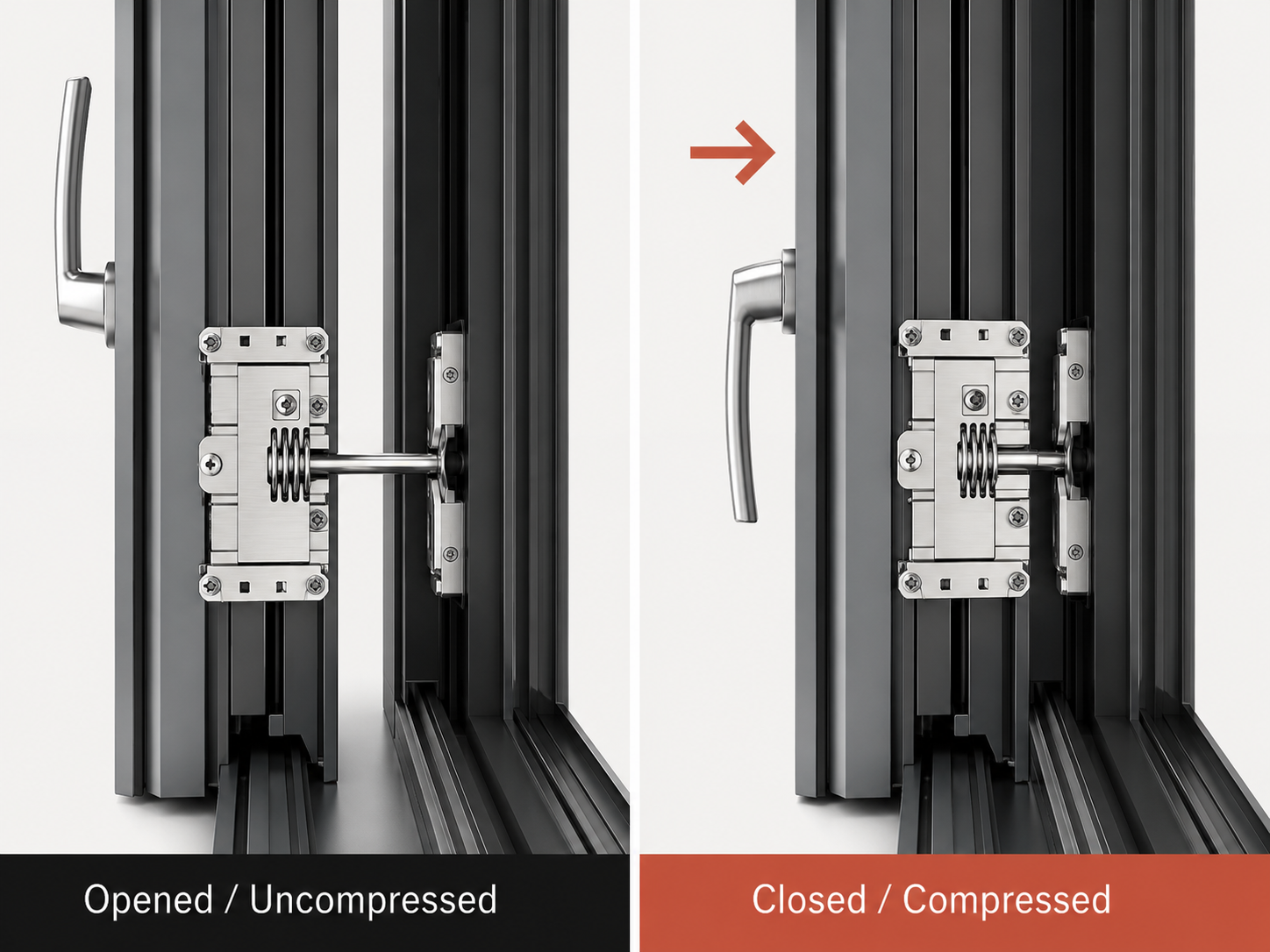
A compression sliding patio door slides open and closed along a track, just like a regular gliding door. When you close and lock it, the mechanism pulls the panel tightly against a gasket that runs all the way around the edge, making a snug fit between the panel and the frame.
The main difference is how the door closes. Regular sliding doors use weatherstripping to keep the panel in place. With the SSP system, locking the door also activates the compression feature. Instead of just latching at the end of the track, the panel is pressed firmly against the frame to reduce gaps.
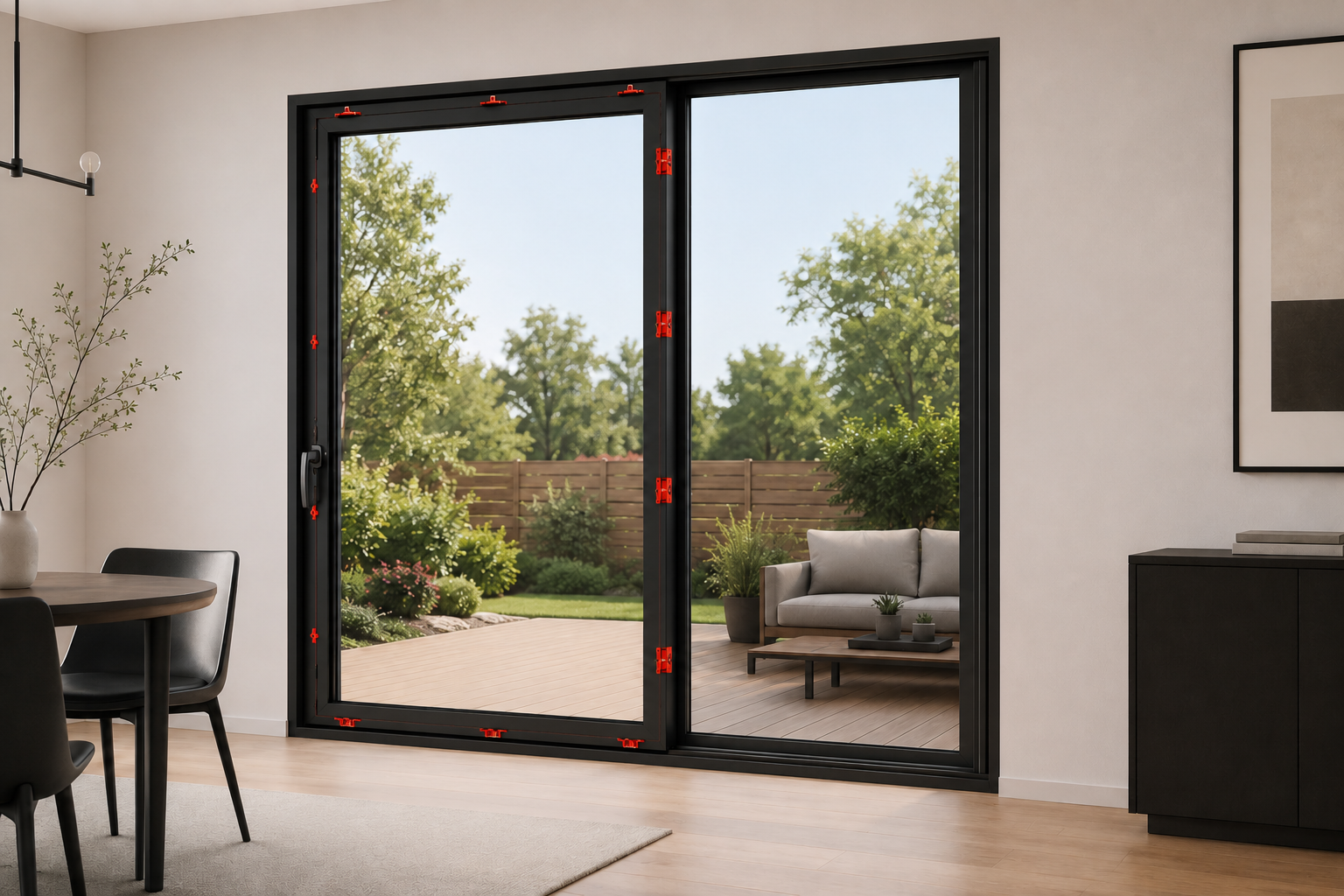
Three components work together to get you a tight fit:
- A circumferential gasket forms a continuous seal around the operating panel.
- Controlled compression locking draws the sash firmly against the frame.
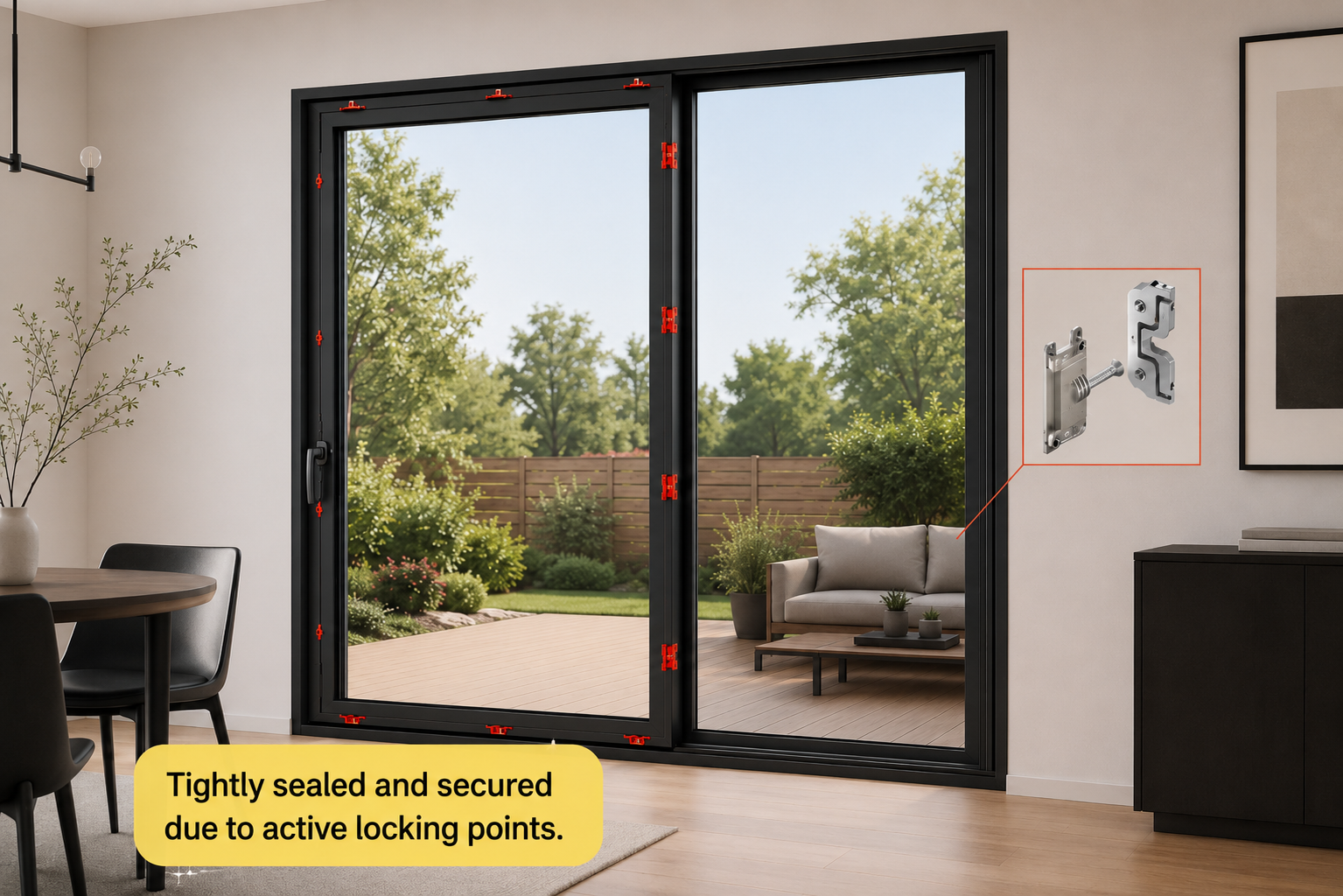
- Eight active locking points engage around the panel rather than concentrating the closure at a single latch location.
For homeowners, this can make a real difference in everyday situations like these:
- the family room feels colder near the patio door during winter
- wind can be heard or felt around the frame
- traffic, neighbours or backyard noise carries into the home
- the existing door rattles during storms
- you want better security without replacing the slider with a hinged door
For example, think for a second about a kitchen door that opens to a backyard. A regular sliding door might work fine in mild weather, but small gaps can become obvious on a windy winter night. Compression technology focuses on sealing those gaps at the moving panel, where it is harder to keep a tight seal than on the fixed side.

How Compression Technology Improves Comfort, Security and Daily Use
Most homeowners do not replace a patio door just because it looks old. Usually, the decision comes from having a cold floor near the glass, a panel that rattles in the wind, a lock that does not feel secure, or a door that gets harder to slide over time.
The SSP Compression Sliding Patio Door solves these problems with its improved sealing, locking, and movement.
A tighter seal where drafts often begin
Even the best glass cannot keep your home comfortable if air leaks around the moving panel. When you lock the SSP door, the panel presses tightly against a gasket that runs all the way around it. This helps block air, wind-driven rain, and pressure from getting through.
Eight locking points instead of one basic latch
Older sliding doors usually have just one latch near the handle. The SSP system uses eight locking points around the frame, and the compression feature pulls the panel tightly closed. This spreads the pressure evenly and helps keep larger panels steady.
The system is not completely break-in proof, but it does replace a simple lock with a multi-point locking system. This can make it less likely that you will need an extra security bar for daily use.
Smoother control for larger, heavier panels
Large patio doors let in more light, but heavier glass can be tough on the rollers and hardware. The new door uses strong Roto hardware that can handle panels up to 440 pounds. The built-in SoftStop feature helps control the panel as it opens and closes, so it does not slam into the frame.
This is especially important for taller custom doors or triple-pane panels, where good hardware makes a big difference in how the door works every day.
| Homeowner concern | Traditional sliding door | SSP compression sliding door |
| Drafts around the moving panel | 🤔 Performance depends on weatherstripping quality and panel alignment | ✅ Sash compresses against a continuous perimeter gasket |
| Patio door security | 🤔 Often uses one main latch, depending on the model | ✅ Eight active locking points engage around the frame |
| Heavy-panel operation | 🤔 Varies by roller system and panel weight | ✅ Heavy-duty hardware supports sash weights up to 440 lb |
| Abrupt closing | 🤔 Panel may stop firmly against the frame | ✅ SoftStop provides a more controlled close |
| Outdoor noise | 🤔 Gaps around the sash can weaken sound control | ✅ Compression sealing is designed to limit sound passing through perimeter gaps |
A good quality regular sliding door can still work well in a sheltered spot. The compression system is a better choice if you are worried about wind, outside noise, security, or the weight of a bigger glass panel.
Compression Patio Door Sizes, Glass, Screens and Colour Options
When choosing a patio door, think of it as part of the whole wall, not just a piece of glass to fill a space. The width, height, type of glass, frame depth, and screen all affect how it will be installed, how it works, and how it looks.
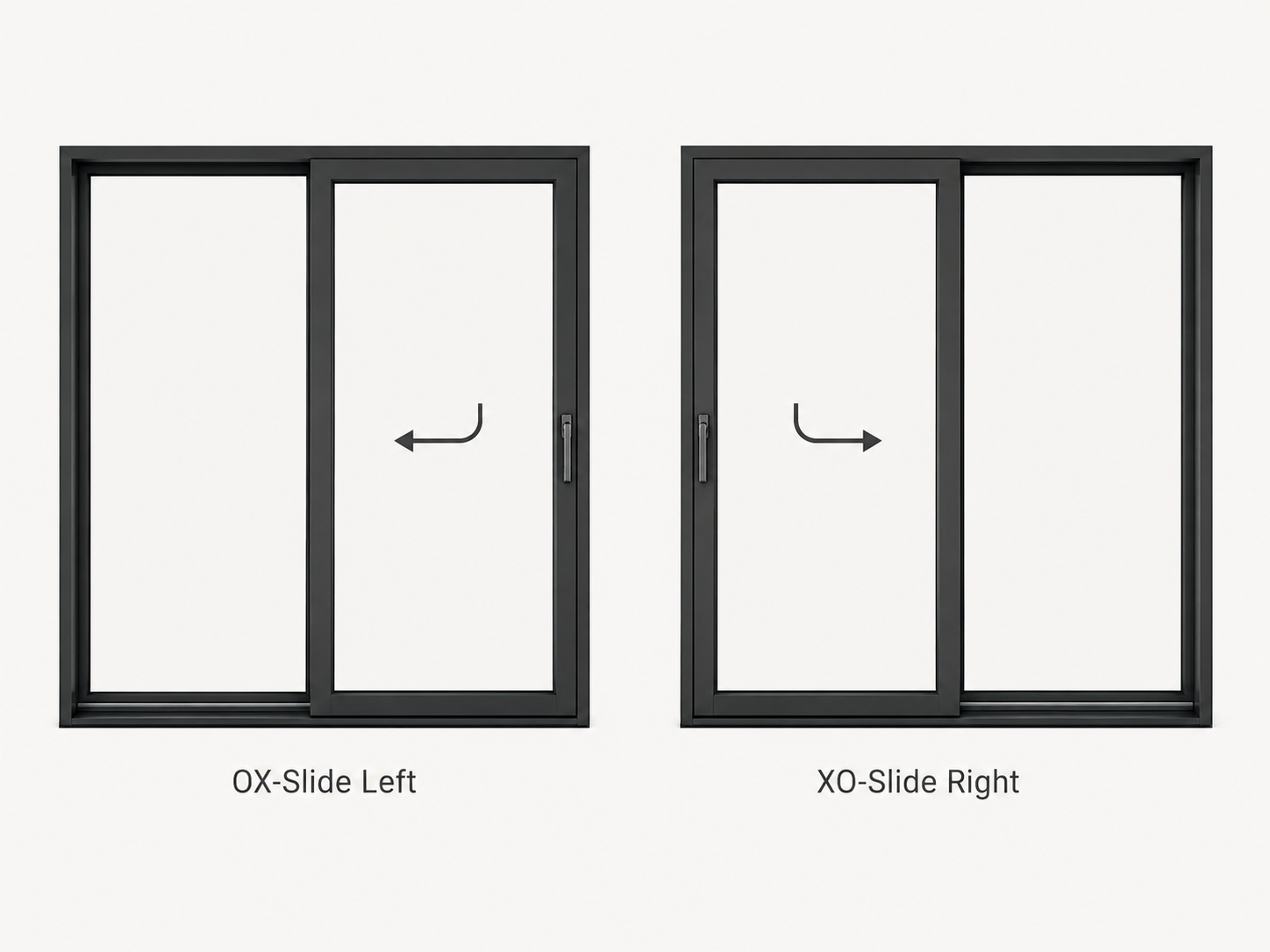
The brand-new sliding door comes in a two-panel setup, with the moving panel able to slide left or right. This lets you place the opening where it works best with your kitchen, furniture, deck stairs, or main walkway to the backyard.
Standard and custom patio door sizes
The typical patio door sizes range covers both conventional replacement openings and taller, more contemporary designs.
| Two-panel compression patio door width | Available typical heights |
| 59½ inches | 79½, 81½ or 95½ inches |
| 71½ inches | 79½, 81½ or 95½ inches |
| 95½ inches | 79½, 81½ or 95½ inches |
| Custom sizes | Up to 120 inches wide by 100 inches high, with a maximum area of 80 sq. ft. |
The door can be configured as:
- OX, with the operating panel sliding to the left
- XO, with the operating panel sliding to the
Custom sizes are helpful if your older home has an unusual opening or if you want more glass and a taller view during a renovation. Bigger is not always better, though. You need to consider things like structural support, panel weight, installation space, and how to move the door safely into place.
Double or triple pane glass
Homeowners can choose between:
- 1-inch double glazing for a practical balance of insulation, panel weight and budget
- 1⅜-inch triple glazing for projects where winter comfort, condensation resistance and lower heat transfer are higher priorities
Triple-pane patio doors are a good option if you live in colder regions such as Alberta, Saskatchewan, or Manitoba and your space faces open areas, while double glazing might be enough for a sheltered spot in a milder climate like British Columbia.
Screen options for frequent or occasional use
At Ecoline, we can pair your new compression sliding door with either:
- a heavy-duty sliding screen for households that use the patio entrance regularly
- a retractable screen for a cleaner view when insect protection is not needed
You should choose your screen before placing your order. The type of screen can change the frame depth and affect how the door fits with your exterior siding, interior trim, and threshold.
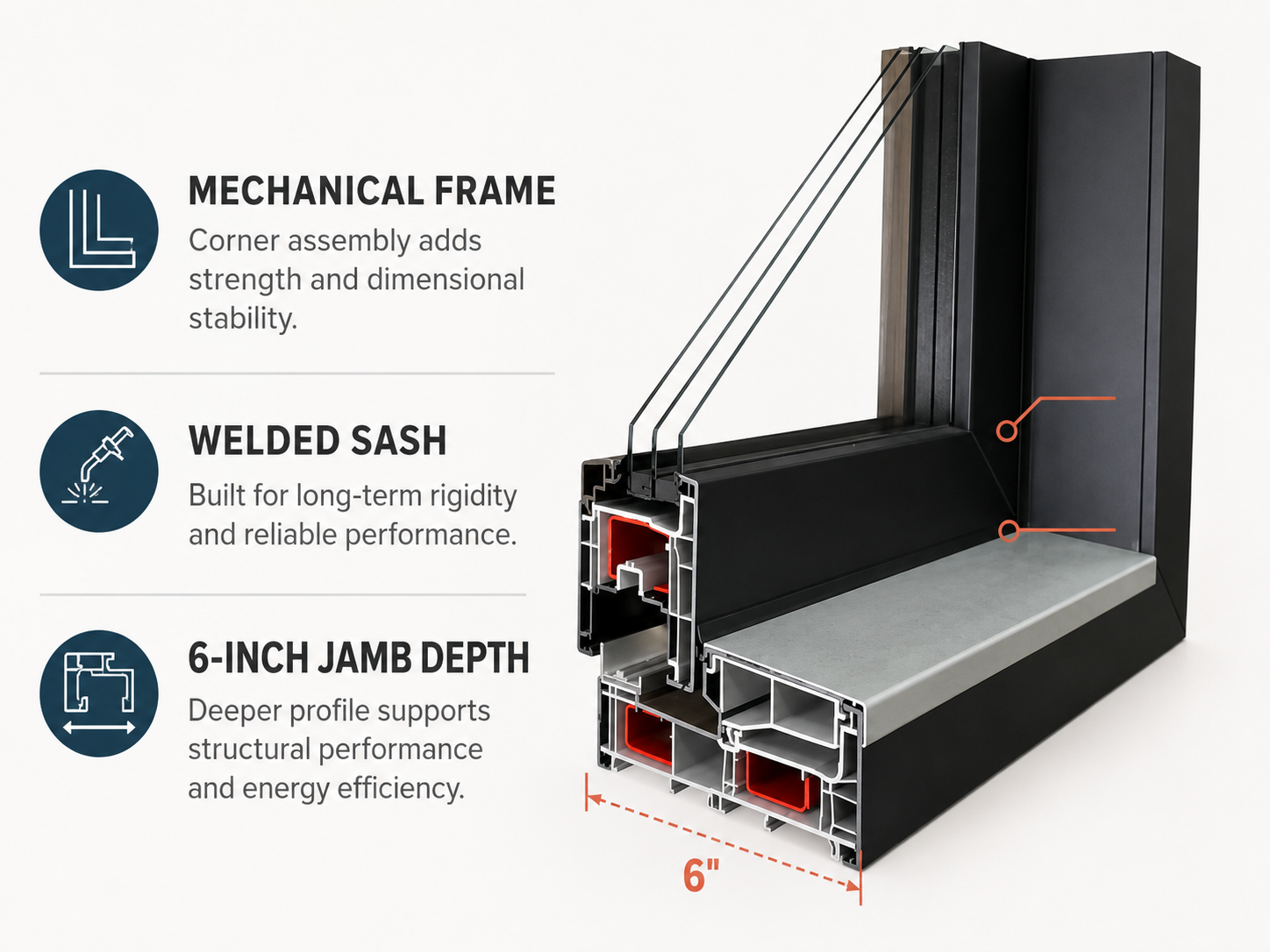
The door has a 6-inch jamb, so it’s vital for our installers to check how the frame lines up with your wall thickness. This is especially important in older homes, additions, or renovations where the wall layers might not match today’s standards.
Interior and exterior colours do not have to match
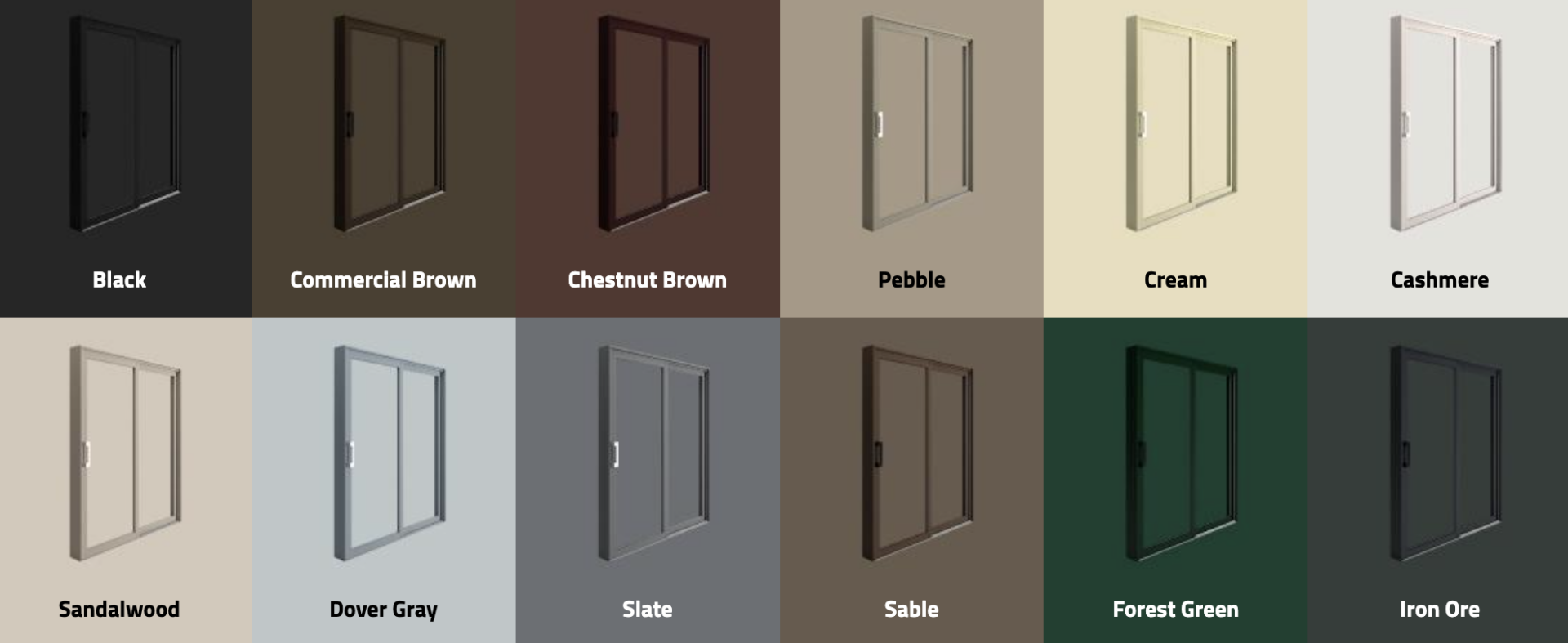
A large patio door takes up a big part of your wall, so its finish affects both your room and the outside look. The SSP door system lets you choose different frame colours for inside and outside, so you can have a darker exterior with brick or siding and keep the inside lighter.
At Ecoline, we offer the popular black and white patio doors, but we can also mix almost any colour and paint your doors in shades like:
- Iron Ore
- Slate
- Sable
- Chestnut
- Forest Brown
- Commercial Brown
- Pebble
- Cashmere
- Sandalwood
- Dover Gray
- Cream
- Green
- Custom colour
This flexibility is helpful in renovations where the new exterior windows are black or charcoal, but the inside trim is still white, cream, or a warm neutral. Matching the handle finish to the frame also makes the door look like it belongs, not like it was added later.
Is Compression Sliding Patio Door a Worthy Upgrade?
A compression patio door makes the most sense when the existing slider creates a real comfort or usability problem. Canadian homeowners who only need basic backyard access may be well served by a quality conventional sliding door. The stronger case for compression technology appears when drafts, noise, exposure, security or panel size are driving the replacement.
Homes where the upgrade has the clearest value
Imagine a family room where the sofa is near the patio door. The thermostat might say the room is warm, but anyone sitting by the glass feels a cold draft on the floor.
In this case, just upgrading the glass may not stop air from moving around the panel. Compression sealing fixes this by pulling the panel tightly against a gasket when you lock the door.
The compression patio glass door is particularly relevant for:
- Exposed backyard openings. Homes facing open areas or prevailing winds place greater pressure on the patio door seal.
- Homes affected by traffic or neighbourhood noise. Compression technology pulls the sash firmly against the frame, ensuring tighter contact around the operating panel. This translates into reduced outside noise entering through perimeter gaps and can drastically improve acoustic comfort in your house.
- Large or tall patio doors. Heavier glass requires reliable rollers, stable framing and controlled movement.
- Ground-floor doors where security is a concern. Eight locking points engage around the frame rather than relying on one basic latch.
- Rooms used throughout winter. Kitchens, dining rooms and family rooms benefit more from improved perimeter sealing than a rarely used seasonal space.
- Layouts with no room for a hinged door. The system retains horizontal sliding operation without taking up interior or deck space.
 5 Reasons to Replace Patio Doors: Benefits & Cost Breakdown
 Introducing New Stacking Patio Doors: Bigger Views, Better Living
 Sliding Patio Doors vs. French Doors – 4 Main Advantages
 Can You Turn a Window into a Patio door? All You Need to Know [2026]
 Sliding Patio Doors in Canada: How to Choose the Best Model in 2026

1750 Coast Meridian Rd #102,
Port Coquitlam, BC V3C 6R8
100, 17866 106A Avenue,
Edmonton, AB, Canada,
T5S 1V3
3307 Dunmore Rd SE #12,
Medicine Hat, AB,
Canada, T1B 3R2
2081 Merivale Rd #201, Ottawa, ON, Canada, K2G 1G9
by appointment only
108, 55 Akerley Blvd, Dartmouth,
NS, Canada, ВЗВ 1M3