


-RATED BY




Built in Canada
All Ecoline windows and doors are built in Ontario, Canada
- Top-of-the-line machinery (Forel, Gracco, Bottero) to produce the best products
- Over 60,000 sq. ft manufacturing plant
- Energy Star-rated and NAFS-11-tested
- Manufactured for local weather conditions
5 Best Window Blinds for Bathrooms To Handle Steam, Moisture and Privacy
Jul 20, 2026
13 min read
855
Your bathroom blinds might look perfect when first installed, but they can quickly turn into a cleaning hassle. Steam collects on the surface, toothpaste and soap leave stains, and regular condensation can damage materials that work fine in a bedroom.
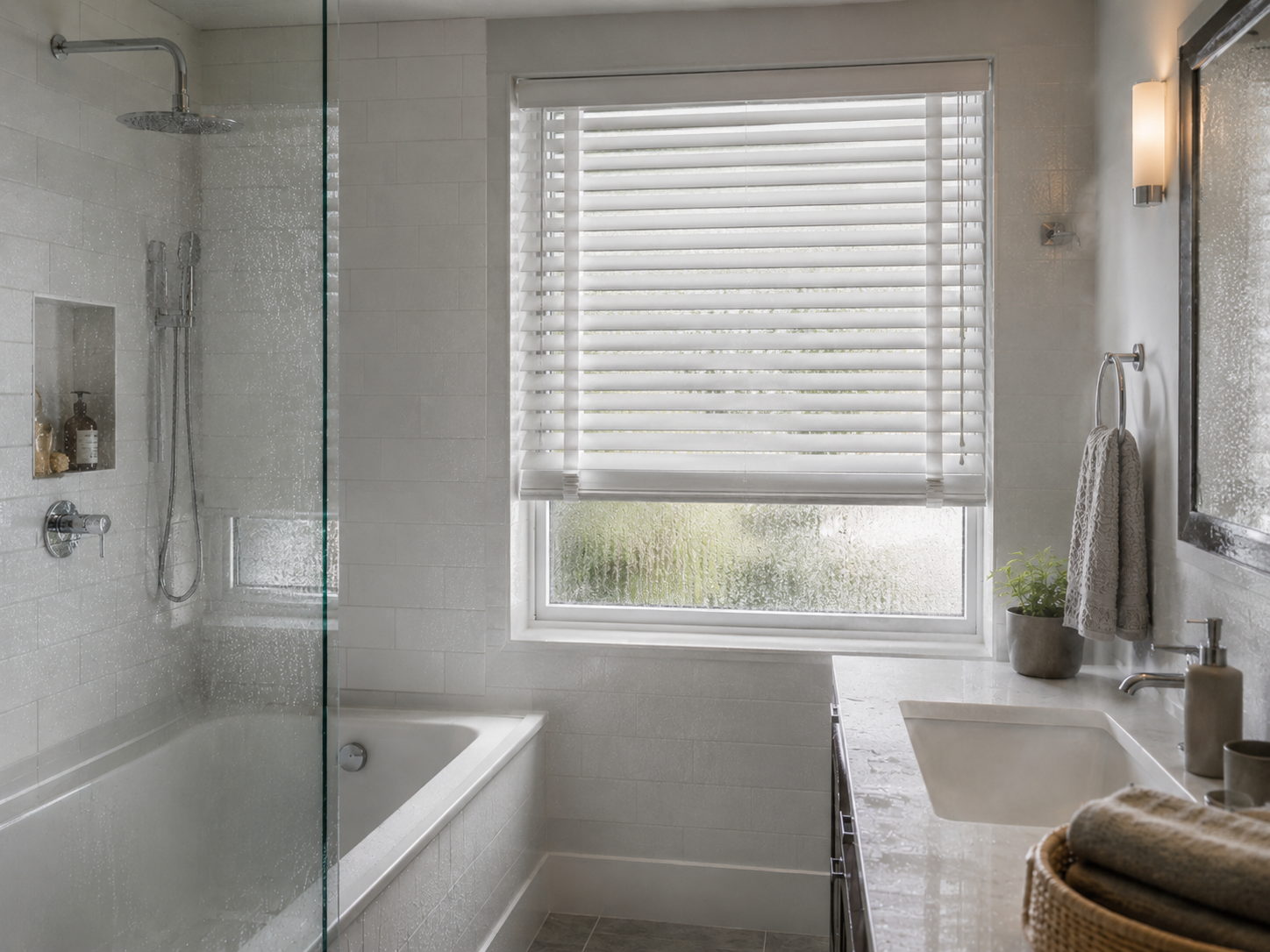
To make sure bathroom window coverings will serve you well for years, our experts usually recommend choosing either two-inch faux wood blinds or vinyl roller shades.
Faux wood blinds let you control privacy and light, and their PVC or vinyl slats resist moisture, warping, and splashes. Vinyl roller shades have a smooth surface that is easy to wipe clean, so they work well near sinks, bathtubs, or showers.
However, it’s also important to consider ventilation, water exposure, nighttime privacy, and how much cleaning you’re willing to do before opting for a specific blind type.
Here are the five most recommended types of bathroom blinds, along with tips on where each one works best, where it might not, and what to consider before installation.


Choose Bathroom Blinds by Water Exposure, Not Style Alone
Bathrooms have varying levels of moisture, which affects blinds in different ways. A window inside a shower needs a much stronger material than one across the room in a well-ventilated ensuite.
A simple way to narrow down your options is to think of your window as being in one of three moisture zones.
1. Direct-splash zone
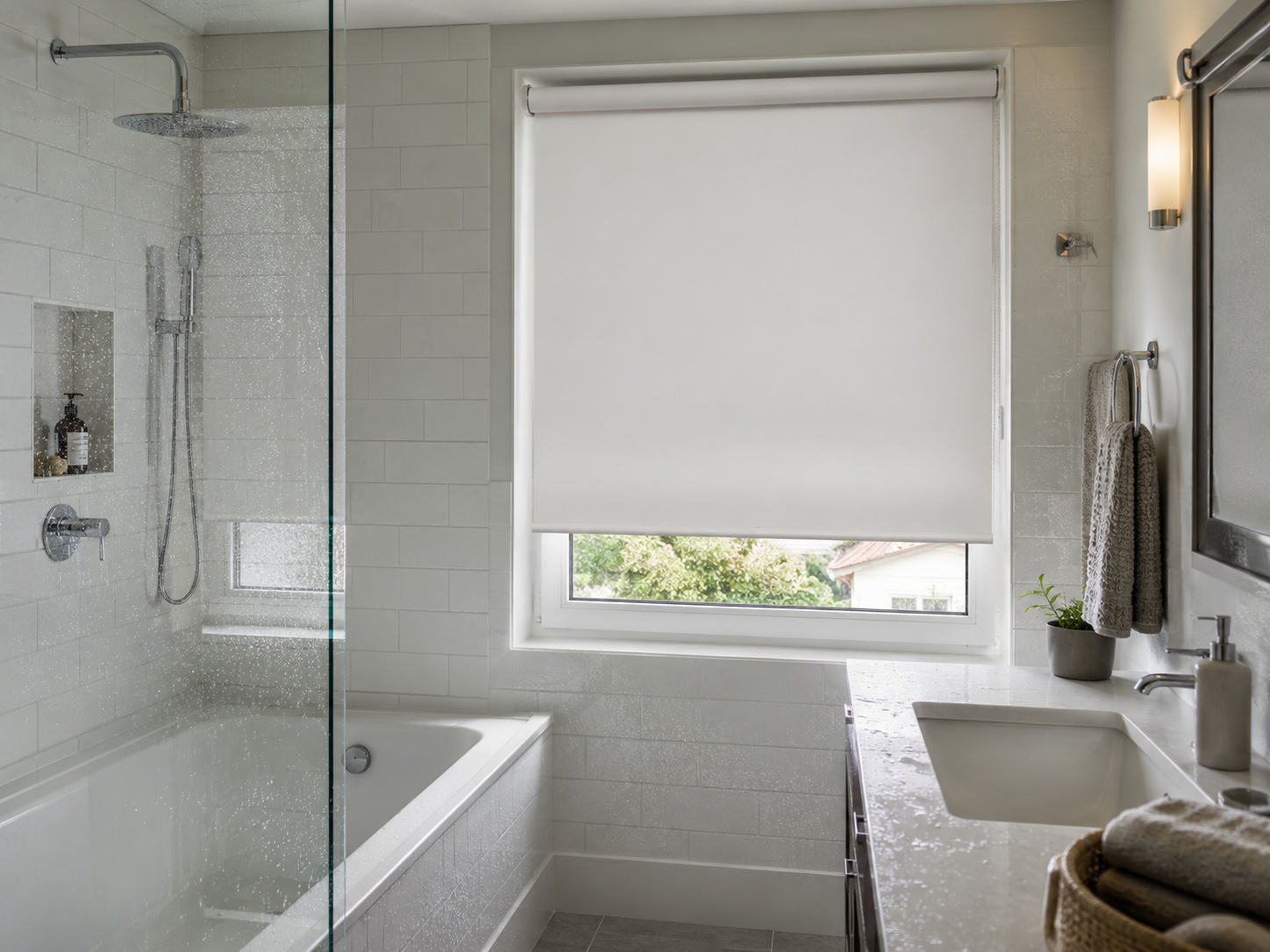
This zone includes windows next to a bathtub, sink, or shower where water often hits the blind. Vinyl roller shades are best here because their flat surface dries quickly and is easy to clean.
Faux wood blinds can also work in this area if the slats are made from moisture-resistant PVC or vinyl. Still, check the whole blind, since parts like brackets, screws, cords, and the headrail may not handle water as well as the slats.
Fabric zebra, cellular, and Roman shades are not good choices here. Water can get trapped between layers, settle in folds, or leave hard-to-clean marks.
2. High-humidity zone
This is the typical family bathroom. Your blinds may stay dry most of the time, but still deal with plenty of steam and condensation.
Faux wood blinds are usually the best all-around choice for this zone. Their slats let you adjust privacy without blocking the whole window, and you can clean them with a damp cloth. Vinyl roller shades are even faster to clean, but they offer less control over privacy and light.
Zebra blinds can work in this area if the room is well-ventilated and the window is far from the shower. They need more careful cleaning than vinyl blinds, since dust and moisture can build up on the layered fabric.
3. Low-exposure zone
Powder rooms and large bathrooms with good ventilation offer more material options. Zebra blinds, cellular shades, and other fabric choices can work here because the window gets little direct moisture.
However, privacy still matters. A light-filtering shade that looks solid during the day might show silhouettes at night when the bathroom light is on. Always test the material from outside before using it in a street-facing room.
Best Bathroom Blinds: Side-by-Side Comparison
| Style | Direct splash tolerance | Humidity | Cleaning | Use for |
| Two-inch faux wood | Moderate to high, subject to hardware | High | Moderate | Street-facing bathroom requiring adjustable light |
| Vinyl roller shades | High with approved vinyl material | High | Low | Window near sink, tub or shower |
| Zebra blinds | Low | Moderate | Moderate | Well-ventilated bathroom away from water |
| Vinyl shutters | High | High | Moderate | Permanent premium renovation |
| Cellular shades | Low | Low to moderate | Higher | Powder room or large ventilated bathroom |
Two-Inch Faux Wood Blinds: Best Choice Overall
Two-inch faux wood blinds are a great all-around option for most bathrooms. They resist moisture and let you control both light and privacy. The wider slats can be tilted to block views while still letting in daylight, which is especially helpful for street-facing or lower-floor bathrooms. At Ecoline, 58% of the bathroom blinds we sell are faux wood.
They are made from PVC, vinyl, or composite materials instead of real wood. These materials do not swell, crack, or warp easily when exposed to steam or splashes. Their smooth surface makes cleaning simple: just wipe away dust, water spots, or soap residue with a damp cloth.
The downside is clear: cleaning usually takes more time. You have to wipe each slat one by one, so faux wood blinds require more effort than roller shades. In busy bathrooms, it helps to clean them lightly and often rather than letting dust and moisture build up.
Faux wood blinds are best suited to bathrooms where:
- Adjustable privacy is a priority
- The window receives steam and occasional splashes
- The homeowner wants more daylight control than a roller shade provides
- The blind can be reached easily for cleaning
- The opening is narrow or medium in width
Vinyl Roller Shades: Best for Direct Splashes and Fast Cleaning
Vinyl roller shades are a practical pick for bathroom windows that get splashed often. Their flat surface has no slats or folds, so moisture and dirt do not collect easily. Most marks wipe off quickly with a damp cloth.
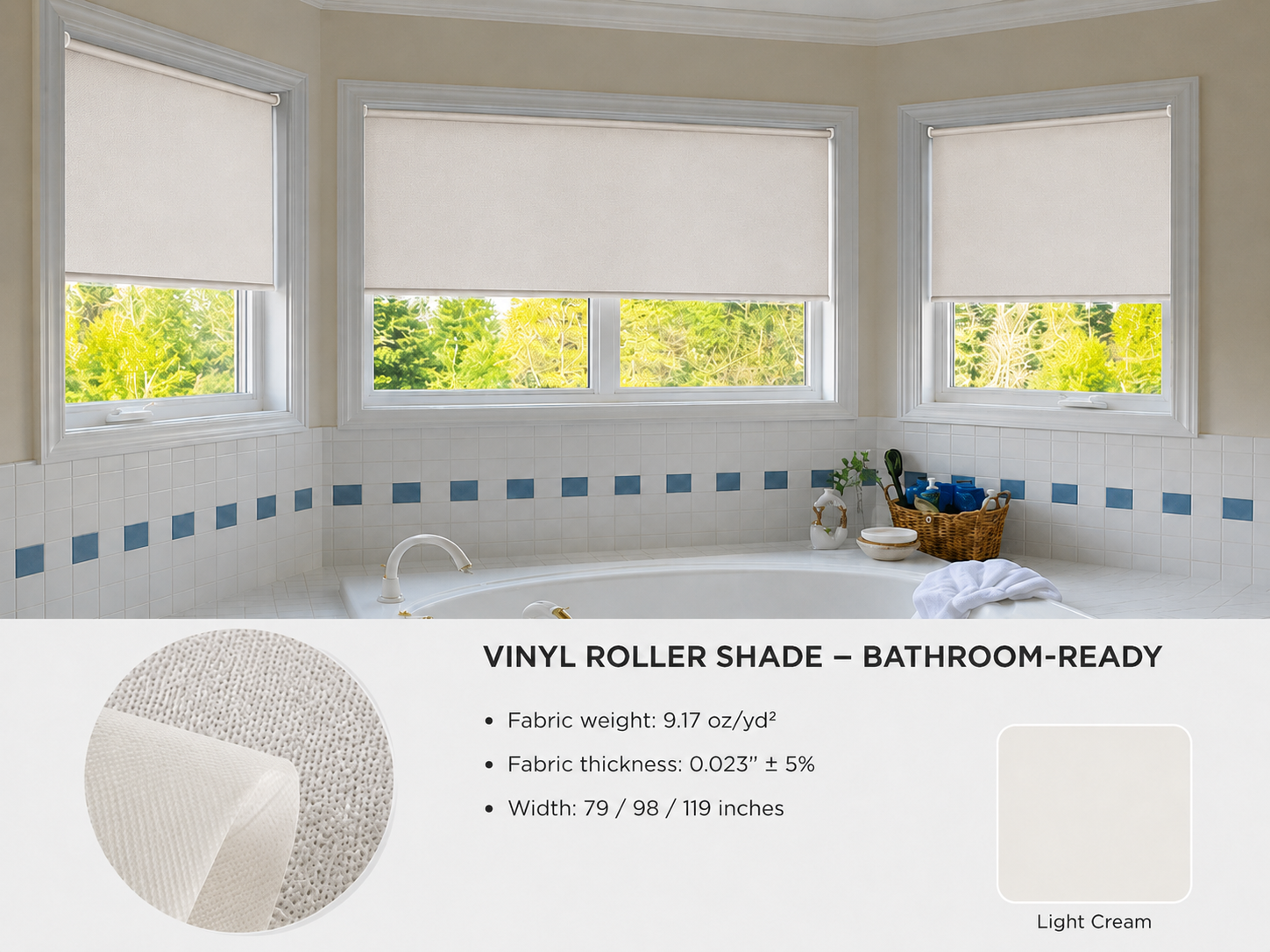
At Ecoline, we offer either 100% polyester roller shades or composite models that are made of 70% PVC and 30% polyester. These models are completely waterproof, provide excellent blackout properties and are highly tear-resistant.
A vinyl roller shade works especially well when:
- The window sits near a sink, bathtub or shower
- Fast, low-effort cleaning is a priority
- The bathroom needs full privacy rather than adjustable slats
- The opening is narrow or difficult to reach
- A simple profile suits a small room
Check the bottom bar and roller mechanism as carefully as the fabric. Even if the vinyl shade is easy to wipe, do not leave it rolled up while it is wet. Trapped moisture can cause marks or build up residue around the tube and hardware. Let the shade dry fully before rolling it up again.
Zebra Blinds Can Work in Bathrooms, but Placement Matters
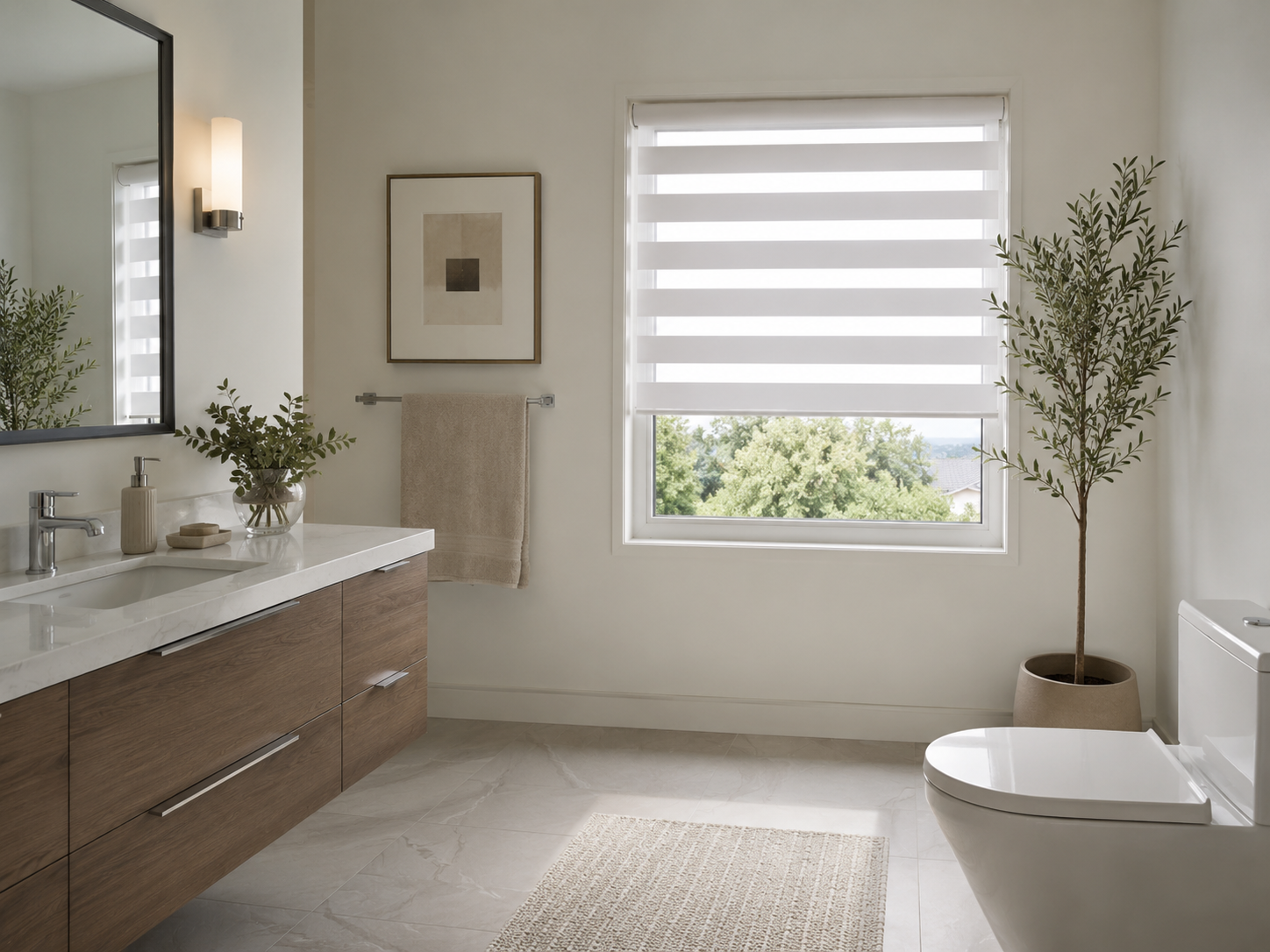
Zebra blinds appeal to homeowners who want softer light control than a roller shade and a cleaner look than horizontal slats. Their alternating sheer and opaque bands can be aligned for filtered daylight or overlapped for greater privacy, making them useful in bright bathrooms where the window is set away from the main water source.
Zebra blinds work best in bathrooms where they are not often wet. Their layered fabric dries more slowly than vinyl, and moisture can get trapped between the panels. Soap, hairspray, and dust can also build up on the surface, so zebra blinds are harder to clean than roller shades.
A well-ventilated ensuite with a window far from the shower is a good place for zebra blinds. In small bathrooms where steam lingers, they are less suitable. The same goes for windows next to a sink, where splashes can leave water spots on both layers of fabric.
Zebra blinds are most suitable when:
- The window remains dry during normal bathroom use
- The exhaust fan clears steam quickly
- Adjustable daylight is a design priority
- The fabric is approved for humid rooms
- The blind can be lowered fully for nighttime privacy
Zebra blinds are not the best option for windows near showers, tubs, or sinks that are used frequently. In these spots, vinyl roller shades are easier to clean, and faux wood blinds give you adjustable privacy without exposing much fabric to moisture.
Vinyl Shutters and Cellular Shades Suit More Specific Bathroom Conditions
Some bathroom window treatments only work well if the room layout and moisture levels are right. Vinyl shutters and cellular shades are such examples, but for different reasons.
Vinyl shutters: durable, permanent and more expensive
Vinyl shutters can handle humidity and routine splashes while providing strong privacy through adjustable louvres. Their rigid frames also give the window a built-in look, which suits traditional bathrooms or larger renovations where the window treatment is expected to remain in place for many years.
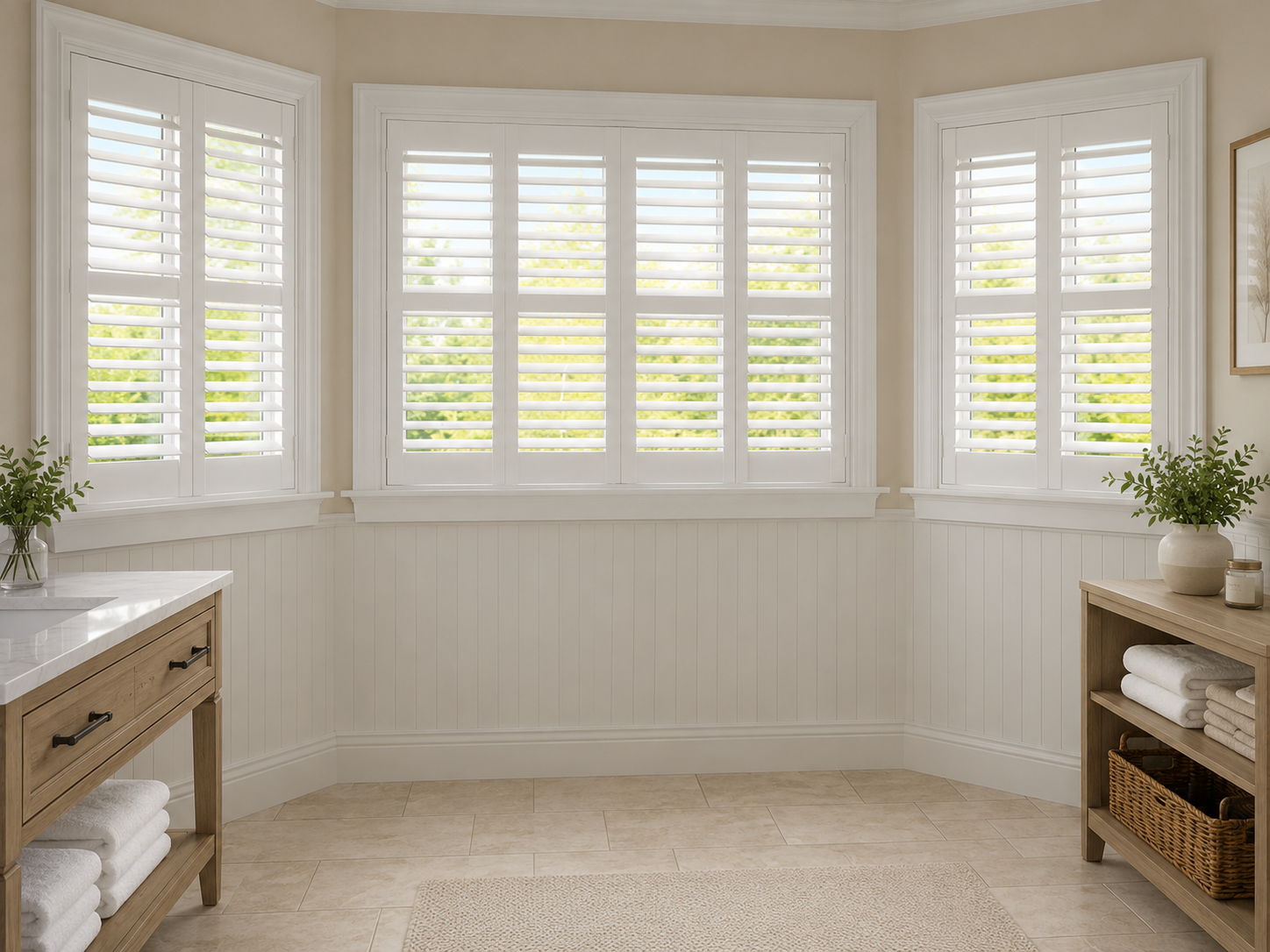
Shutters have some practical limits. They need enough depth and space to open without bumping into faucets, mirrors, towel bars, or window handles. On small bathroom windows, a wide shutter frame can also block some of the glass.
Cleaning shutters takes more work than cleaning a roller shade. Water spots and dust can build up on the louvres, frame joints, and hinges, so you have to clean each part. Vinyl is still easier to care for than painted wood, but shutters have more pieces to clean than a simple panel.
Vinyl shutters make the most sense when:
- The bathroom is part of a long-term renovation
- The homeowner wants adjustable privacy and a permanent finish
- The window has enough depth and surrounding clearance
- The higher upfront cost fits the project budget
- The full shutter system is approved for humid rooms
Shutters can look bulky on narrow windows and might be too much for a small rental bathroom or a room that will be renovated again soon.
Cellular shades: better for powder rooms than steamy bathrooms
Cellular shades are often promoted for their insulation, boosting energy efficiency by 17% – 36%, and compact appearance. Their pleated cells can reduce cold drafts around a bathroom window, and top-down configurations allow daylight to enter from above while keeping the lower part of the window covered.
The folded design of cellular shades is more challenging to manage in damp bathrooms. Moisture, dust, and residue can get trapped inside the cells or along the pleats, making them harder to clean than vinyl or faux wood. If the shade gets wet, it can also take longer to dry.
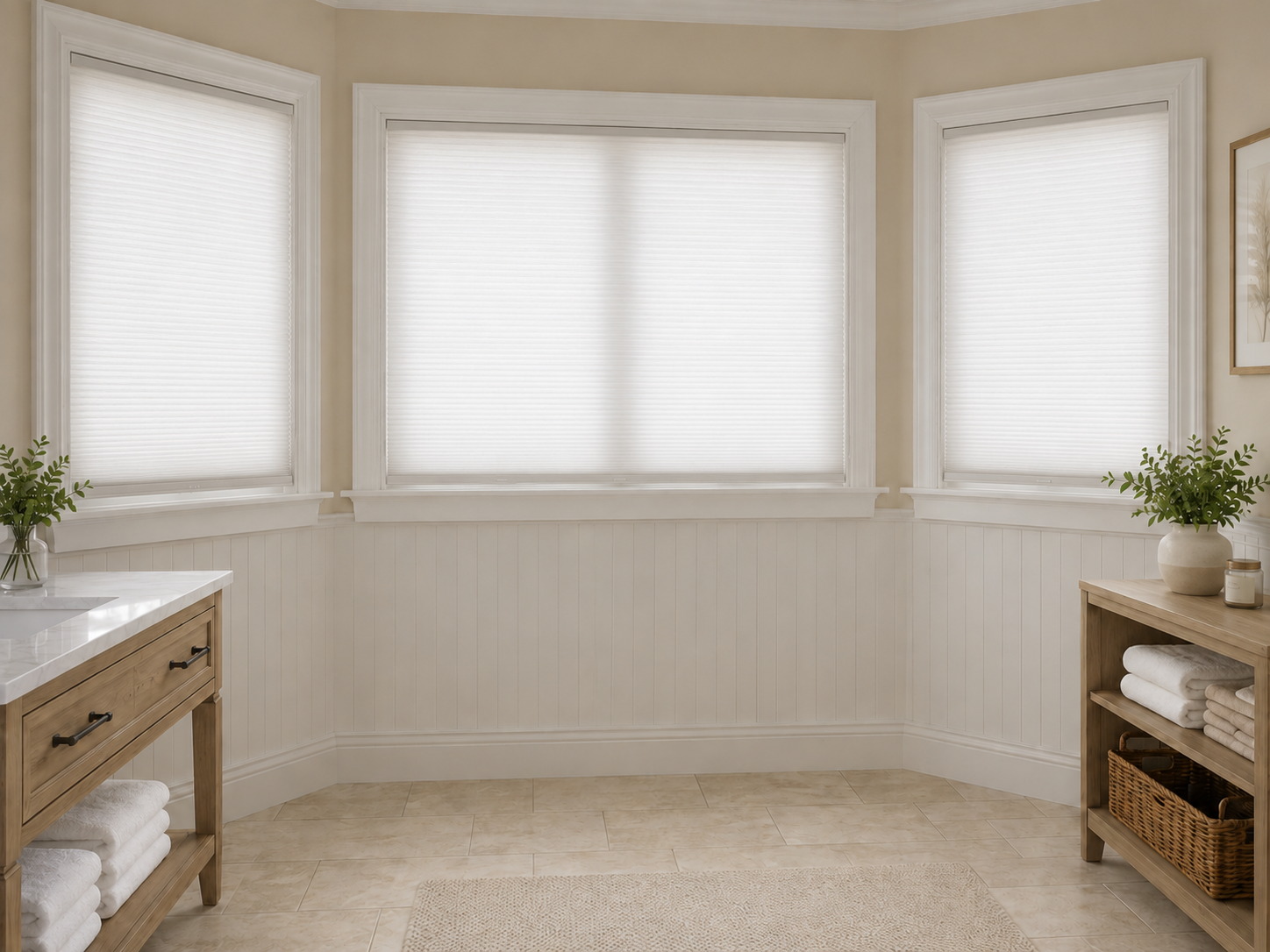
Cellular shades work better in powder rooms, guest bathrooms that are not used much, or large ensuites where the window stays dry and the fan removes humidity quickly. They are not a good choice for small family bathrooms with daily showers and lots of condensation.
Before picking a cellular shade, make sure the fabric is approved for humid rooms and can be cleaned without harming the pleats.
Don’t Use These Window Blinds for Your Bathroom
Some window treatments look good in bathroom photos but do not hold up well to daily steam, condensation, and cleaning products. The type of material is more important than the style name.
1. Real wood blinds and shutters
Natural wood can soak up moisture, swell, and dry unevenly. Over time, this can cause slats to warp, finishes to crack, or joints to loosen. Real wood might be fine in a big, well-ventilated powder room, but it is not a good choice for bathrooms with daily showers.
Even painted or sealed wood needs care. The coating slows down moisture, but scratches, cut edges, and joints can still let water in.
2. Woven wood and bamboo shades
Woven shades add texture, but their open fibres can trap dust and soak up moisture. If they get wet often, they may stain, smell, or change colour unevenly. The loose weave also means privacy is not consistent, especially at night.
Adding a liner can help with privacy, but it is another layer that needs to dry after the room gets humid. That is why woven shades are better for dry rooms.
3. Roman shades and absorbent fabrics
Roman shades have folds, seams, and often a lining. These layers can trap moisture longer than flat shades, and soap or dust can build up along the folds.
Fabric window treatments are also harder to clean while hanging. Many cannot be wiped well without leaving water marks, and some need professional cleaning. That much upkeep is not practical for a busy bathroom.
4. Ordinary fabric roller shades near water
Just because a shade has a roller mechanism does not mean it is good for bathrooms. Uncoated polyester and decorative woven fabrics can handle some humidity, but repeated splashes can stain them or cause uneven drying.
For windows near a bath or sink, make sure the fabric is vinyl, PVC-coated, or clearly approved for wet or humid rooms.
5. Sheer and solar shades where full privacy is required
Sheer and solar shades cut down glare and let you see outside during the day. But after sunset, privacy can disappear. When the bathroom is brighter than outside, people may see silhouettes or details through the fabric.
These shades are risky for ground-floor bathrooms, windows facing neighbours, or any bathroom used at night. Seeing them in a showroom during the day does not show how private they are at night.
6. Products described only as moisture-resistant
The term ‘moisture-resistant’ can mean many things. Sometimes it just means the material can handle a bit of humidity, not direct water or constant dampness.
Before ordering, check:
- Whether the entire blind or only the fabric or slats resist moisture
- Whether direct splashes are allowed
- Which cleaning products are approved
- Whether humidity or mould damage is excluded from the warranty
- Whether the shade must be left open or lowered to dry
Even blinds made from non-porous materials need regular cleaning. Mildew can grow on dust, soap, or other debris on the surface, as well as on nearby caulking, trim, or fabric. Moisture-resistant blinds help prevent damage, but you still need good ventilation and regular cleaning.


1750 Coast Meridian Rd #102,
Port Coquitlam, BC V3C 6R8
100, 17866 106A Avenue,
Edmonton, AB, Canada,
T5S 1V3
3307 Dunmore Rd SE #12,
Medicine Hat, AB,
Canada, T1B 3R2
2081 Merivale Rd #201, Ottawa, ON, Canada, K2G 1G9
by appointment only
108, 55 Akerley Blvd, Dartmouth,
NS, Canada, ВЗВ 1M3