


-RATED BY




Built in Canada
All Ecoline windows and doors are built in Ontario, Canada
- Top-of-the-line machinery (Forel, Gracco, Bottero) to produce the best products
- Over 60,000 sq. ft manufacturing plant
- Energy Star-rated and NAFS-11-tested
- Manufactured for local weather conditions
What Service Calls Reveal: Top-5 Replacement Window Problems
Oct 1, 2026
15 min read
33
If you notice a problem after replacing your windows, it does not always mean the installation was done wrong. Sometimes the issue is with sealing or alignment. Other times, it could be the glass, hardware, weatherstripping, or the finishing around the window. Often, a simple adjustment is all that is needed instead of a big repair.
To find out what concerns homeowners have, we looked at the service calls Ecoline received from 2025 to 2026. These calls came from our customers and from people whose windows or doors were installed by other companies but who reached out to us for repairs or advice.
We did not get a large number of these calls, but the same types of issues came up often: worn weatherstripping or seals, problems with caulking or moisture, cracked glass or failed sealed units, issues with how the window operates or lines up, and defects in the trim or finish.
So instead of just asking, “Is my new window defective?” look at it from a different angle: does this problem mean you need regular maintenance, a small adjustment, a product fix, an installation repair, or is something else happening around your vinyl window?

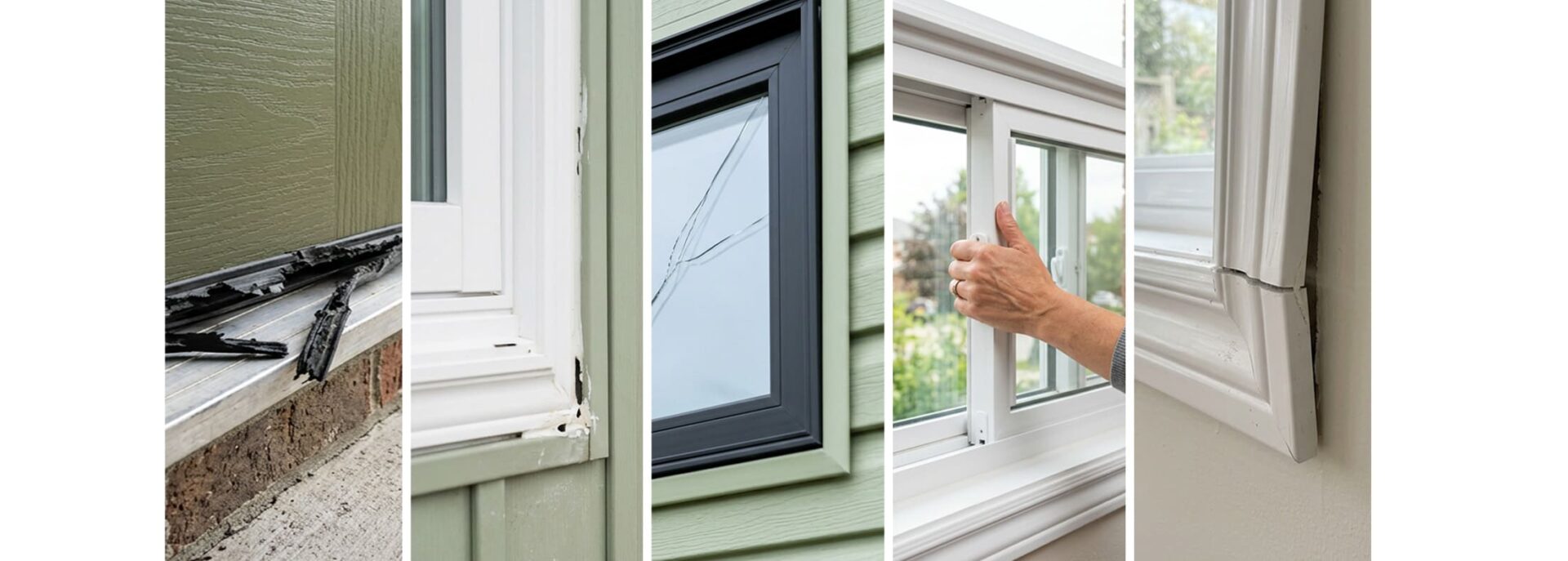
5 Common Window Installation Problems Homeowners Face
| What you notice | What it may involve | Typical next step |
| Draft or damaged weatherstripping | Weatherstrip wear, poor sash compression, alignment or perimeter air leakage | Inspect the seal and sash operation; adjust or replace damaged weatherstripping |
| Gaps in caulking, moisture or mould near the frame | Failed sealant, condensation, air leakage or exterior water intrusion | Identify where and when moisture appears before resealing |
| Cracked glass or fog between panes | Impact damage, glass stress or insulated glass seal failure | Professional inspection; glass unit replacement may be required |
| Window is difficult to open, close or lock | Hardware, sash alignment or seasonal movement | Adjustment by your installers |
| Cracked casing, missing covers or finish defects | Cosmetic finishing, movement or localised installation finishing | Repair or refinish depending on the cause |
1. Weatherstripping Is Torn, Loose or No Longer Sealing Properly
Weatherstripping has a simple but important job: it creates a seal between an operable sash and the window frame. Natural Resources Canada identifies weatherstripping as one of the components used to reduce air leakage around windows and doors.
Because the material sits at moving contact points, it can become compressed, displaced, torn or worn with use.
Weatherstripping concerns appeared repeatedly in the service inquiries we reviewed. Door sweeps and bottom door seals were particularly common within the broader window-and-door service data. With windows, the equivalent concern is usually weatherstripping around an operable sash.
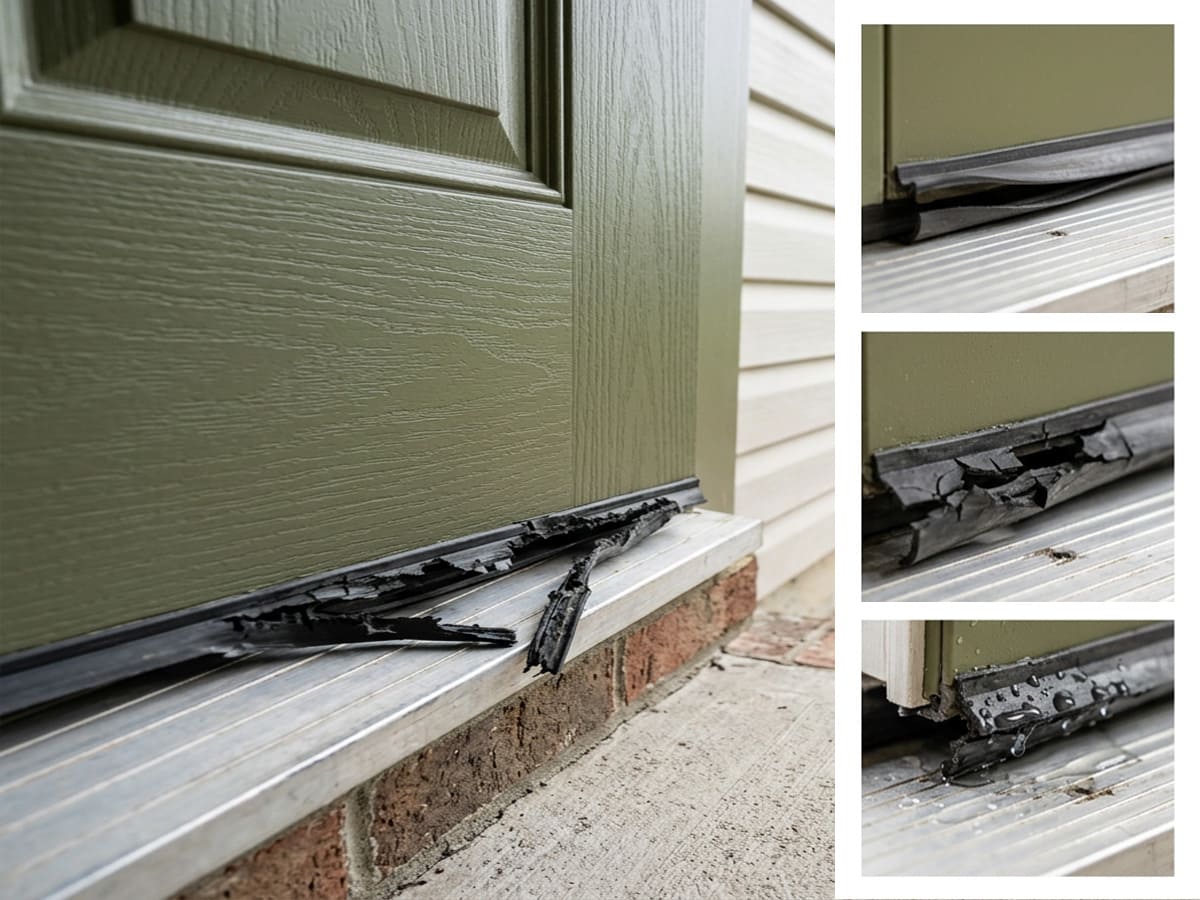
A homeowner may notice:
- a piece of weatherstripping pulling away from the frame;
- visible damage or flattening;
- more outside air near one edge of a closed sash;
- a window that no longer closes as tightly as before; or
- weatherstripping that catches when the window operates.
However, it is important to tell the difference between worn weatherstripping and a bigger air-sealing problem.
If air is entering between the sash and frame, the weatherstripping or sash compression may need attention. If the airflow appears around the window casing or between the frame and wall, replacing the weatherstripping is unlikely to solve the actual problem.
It’s usually recommended to check windows for leakage both around the frame and at movable joints, because these are separate potential leakage locations.
Does worn weatherstripping mean the window was installed badly?
Not always. Weatherstripping is a serviceable component. It can wear, move or need adjustment over time. A sash that is slightly out of alignment may also stop compressing the seal evenly, even though the weatherstripping itself is still usable.
First, find out exactly where the air is coming in before adding caulk or replacing seals. If a relatively new window has persistent airflow despite being completely closed and locked, the installer or service technician should check both sash alignment and the window-to-wall connection.
2. Caulking Gaps, Moisture or Mould Appear Around the Frame
Caulking and sealing concerns were another recurring category in the service calls we reviewed. These ranged from visible gaps that required new sealant to moisture or mould appearing around interior frame corners.
These symptoms might be related, but you should not assume they are the same problem.
A visible gap in exterior caulking may allow air or water to reach areas it should not. A continuous perimeter seal is an important part of protecting the window-to-wall connection, and damaged or separated caulking should be investigated.
But moisture around a window can come from several different sources:
Moisture on the room-side glass or frame
This is often condensation. It occurs when humid indoor air contacts a sufficiently cold surface. The risk increases as outdoor temperatures fall or indoor humidity rises.
New windows can sometimes make condensation more noticeable because they reduce the uncontrolled air leakage that previously allowed indoor moisture to escape. NRCan specifically notes this effect following window upgrades.
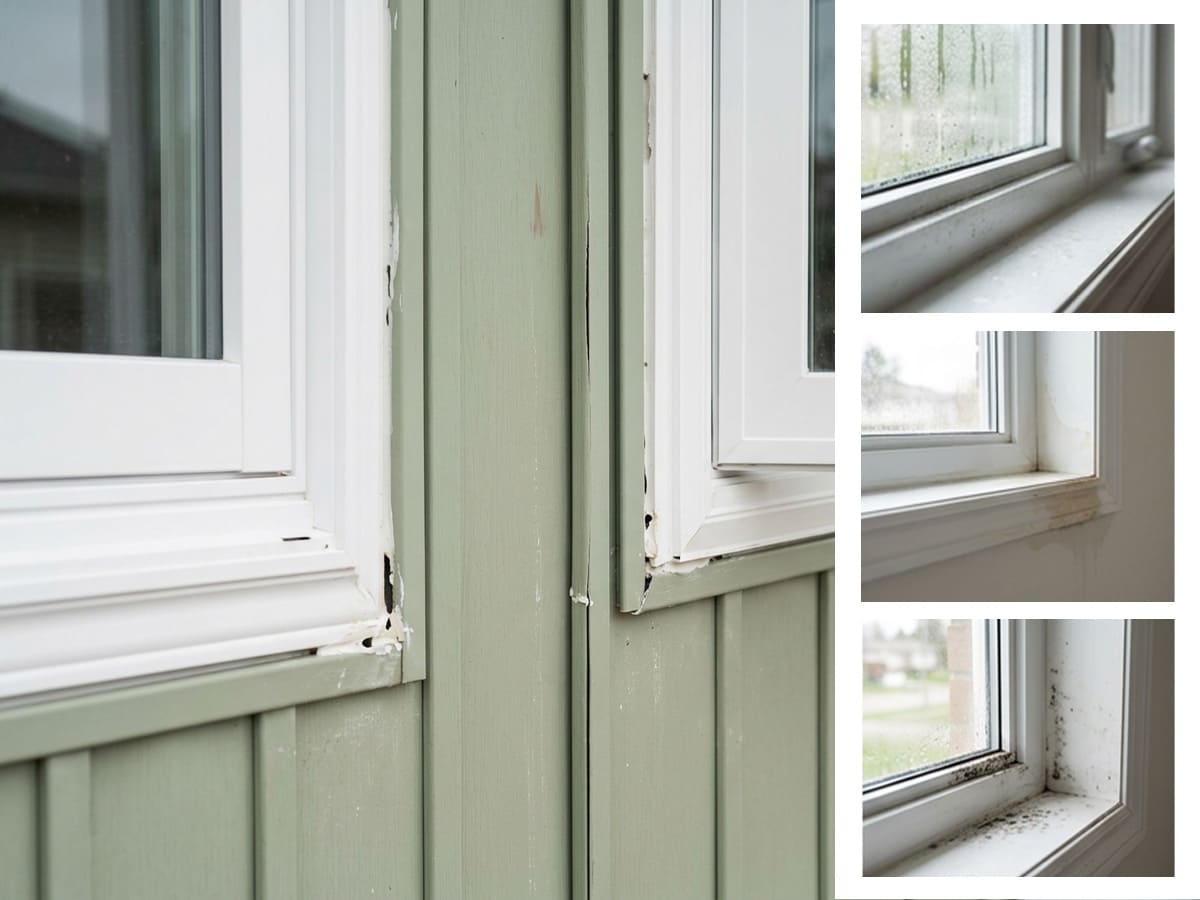
Moisture or staining around a frame corner
This deserves closer investigation. Possibilities include repeated condensation, an air leak creating an unusually cold surface, a failed seal around the opening or water entering from outside.
Water appearing after rain or snowmelt
This is more consistent with water intrusion than normal interior condensation. A service inspection should determine whether the source is the window, perimeter sealing, drainage, flashing or another part of the surrounding wall assembly.
The wet spot you see is not always where the water actually got in.
What about mould near the window?
If you see mould near a window frame, it means there has been enough moisture for it to grow. However, this alone does not explain the cause.
Just cleaning the surface or adding more caulk might cover up the symptom, but it will not fix the real cause of the moisture.
For recurring moisture, first establish whether you are dealing with:
- interior condensation;
- air leakage and a cold surface;
- exterior water intrusion; or
- another source of dampness around the opening.
For homeowners dealing specifically with perimeter sealing, our window caulking guide goes deeper into separated caulking, gaps and resealing.
3. Glass Cracks or Fog Appears Between Window Panes
Glass-related calls generally fall into two very different categories: the glass has physically cracked, or the sealed glass unit has lost its seal.
Neither of these issues should be blamed on installation right away.
Fog or moisture between the panes
This problem is usually easier to spot:
- If moisture is trapped inside a sealed double- or triple-glazed unit and cannot be wiped from either surface, the insulated glass unit has likely lost its seal.
At Ecoline, we always recommend replacing a window when fog occurs between its panes because of seal failure. This is different from condensation you can wipe off the room-side glass since it directly affects energy performance, home comfort and appearance of your windows.
| Where you see moisture | What it usually indicates |
| Room-side surface | Indoor humidity meeting a cold surface |
| Exterior glass surface | Can occur under certain cool, humid conditions on efficient glazing |
| Between sealed panes | Sealed-unit failure |
| Around frame/wall after precipitation | Possible water intrusion requiring investigation |
What if the glass cracks without an obvious impact?
A professional should check this, since a crack does not show its cause on its own. Glass can break because of obvious impact, edge damage, thermal stress or other stresses acting on the pane.
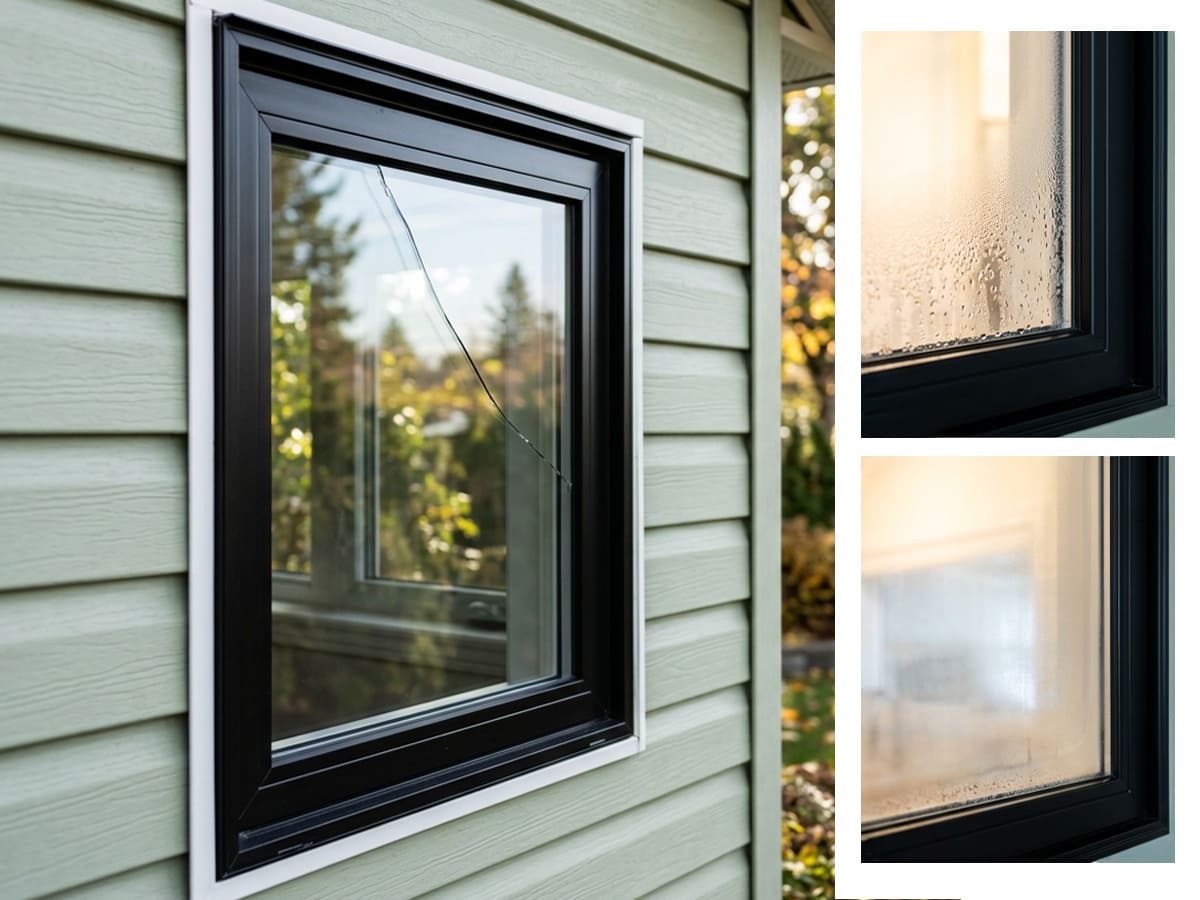
The crack pattern, where the fracture begins, and the type of glass all matter. You do not have to figure out exactly why the glass cracked. Instead, you can:
- take a photo of the entire pane and the point where the crack appears to start;
- avoid pressing on or operating a badly cracked unit;
- note whether there was any known impact or extreme temperature event; and
- contact the window company or glass professional for inspection.
A failed sealed unit usually requires replacement of the glass unit rather than replacement of the entire window frame. The appropriate repair for cracked glass depends on the type and extent of the damage.
4. Window Becomes Hard to Open, Close or Lock
This is a good example of a problem that might seem serious at first, but often just needs a simple adjustment. The service calls we reviewed included windows with stiff locks or latches, difficult opening or closing, and windows or doors that no longer aligned as they originally did.
Homes and windows can shift a little over time. Changes in temperature and normal building movement can affect how your windows line up. Sometimes, the hardware just needs a bit of fine-tuning after some use.

Common symptoms include:
- a sash rubbing against one side of the frame;
- a lock that needs excessive force;
- a casement that does not pull evenly against the weatherstripping;
- a slider that feels noticeably harder to move; or
- a unit that operated normally after installation but later became difficult to latch.
The useful diagnostic question is whether the problem comes from hardware, the operable sash or the frame itself.
If the sash otherwise sits correctly but the lock no longer lines up, adjustment may be enough. If the window visibly sits unevenly in the opening, repeatedly binds or cannot be brought back into correct operation through adjustment, the installation needs closer inspection.
Ecoline crews check opening, closing, locking, alignment, sealing and visible finishes as part of the post-installation inspection process.
Avoid forcing hardware that feels stiff
If you keep forcing a handle or lock, you might turn a small adjustment issue into real damage.
For a recently installed window, take a short video showing what happens during normal operation. A technician can often learn much more from seeing where the sash catches or how the lock behaves than from a description that simply says the window is “hard to close.”
5. Window Trim, Casing or Finishing Starts to Look Wrong
Not every issue that comes up after installation affects your window’s energy efficiency or ability to keep out the weather.
Some of the service calls we reviewed involved finishing details such as cracked interior casing or jambs, missing screw covers and, on entry-door projects, peeling exterior finishes.
These details still matter because they are part of your finished renovation. However, they are different from problems that affect how your window works.
Cosmetic defect or sign of movement?
A missing screw cover is straightforward finishing work. A hairline joint opening in painted casing may also be primarily cosmetic.
More attention is warranted if a finishing defect appears together with another symptom. For example:
- casing separates while the window becomes difficult to operate;
- staining develops around a trim joint;
- a crack continues to widen;
- trim movement exposes a previously sealed area; or
- moisture repeatedly appears around the same section.
In these situations, just fixing the paint or casing might not solve the real reason the finish changed.
The point is not to assume every crack means there is a structural problem. Instead, check if anything else around the window has changed too.
For a recently completed installation, take a photo of the condition before applying filler, paint or additional caulking. That gives the original contractor a chance to see the issue as it developed.
Adjustment, Repair or Further Investigation: What Does the Problem Usually Need?
Post-installation issues can be frustrating because it is often hard for homeowners to know how serious a problem really is.
Some problems require only minor air-sealing or maintenance work, while more serious glazing, sash or unit problems can justify larger repairs or full window replacement. This framework is a more useful starting point than assuming every problem requires a new window.
| Problem | Expert installers recommend |
| Loose or damaged weatherstripping | Reposition, adjust or replace the seal |
| Sash no longer compresses evenly | Alignment/hardware adjustment and inspection |
| Small finishing defect | Cosmetic repair or finishing service |
| Separated perimeter caulking | Inspect source, prepare joint and reseal where appropriate |
| Recurring moisture at a frame corner | Diagnose condensation, air leakage or water intrusion before repairing finish |
| Fog permanently trapped between panes | Replace failed sealed glass unit or full window replacement if warranty is void |
| Cracked pane | Professional assessment and glass replacement as required |
| Water enters during rain | Prompt investigation of sealing, drainage and surrounding envelope |
How to Request a Window Service: Step-by-Step
You do not have to figure out the technical cause on your own. However, you can help the service team by carefully documenting what you notice. Before calling, collect:
- The exact location. Which window is affected, and what part of it?
- When it happens. Constantly, only in winter, after rain, during strong winds or when operating the window?
- Photos. Include one wider shot showing the whole window and close-ups of the affected area.
- Video where applicable. This is especially helpful for leaks, rattling, stiff hardware and alignment problems.
- Weather conditions. Temperature, rain, wind or rapid weather changes can provide useful context.
- What has already been changed. Mention any caulking, painting, cleaning or DIY repairs completed since installation.
For Ecoline projects, our existing service process similarly asks customers to provide a description of the issue, when it began and photos or videos where available.
This does not mean you have to decide if the problem is covered, if it is a product defect, or if it was caused by installation. The main reason to document the issue is to help the professional figure it out faster.

What Matters Most When Something Changes After Installation
A well-installed window should work smoothly, seal properly, and look finished. Still, windows have moving parts, seals, glass units, and finishes that might need service from time to time.
The five issue categories we found in service conversations from 2025 through 2026 show why the type of symptom matters more than simply when it appeared.
- A worn weatherstrip may need replacement
- A stiff sash may only require adjustment
- Fog trapped between panes points toward the glass unit
- Moisture around a corner needs to be diagnosed before someone simply covers it with more caulk
- A cracked piece of casing may be cosmetic, unless other changes around the same opening suggest something more is happening.
If you have just had new windows installed and something seems off, write down what is happening before you try to fix it yourself. Note where the problem is, when it happens, and if it affects how the window works, seals, the glass, or the finish. These details help decide if you need maintenance, an adjustment, a repair, or a professional to take a closer look.



1750 Coast Meridian Rd #102,
Port Coquitlam, BC V3C 6R8
100, 17866 106A Avenue,
Edmonton, AB, Canada,
T5S 1V3
3307 Dunmore Rd SE #12,
Medicine Hat, AB,
Canada, T1B 3R2
2081 Merivale Rd #201, Ottawa, ON, Canada, K2G 1G9
by appointment only
108, 55 Akerley Blvd, Dartmouth,
NS, Canada, ВЗВ 1M3