


-RATED BY




Built in Canada
All Ecoline windows and doors are built in Ontario, Canada
- Top-of-the-line machinery (Forel, Gracco, Bottero) to produce the best products
- Over 60,000 sq. ft manufacturing plant
- Energy Star-rated and NAFS-11-tested
- Manufactured for local weather conditions
Why Window Replacement Quotes for the Same House Can Differ by Thousands
Sep 1, 2026
14 min read
13
If you ask three window companies to quote the same house, their estimates can differ by thousands of dollars. This does not always mean one contractor is overpriced or another is too cheap. Often, each company is quoting a different version of the project.
For example, the installation method can affect the final quote big time. At Ecoline, we always make it clear that full-frame window replacement usually costs about 15 to 20 percent more than a retrofit because more of the old window is removed and rebuilt. So, if a retrofit costs $15,000, a full-frame job could be about $17,250 to $18,000, even before you change the glass, window style, colour, or finishing.
So instead of asking, “Why is Company B $5,000 more?” first find out what Company B includes that Company A doesn’t.

10 Factors That Make Your Window Replacement Quote
| What Makes Up the Quote | What Can Change the Price | What May Be Included or Excluded |
| Window product | Size, style, frame system, fixed vs. operable sections | Window unit itself, hardware, screens |
| Glass package | Double vs. triple pane, Low-E coatings, gas fill, laminated or specialty glass | Standard glazing may be included; upgraded glass may be extra |
| Installation method | Retrofit vs. full-frame replacement | Removal of sash only or removal of the entire existing frame |
| Installation labour | Number of windows, storey, access, opening condition and complexity | Labour, setup, protection and installation materials |
| Interior finishing | Jamb depth, casing type, custom woodwork | New jamb extensions, casing, finishing or touch-ups |
| New jamb extensions, casing, finishing or touch-ups | Brick mould, aluminum capping, siding, brick or stucco | Exterior trim, capping, caulking and sealing |
| Removal and disposal | Number and size of existing windows | Old-window removal, hauling and disposal |
| Opening repairs | Rot, water damage, deteriorated framing or openings out of square | May be included as an allowance or charged separately after removal |
| Custom options | Colours, grills, hardware finishes and custom configurations | Standard options may be included; upgrades usually increase the quote |
| Warranty and service | Length and scope of product, labour and workmanship coverage | Product replacement, installation labour and future service calls vary by company |
This is why the bottom-line number should be the last thing homeowners compare. A $17,000 estimate and a $22,000 estimate may become much closer once you discover that one includes full-frame installation, new trim, disposal and long-term labour coverage while the other prices only the windows and basic installation.
“Triple-Pane Vinyl Window” Is Still Not a Complete Specification
Two quotes might both mention white triple-pane vinyl casement windows, but they could still be describing different products.
Price can change based on the frame, hardware, seals, glass thickness, spacer, Low-E coating, gas fill, colour, and specialty glass. Style is important too. Casement windows need hinges, locks, and a crank, while sliders use a simpler track system.
Fixed windows are usually simpler because they have no moving parts, but very large windows may need special glass or extra support. Bay and bow windows cost more because they combine several window sections, frames, and exterior finishes into one unit.
Comparing energy performance is more helpful for homeowners than just looking for terms like “premium glass.”
Look at energy specs like U-factor, Solar Heat Gain Coefficient and Energy Rating to understand your residential window performance. ENERGY STAR-certified windows and doors sold in Canada must have a U-factor of 1.22 W/m²·K or lower, or an Energy Rating of 34 or higher. NRCan also limits air infiltration and exfiltration for certified fenestration models to 1.5 L/s/m².
Before you compare prices, check these details:
- window style and configuration;
- double or triple glazing;
- Low-E and gas-fill specification;
- U-factor or Energy Rating;
- hardware;
- interior and exterior colour;
- privacy, laminated or other specialty glass.
If these details are not the same, the contractors are already quoting different products.
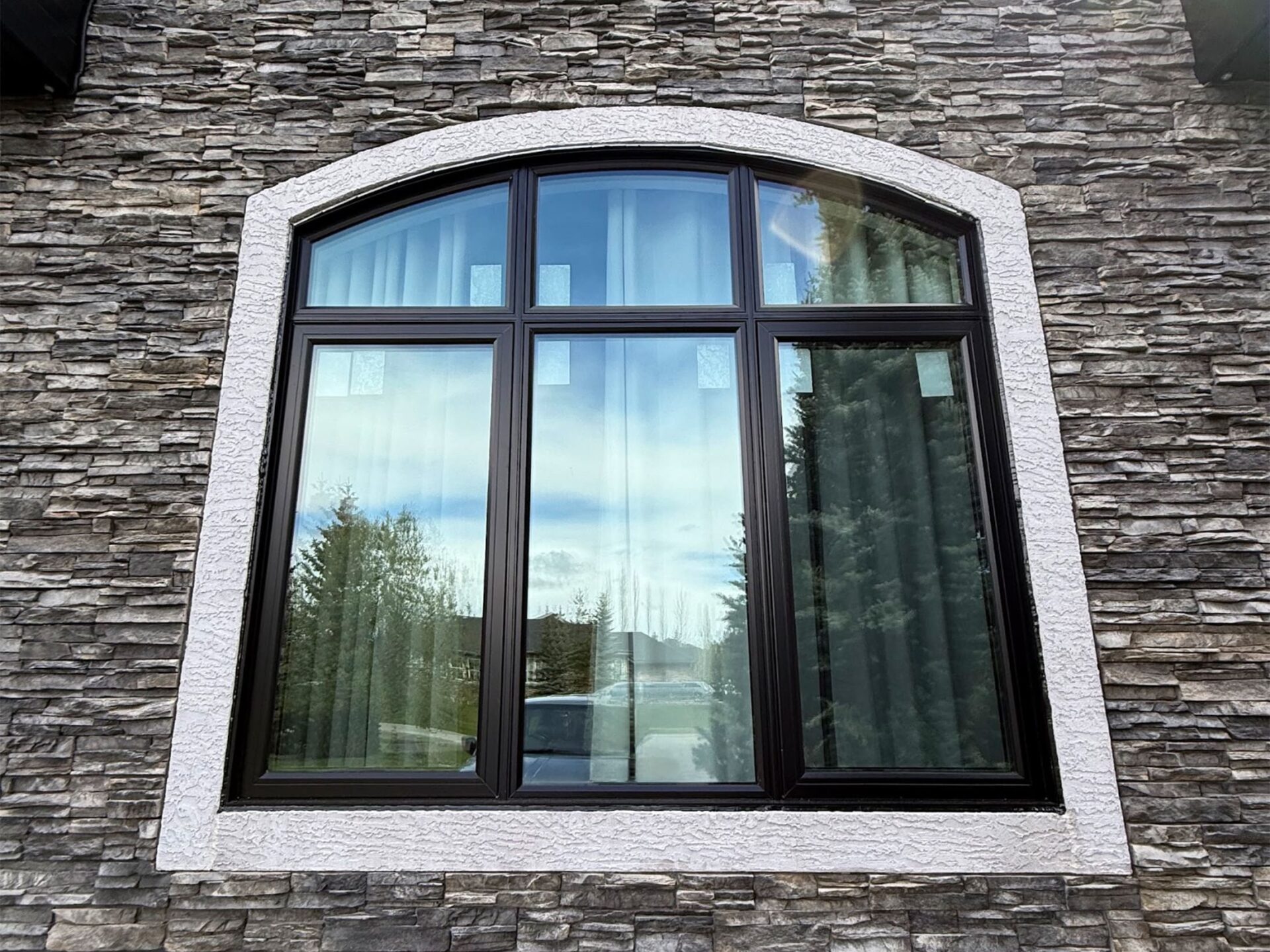
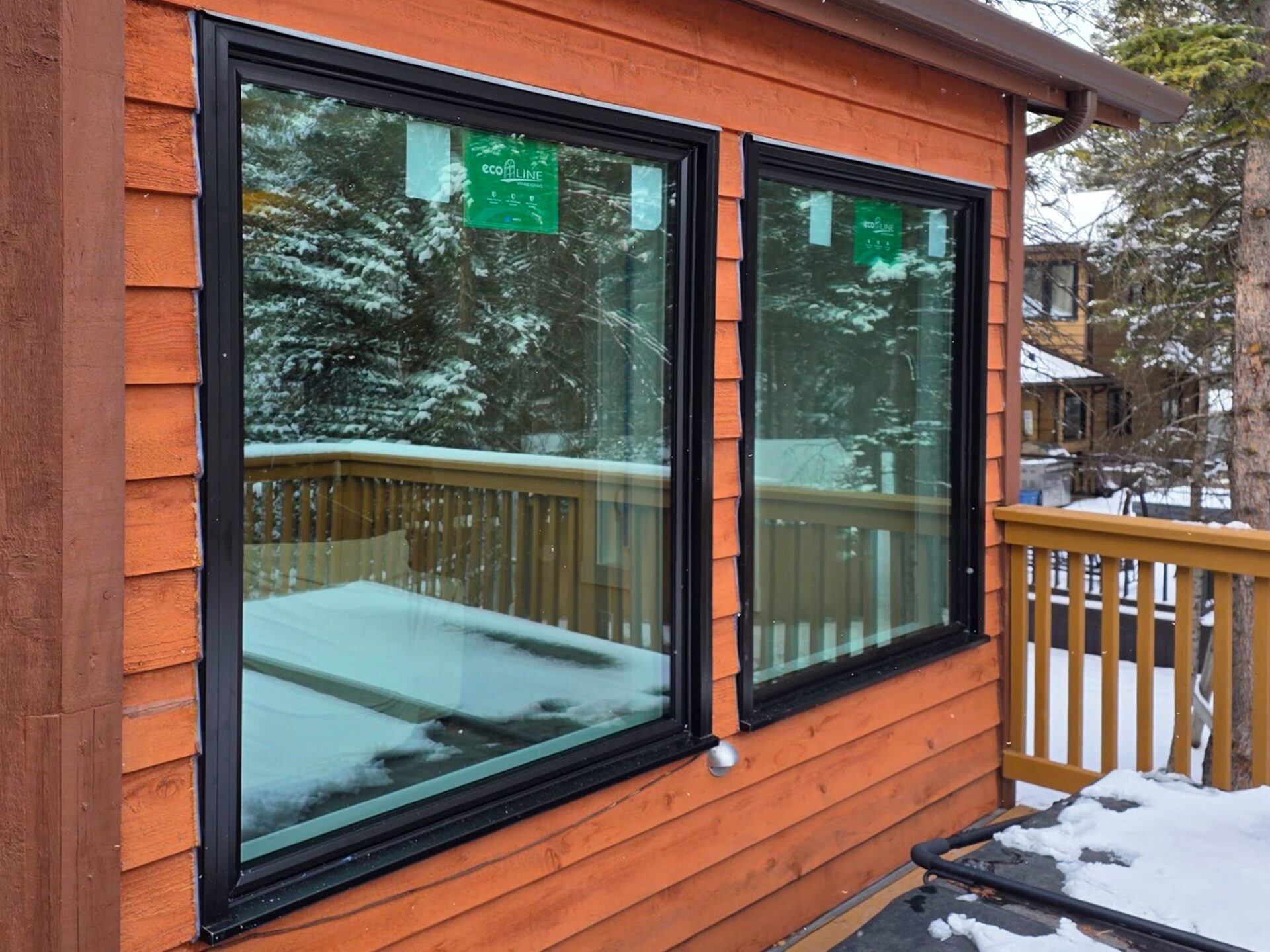 black windows
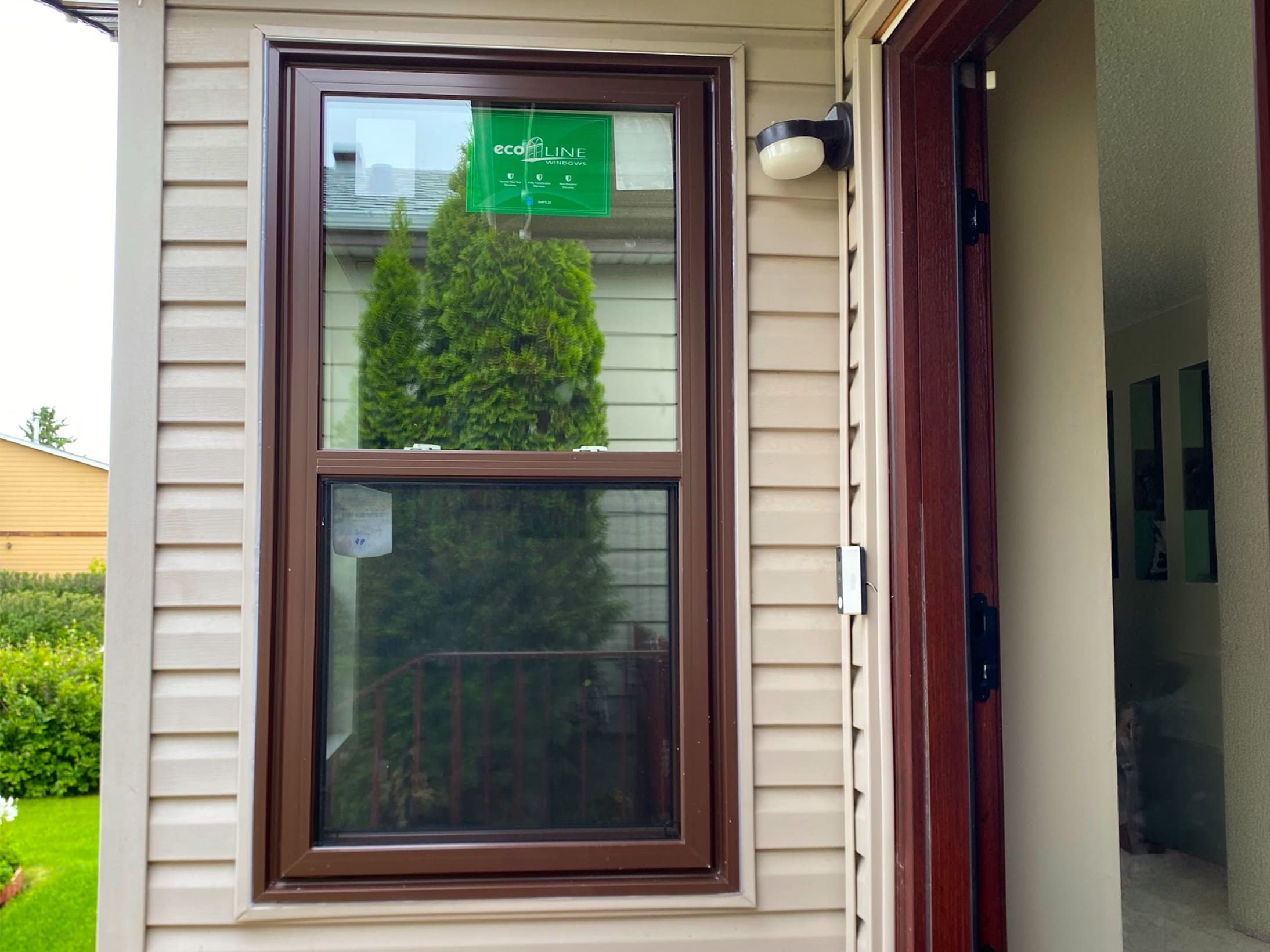 brown windows
The Installation Method Can Change the Price by Thousands
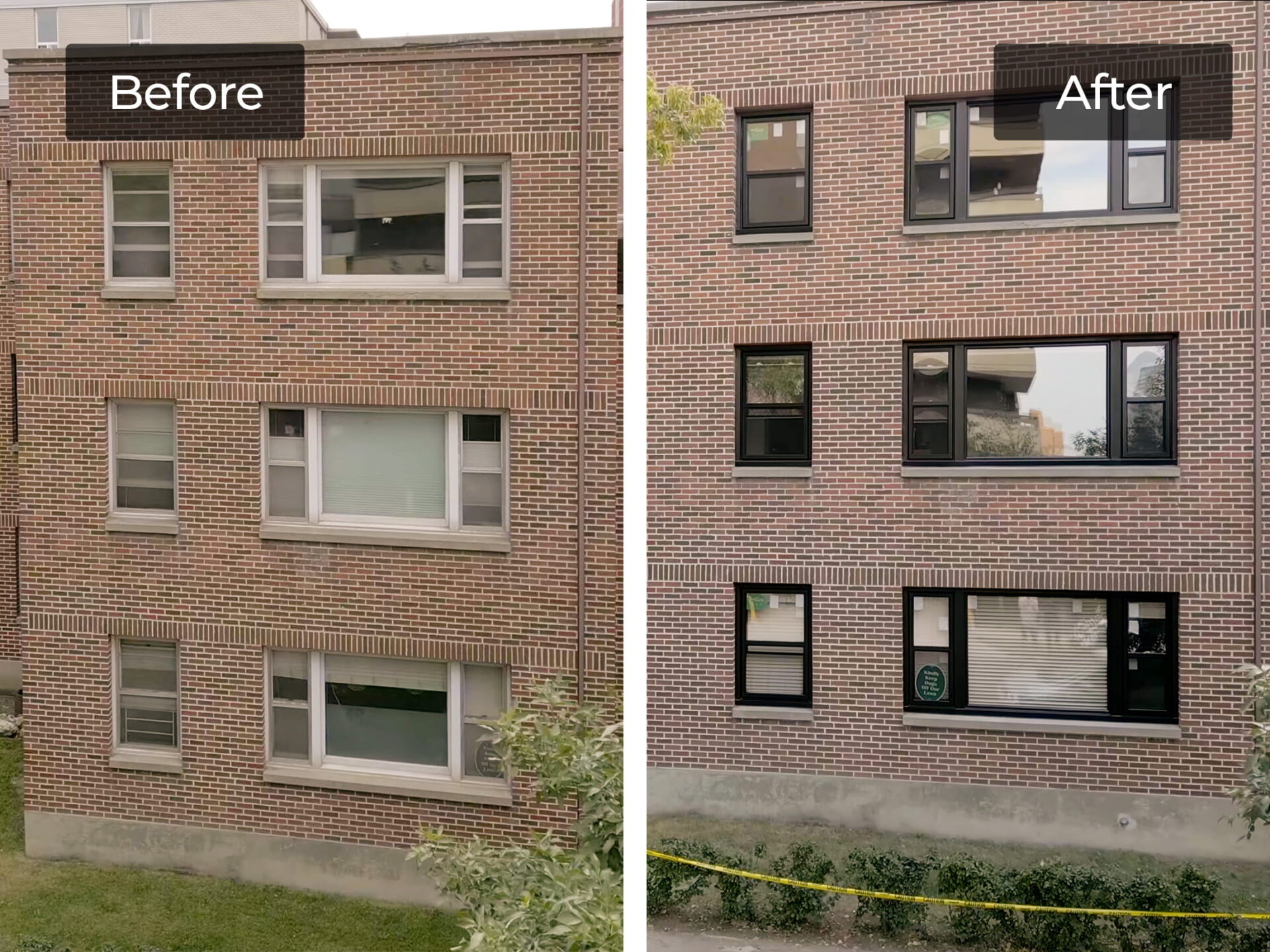
Another big factor is what happens to your current window. A retrofit installation keeps most of the existing frame and puts the new window inside it. This means less demolition and finishing work, so the job usually takes less labour.
A full-frame replacement takes out much more of the old window, sometimes including the frame, jamb extensions, casing, and exterior trim. Once the opening is exposed, it can be checked, prepared, insulated, and sealed before the new window and finishes go in.
The condition of your current frame helps decide which method is best. Retrofit works if the frame is solid and can be reused. If there is rot, water damage, or other problems behind the trim, extra work may be needed once the window is opened up.
This is why two quotes that both say “windows installed” can actually mean very different projects.
A good quote should make it clear if these steps are included:
- removal of the existing window;
- disposal;
- preparation and insulation around the opening;
- exterior sealing;
- jamb extensions and interior casing where required;
- exterior capping or brick mould;
- cleanup;
- the process and pricing method for unforeseen repairs.
The first question to ask any contractor about installation is straightforward:
- Are you quoting retrofit or full-frame replacement, and why is that method appropriate for my existing windows?
If the answers are different, that could explain much of the price difference.
Your House Can Affect the Price Even If the Windows Stay the Same
Window pricing depends on your house, too. The same window can take much more work to install in one spot than in another.
| Condition | Why It Can Increase the Quote | What to Check Before Signing |
| Second- or third-storey opening | More difficult access, handling and safety requirements | Whether access equipment and additional labour are included |
| Brick, stucco or masonry exterior | Removal and finishing can require more careful work | How the exterior will be restored and sealed |
| Deep jambs or custom woodwork | More interior finishing and material | Whether new jamb extensions, casing and finishing are included |
| Suspected rot or water damage | Damaged material may only become visible after removal | How repair work will be priced if discovered |
| Opening is out of square | Additional preparation may be needed before the unit can be installed correctly | Whether corrective work is included |
| Window size is changing | Framing, headers, masonry, permits or engineering may enter the project | Who handles structural work and approvals |
For example, replacing twelve windows in a newer bungalow can be very different from doing the same job in a century-old house.
This is also why the lowest quote can change once work begins. A good contract should clearly show what is included in the base price and what could cost extra. Ask how extra charges are calculated before any old windows are removed.
Project Size and the Company Can Also Change the Price
The price per window matters less as the size of the project changes.
Even if you replace just one window, you still need measuring, manufacturing, delivery, installation, and cleanup. Bigger jobs spread these costs over more windows. Homeowners might save about 10 to 20 percent per window on larger projects compared to single-window jobs, though this can vary.
This means you cannot always compare your quote to your neighbour’s. Someone who replaced ten simple sliders for a certain price did not set the market price for two casement windows on another home’s second floor.
Some of the price difference can also come from the company you choose.
One contractor might make or buy the windows, use their own crews, and handle service themselves. Another might use different manufacturers, dealers, or subcontractors. Things like showrooms, insurance, storage, financing, sales, and long-term service all add to their costs.
Higher overhead does not always mean better windows or installation. Lower overhead does not always mean poor quality. What matters is what you get for the price difference.
Check these three things:
- Who manufactures or supplies the window?
- Who installs it?
- Who handles the problem if something fails later?
These answers can explain costs that are not obvious from the window specs alone.
The Warranty Can Make Similar Quotes Very Different
A headline like “lifetime” warranty is hard to judge unless you know exactly what is covered.
Window warranties can cover the frame, glass, hardware, paint, installation, and service labour in different ways. Sometimes, the manufacturer will provide a replacement part, but you still have to pay for the labour to install it.
For example, at Ecoline we offer a 25-year full warranty on products and labour, including window frames, sealed glass units, hardware, and installation-related workmanship, subject to its warranty terms.
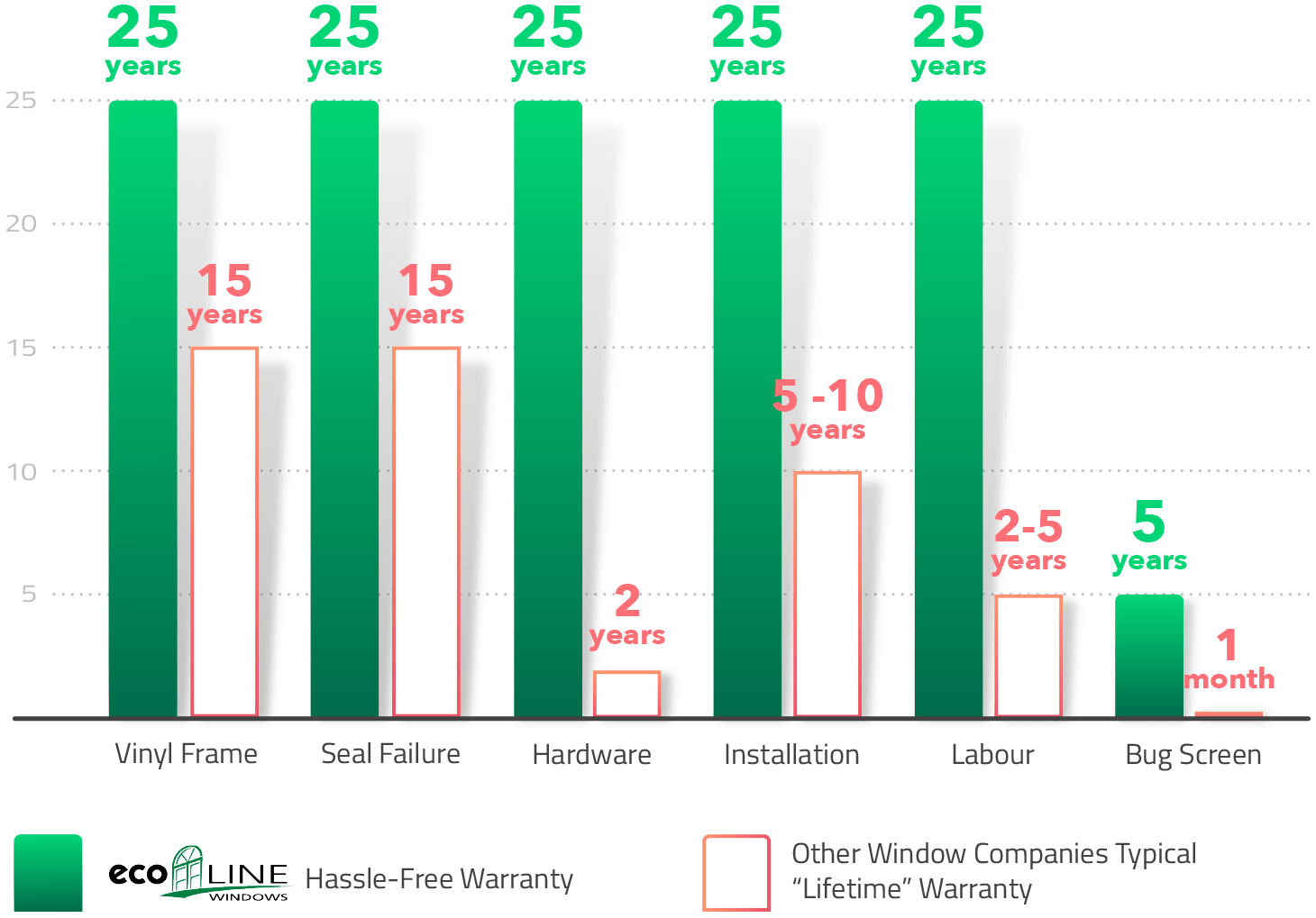
So, the number of warranty years is just the starting point when comparing quotes. Ask your contractor about a real-life situation:
- If the insulated glass seal fails eight years from now, who supplies the glass, who installs it, and what could I still have to pay?
Then check the same question for hardware failure and an installation-related leak. The best warranty clearly explains what is covered, for how long, who does the work, what labour costs you might pay, and whether the warranty transfers to a new homeowner.
Compare the Quotes Side by Side Before Looking at the Total
Once you understand the main differences, make sure the quotes are for the same things. Set aside the final prices for now and fill out a comparison like this:
| Compare | Quote A | Quote B | Quote C |
| Manufacturer / product line | Entry-level vinyl windows | Mid-range ENERGY STAR windows | High-performance ENERGY STAR windows |
| Window styles and configurations | 6 casements, 6 sliders, 3 fixed | 6 casements, 6 sliders, 3 fixed | 6 casements, 6 sliders, 3 fixed |
| Double or triple pane | Double pane | Triple pane | Triple pane |
| U-factor / Energy Rating | U-factor 1.40 / ER 30 | U-factor 1.10 / ER 36 | U-factor 0.95 / ER 40 |
| Retrofit or full-frame | Retrofit | Full-frame | Full-frame |
| Interior finishing included | Existing trim retained | New jamb extensions and casing | New jamb extensions and casing |
| Exterior finishing included | Basic caulking | New exterior capping and sealing | New exterior capping, trim and sealing |
| Removal and disposal | Included | Included | Included |
| Product warranty | 15 years | 25 years | |
| Labour warranty | 2 years | 10 years | 25 years |
| Total project price | $13,800 | $18,600 | $21,900 |
NOTE: Illustrative example only. Actual specifications, warranty terms and prices vary by manufacturer, contractor, location and the condition of your home.
At first glance, Quote C costs $8,100 more than Quote A for the same 15 openings. Once you compare the scopes, however, the difference is easier to explain.
Quote A uses retrofit installation, double-pane glass and retains most existing finishes. Quote C includes full-frame replacement, higher-performing triple-pane glazing, new interior and exterior finishing, and substantially longer labour coverage.
That does not automatically make Quote C the better purchase. It shows why choosing Quote A simply because it is 37% cheaper would also be misleading. The homeowner first needs to decide which product, installation scope and long-term coverage the house actually requires.
Quick checklist for comparing window quotes
Before you pick a contractor, make sure:
- the companies are pricing the same openings and configurations;
- glazing and tested performance are comparable;
- the installation method is stated;
- trim, sealing, disposal and cleanup are clearly included or excluded;
- possible charges for rot or structural repairs are explained;
- product, workmanship and future service labour warranties are separated.
If the quotes cover the same work but one is still much higher, ask the contractor to explain the difference instead of just asking for a price match.
This conversation can show if there are extra services, different products, or costs that may not add value to your project.
The Best Quote Is the One You Understand
It is much easier to judge a big price gap when every contractor is quoting for the same project.
- A higher quote might make sense if your house needs full-frame installation, the windows have better performance, more finishing is included, or labour is covered under warranty.
- A lower quote can also be reasonable if the frames can be reused, the job is simple, and the contractor has lower overhead.
First, compare the window details, then the work included, and finally the total price. Once you know these three things, a price difference of several thousand dollars will make sense.
Why do window replacement quotes vary so much?
Window quotes can vary by thousands of dollars because contractors may quote different products and services. Window style, glass type, energy ratings, installation method, trim, disposal, repairs, and warranty all affect the price. Review these details before deciding whether one company is just charging more.
What should be included in a window replacement quote?
A good quote should list the windows and glass package, how they will be installed, what finishing work is included inside and out, removal and disposal, warranty, and the total price. It should also explain how extra work, like fixing rot or damaged framing found during the job, will be charged.
Is the cheapest window quote always a bad choice?
Not always. A lower quote might mean a simpler job, fewer upgrades, lower company costs, or that your existing frame allows for a retrofit. The key is to find out why it costs less. Before deciding the lowest price is the best deal, make sure the products, installation, finishing, and warranty are similar.
Why is full-frame window replacement more expensive than retrofit?
Retrofit installation keeps most of your existing frame, so there is less demolition and finishing work. Full-frame replacement takes out the whole window assembly, which lets the installer check, prepare, insulate, and finish the opening again. This extra work and materials make full-frame jobs more expensive, especially if trim or repairs are needed.


1750 Coast Meridian Rd #102,
Port Coquitlam, BC V3C 6R8
100, 17866 106A Avenue,
Edmonton, AB, Canada,
T5S 1V3
3307 Dunmore Rd SE #12,
Medicine Hat, AB,
Canada, T1B 3R2
2081 Merivale Rd #201, Ottawa, ON, Canada, K2G 1G9
by appointment only
108, 55 Akerley Blvd, Dartmouth,
NS, Canada, ВЗВ 1M3