


-RATED BY




Built in Canada
All Ecoline windows and doors are built in Ontario, Canada
- Top-of-the-line machinery (Forel, Gracco, Bottero) to produce the best products
- Over 60,000 sq. ft manufacturing plant
- Energy Star-rated and NAFS-11-tested
- Manufactured for local weather conditions
Cordless vs. Corded Blinds in Canada: Safety Rules, Engineering & Costs [2026]
Sep 18, 2026
16 min read
33
Some time ago, choosing between corded or cordless blinds for windows was mainly about convenience and cost. Now in Canada, you also need to consider how the system is built, if the cords are within reach, and whether the mechanism fits the blind’s size and weight.
Federal rules introduced in 2021 now limit long cords and large loops on window coverings because they can be dangerous for young children. However, not all window blinds have to work the same way.
Cordless springs, safety cords or chains, wands, and motorised blinds each address safety differently. They also vary in price, durability, ease of use, and how well they work for large or hard-to-reach windows. So, let’s look at the engineering and compare cordless and corded blinds and shades available today to see what works best for your space.


Are Corded Blinds Still Legal in Canada in 2026?
Yes, corded blinds are still allowed in Canada, but their cords must follow strict federal safety rules. These rules cover both custom and ready-made window coverings sold nationwide.
The Corded Window Coverings Regulations started on May 1, 2021. They don’t ban all cords, chains, or loops, but instead limit how much of a cord can be reached and how big a loop can get.
For homeowners, the two numbers worth knowing are:
- 22 cm: a reachable cord with a free end cannot exceed this length.
- 44 cm: the perimeter of a loop created by a reachable cord cannot exceed this size under the prescribed test conditions.
This difference matters because some modern blinds still use cords or chains, but they are designed so long, dangerous sections are not accessible.
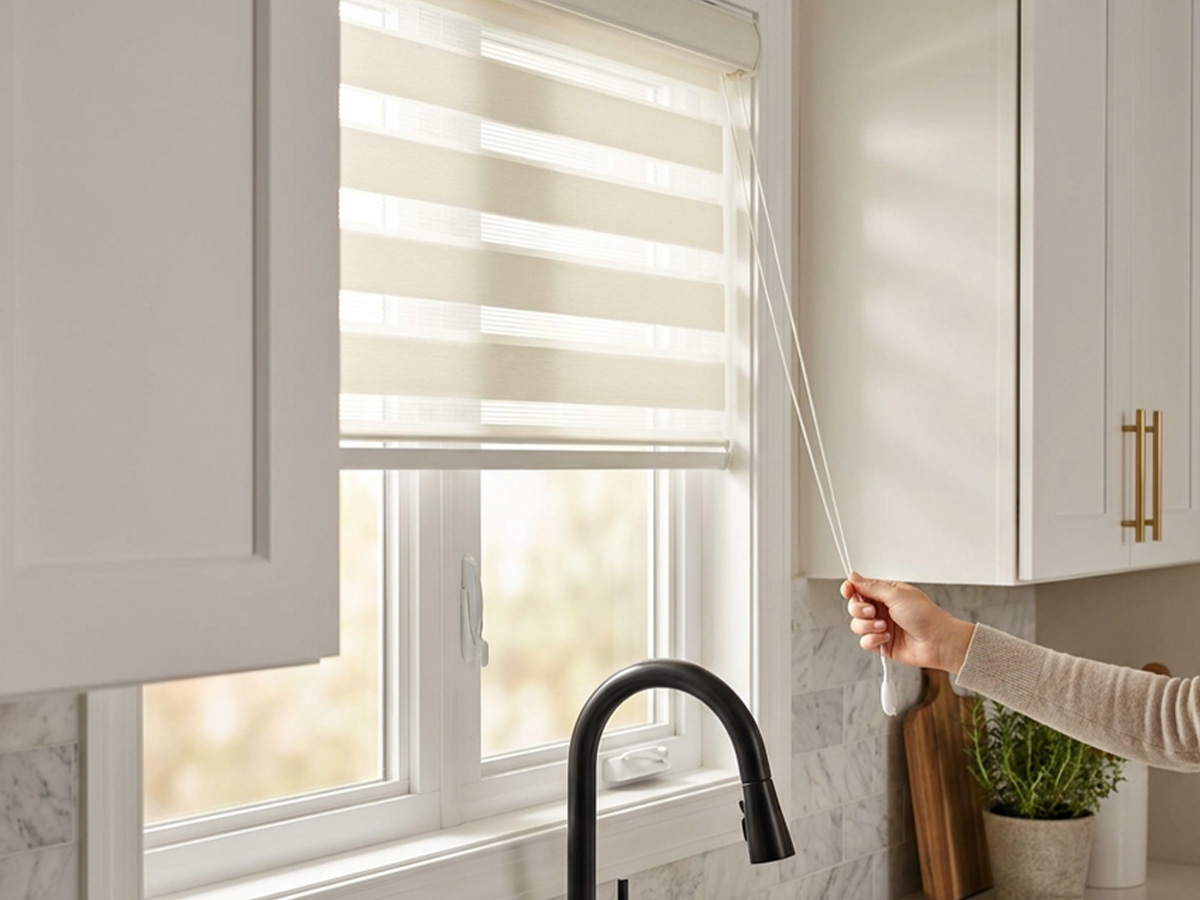
The regulations also cover less obvious cords inside or behind the window covering. Health Canada specifically warns that lift cords, tilt cords and internal cords can all create a strangulation hazard if they become accessible. Young children between one and three years old are at the greatest risk.
Today, it’s not just about corded or cordless blinds. Homeowners now pick from several systems that avoid long cords, and each works differently as blinds get bigger, heavier, or harder to reach.
Corded, Cordless, Wand or Motorised: What Actually Changes Inside the Blind?
The operating system does more than change how a blind looks. It affects how force moves through the headrail or roller, how easy it is to move the shade, which parts are under stress, and what might wear out over time.
| Operating System | How it works | Best use-case | Main Limitation |
| Cord or chain control | Pulling the cord or loop rotates a clutch or lift mechanism | Frequently used shades, larger blinds where controlled movement matters | Accessible cords and loops must meet Canadian safety requirements |
| Cordless spring system | A spring mechanism balances the weight of the shade as it is raised or lowered by hand | Standard windows, bedrooms, living rooms, homes with children | Requires physical reach and proper spring calibration |
| Wand control | Turning or moving a rigid wand operates the internal mechanism | Vertical blinds and selected roller or zebra systems | Less convenient on very tall windows |
| Motorised system | An electric motor turns the roller or lift mechanism | Large, heavy, high or frequently operated blinds | Higher upfront cost and more components to service |
Corded and chain-driven systems
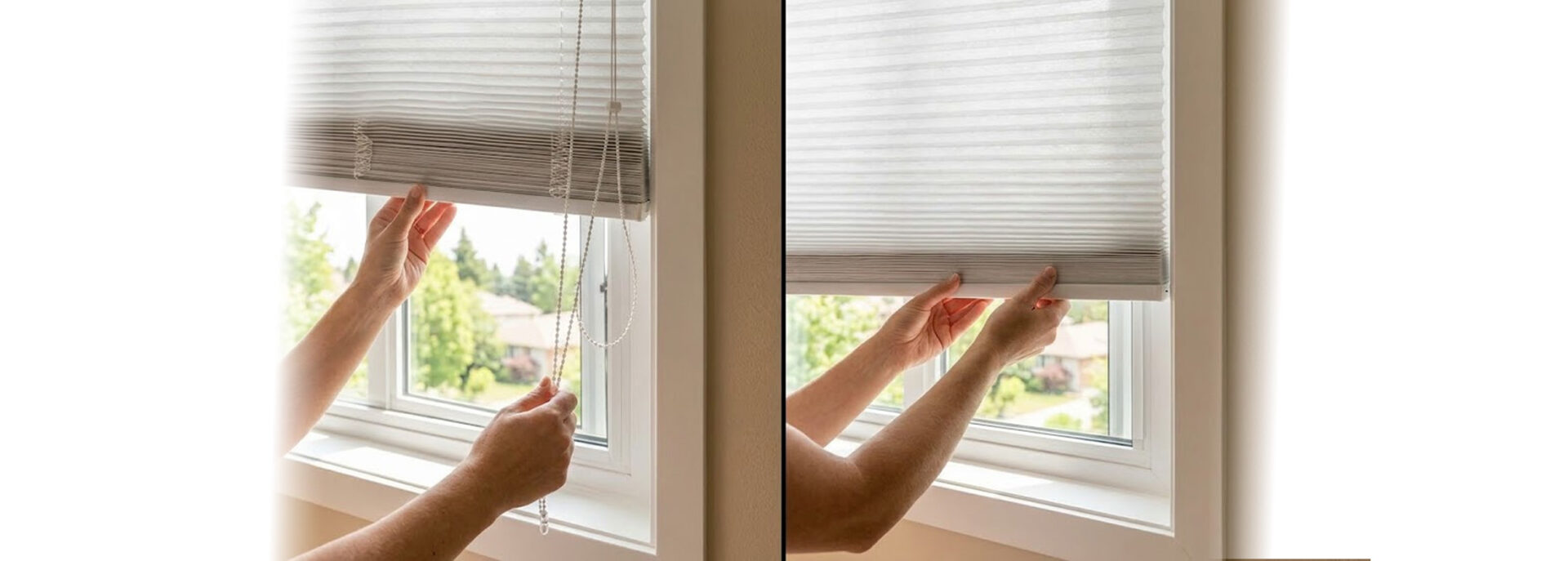
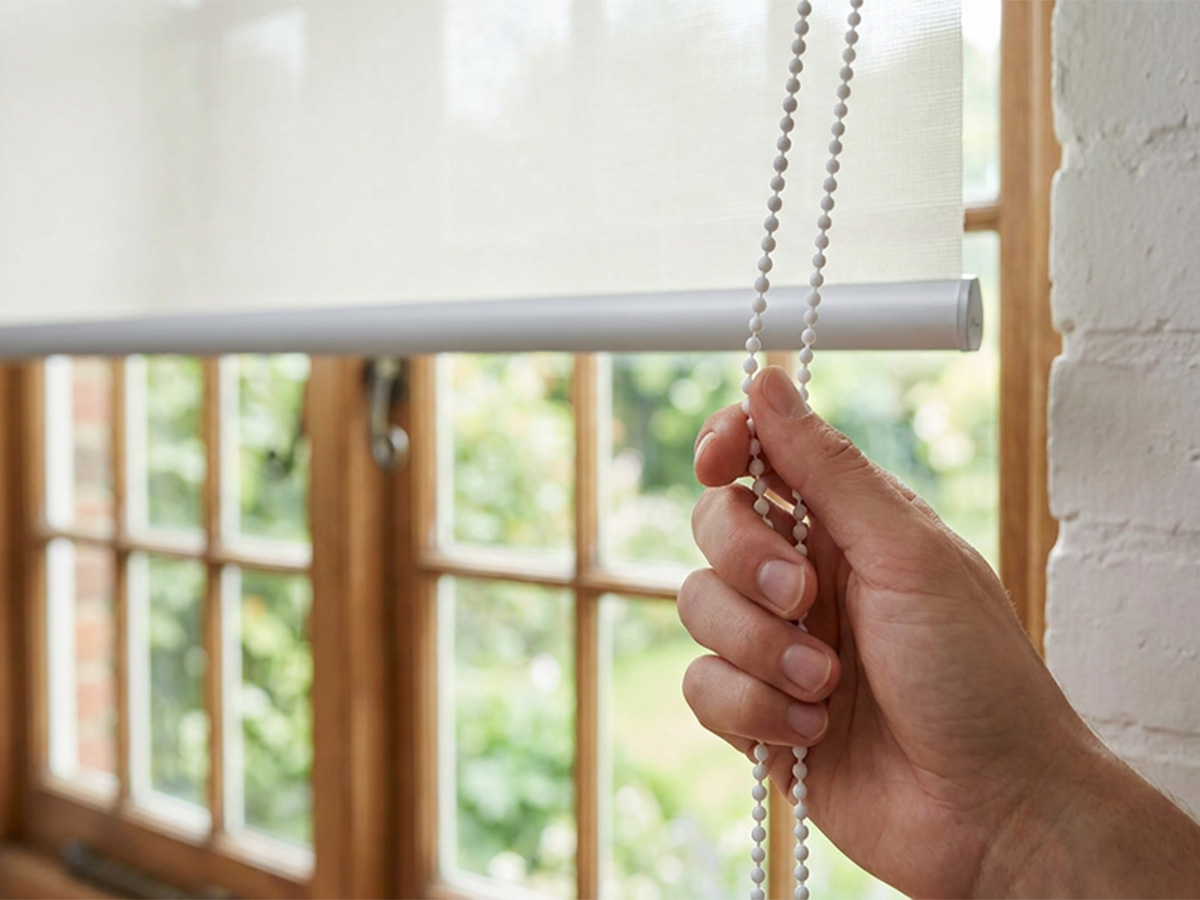
Traditional roller and zebra blinds often use a clutch connected to a continuous chain or loop. Pulling one side rotates the tube in one direction, while pulling the other reverses it.
The main benefit is control. The clutch lets you move a heavy shade slowly and easily, instead of having to lift all the weight yourself.
This becomes important as blinds get bigger. A wide blackout shade has much more fabric and heavier parts than a small kitchen blind. The right clutch size helps make it easier to handle.
But modern Canadian blinds must make sure any accessible parts of the system meet federal cord-safety rules.
How cordless blinds work
Cordless blinds eliminate the hanging cord. In most systems, you lift or lower the bottom rail by hand, while a spring inside the headrail or roller helps balance the shade. The spring has to be calibrated to the blind’s weight.
- If the spring is too weak, the blind might slowly fall or not stay where you want it.
- If it’s too strong, it can be hard to lower or might snap up too quickly.
Bigger blinds put more strain on the mechanism because more fabric and hardware need to be balanced.
That’s why two blinds that both look cordless can work very differently. The spring strength, roller size, bearings, headrail build, and total weight all affect how smoothly the blind works.
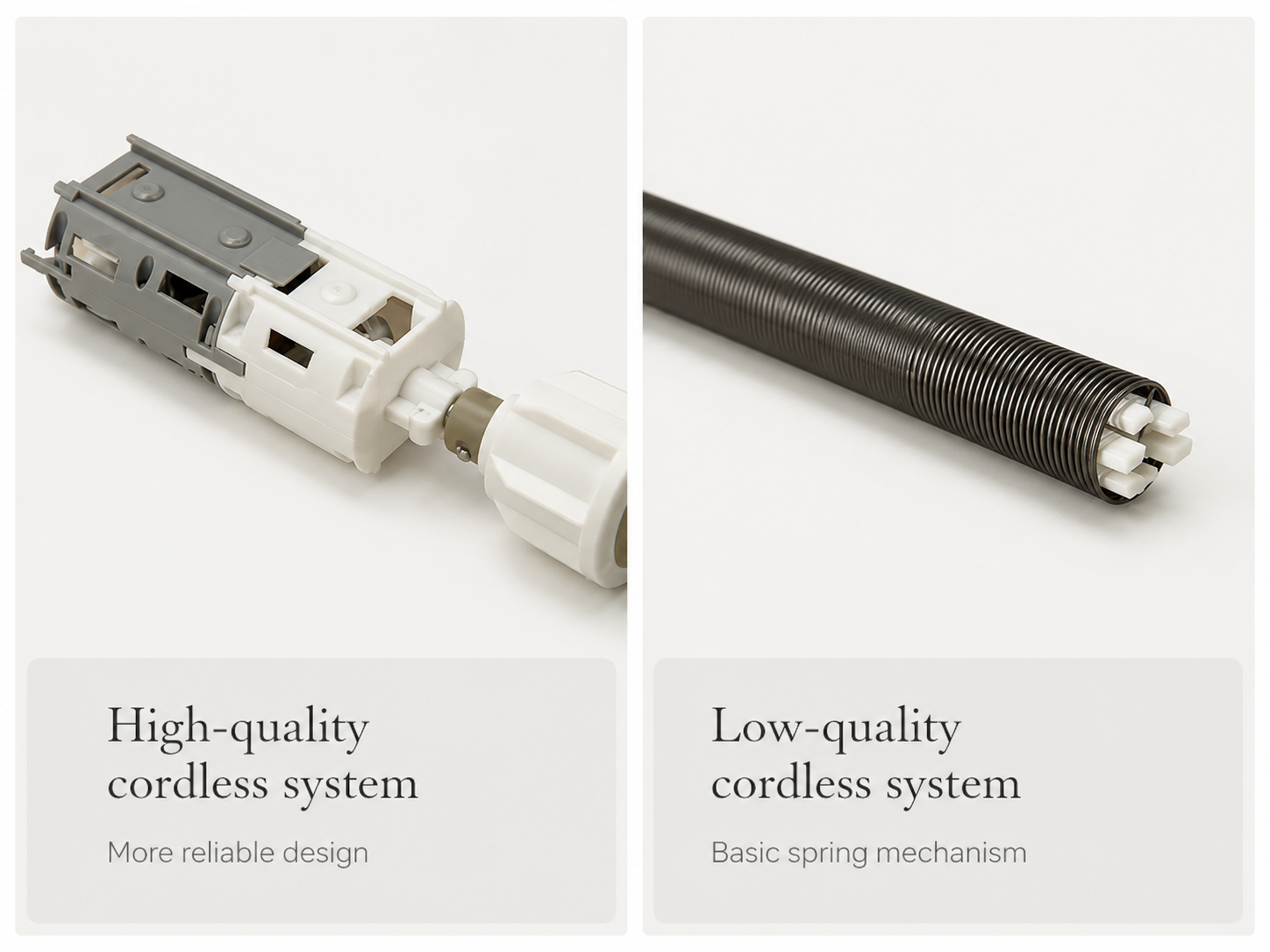
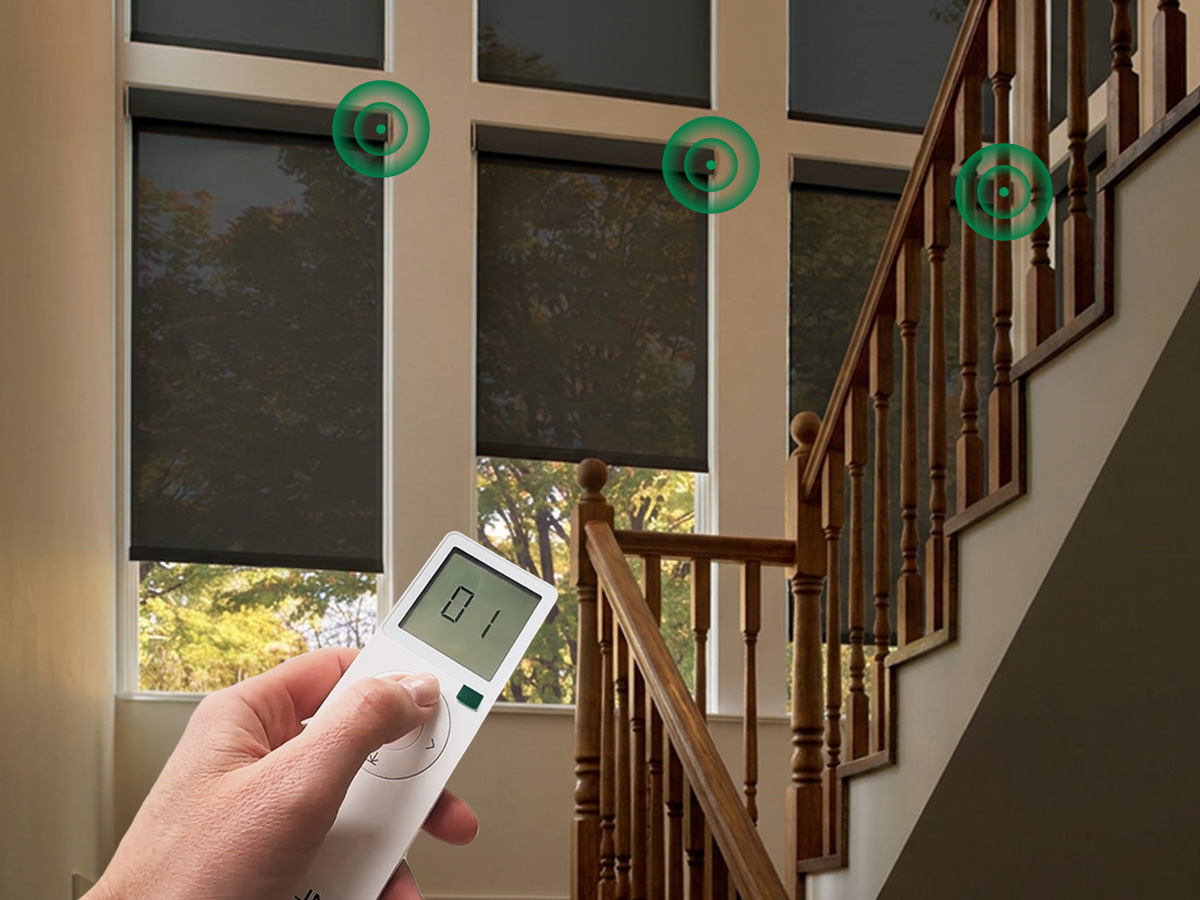
Cordless controls are best for windows where you can easily reach the bottom rail. On tall stairwell windows, a cordless shade removes the cord but can still be inconvenient since you have to reach the blind itself.
Wand controls remove the flexible loop
Some window coverings use a rigid wand rather than a hanging cord or chain. Turning or moving the wand transfers force into the mechanism that tilts vanes or operates the shade.
Wands are common on vertical blinds and can also appear on other systems designed around Canadian cord-safety requirements.
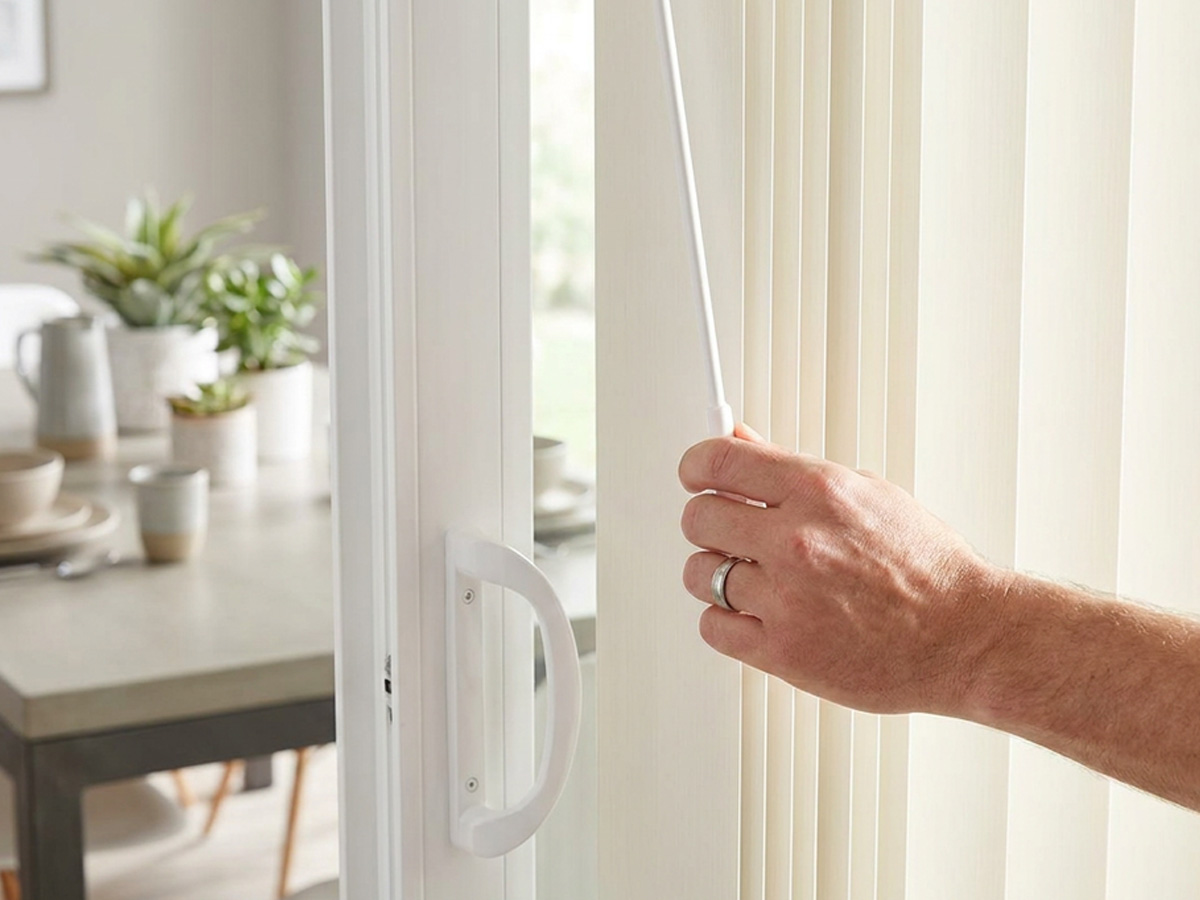
Their main benefit is simple: you get a physical control without a long, flexible loop hanging by the window.
But how useful wands are depends on where you place them. If a wand is 2.5 metres above the floor, it’s not easy to reach, so very tall windows may need a different solution.
Motorisation changes the load question
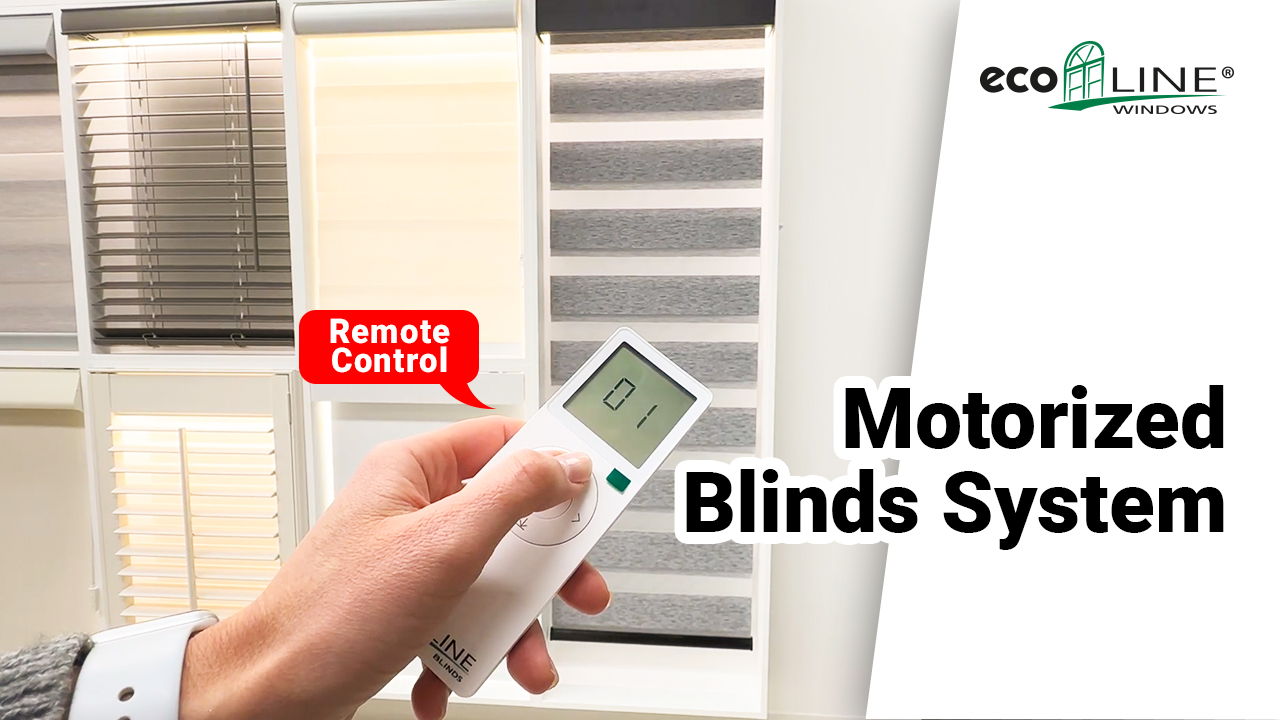
With a motorised blind, an electric tubular motor rotates the roller instead of relying on hand force, a spring or repeated chain pulling. Power can come from rechargeable batteries, hardwired connections or other manufacturer-specific systems.
This changes how you plan for large windows.
Instead of worrying about whether someone can lift or reach the shade, the installer checks whether the motor is strong enough for the blind’s width, fabric weight, and roller setup.
Motorisation is particularly practical for:
- windows above staircases or bathtubs
- tall foyer glazing
- wide picture windows
- groups of blinds operated several times a day
- homeowners who want scheduled or remote operation
The downside is added complexity. Motors, batteries, controls, and smart-home parts cost more and may need charging, replacement, or service over time.
That’s why you should pick the operating system along with the blind’s size and fabric, not as an afterthought. A small bedroom blind and a wide blackout shade might use similar fabric, but their operating systems need to handle very different demands.
Where Cordless Blinds Work Best
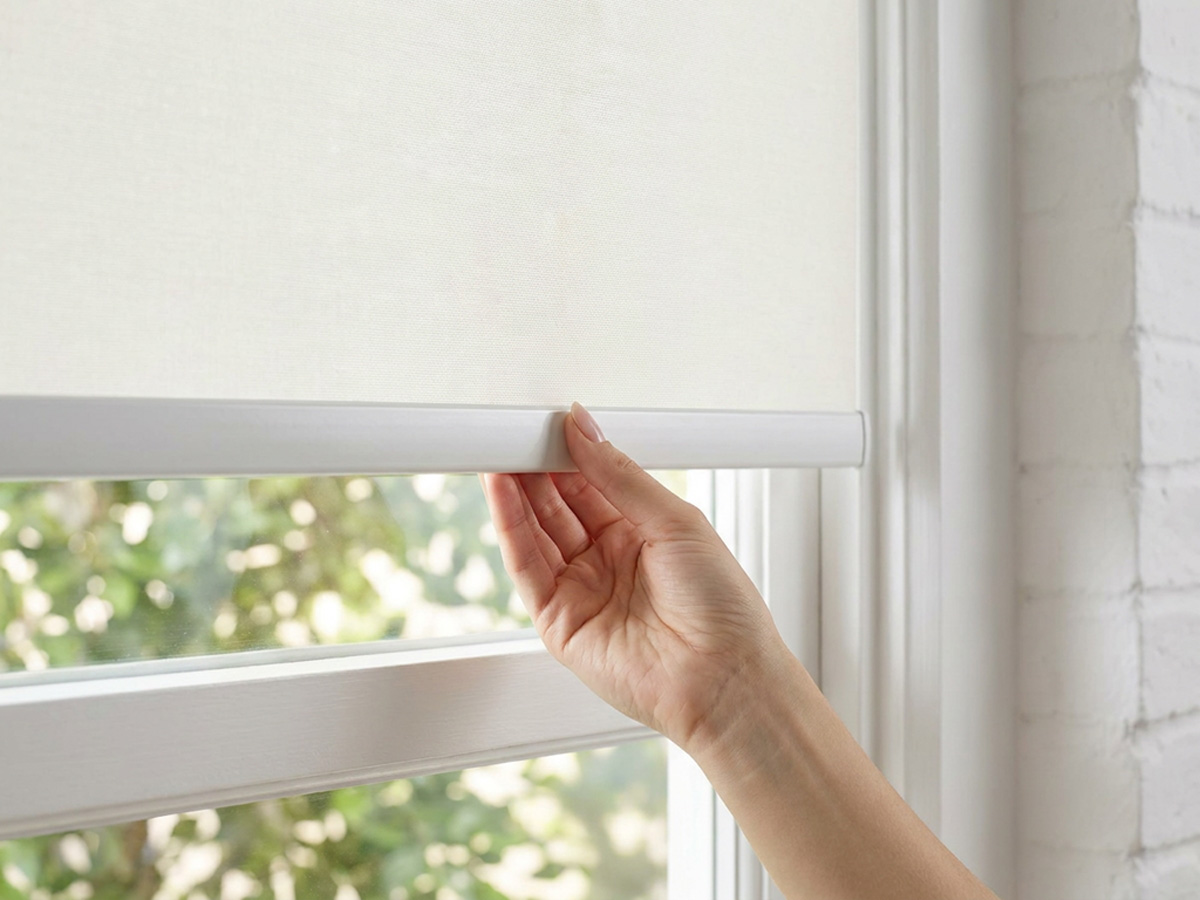
Cordless blinds work best on windows that are easy to reach and used often. You move the bottom rail by hand, which keeps the window looking neat and eliminates the need for a hanging cord.
That works especially well for:
- standard bedroom and living-room windows;
- nurseries and playrooms;
- kitchen windows above accessible counters;
- smaller roller, zebra and cellular shades;
- windows where the blind is opened and closed once or twice a day.
But the drawbacks show up more with bigger, taller, or heavier windows.
Large blinds put more stress on cordless mechanisms
A 90-inch-wide blackout shade puts much more strain on its operating system than a 30-inch bedroom blind. More fabric means more weight, and wider rollers can bend if the tube isn’t strong enough.
In a cordless system, the spring has to handle the extra weight and still let the blind stop evenly at any height. If the spring isn’t right for the shade, you might see the blind drift down, snap up too fast, or become hard to use smoothly.
This doesn’t mean cordless systems can’t work for big windows. It just means you need to consider the blind’s width, fabric weight, tube size, and spring strength together, not separately.
For very wide windows, using two narrower blinds instead of one big shade can make them work more smoothly and be easier to service later.
Cordless does not solve a reach problem
A cordless blind on a high stairwell window might look neat, but someone still has to reach the bottom rail to use it. The same problem appears with:
- windows above deep bathtubs;
- double-height foyers;
- windows behind large desks or kitchen counters;
- high basement or clerestory windows;
- tall patio-door glazing.
In these spots, motorised blinds can be more practical than manual cordless ones because the main issue is reaching the blind, not just cord safety.
If you can’t easily reach the bottom rail in every spot, keep that in mind when picking a control system.
Heavy fabrics can change the best option
Blackout materials, laminated fabrics and larger bottom rails increase the total mass that the mechanism has to move.
The difference might be small on a little window, but it stands out more as the blind gets wider or longer. A shade that’s easy to use in a showroom might act differently when it’s twice as big.
For big blackout shades, check with your company about the cordless system’s size limits instead of assuming the fabric can just be made bigger.
Cordless can be less convenient for frequent adjustments
Some people adjust their blinds many times a day for glare, privacy, or heat. Having to reach the bottom rail each time can get annoying, especially if there’s furniture in the way.
A chain, wand, or motorized system lets you control the blind more precisely from one spot.
This matters a lot for zebra shades, where small adjustments decide if the fabric bands overlap for privacy or line up to let in more light. Fine-tuning is more important here than with a basic roller shade.
Navigate between different blinds control options within the same house
You don’t need every blind in your home to use the same control system. A practical layout might use:
- cordless cellular shades in children’s bedrooms;
- cordless rollers on standard living-room windows;
- wand-operated vertical blinds on a patio door;
- motorised shades on a high foyer window;
- powered blinds across a large bank of south-facing glazing.
Choosing controls room by room usually makes more sense than picking one system for the whole house. For most regular windows, cordless is a great default because it’s simple, looks neat, and is easy to use. But if the window is wide, heavy, or hard to reach, the mechanism matters as much as the fabric.
Cordless vs. Corded Blinds Cost in Canada: What Are You Actually Paying For?
The type of operating system can affect the price of a custom blind, even if the size, fabric, and style don’t change. For example, take a 45″ × 45″ light-filtering zebra blind from Ecoline. The main price difference comes from how the blind operates.
| Operating system | Price | Added cost vs. corded |
| Corded | $241.70 | Base |
| Cordless | $287.27 | $45.57 |
| Wi-Fi motor | $414.73 | $173.03 |
| Motorised | $435.40 | $193.70 |
| Motorised + smart-home integration | $727.05 | $485.35 |
For this particular blind, switching from corded to cordless adds $45.57, or roughly 19% to the base price. Moving to motorisation increases the same shade to about $415 to $435, while full smart-home integration pushes it above $700.
This comparison helps show what you’re paying for. Cordless operation is usually a small upgrade for a standard shade. Motorisation costs much more because it adds a motor, controls, power parts, and maybe smart-home features.
Why cordless blinds cost more than a basic manual system
A cordless blind needs an internal mechanism that can balance the shade without a hanging cord.
Depending on the product, that may involve:
- spring-loaded components;
- more complex internal hardware;
- tighter calibration to the shade’s weight;
- additional testing across the permitted size range;
- upgraded headrail or roller components.
So, the higher price is about more than just not having a cord. For small or medium windows, the extra cost is usually small. For very large shades, you might need stronger parts or a different system altogether.
Blinds size can matter more than the control upgrade
The $45.57 we have been looking at for a 45″ × 45″ Ecoline zebra blind isn’t a standard cordless fee for every blind.
Bigger blinds need more fabric and might need a stronger tube, headrail, or mechanism. At Ecoline, the prices for standard custom blinds are usually $150 to $500 per window, but large, blackout, or motorised blinds can cost $600 to $1,000 or more.
This is why quotes should be compared using the same:
- width and height;
- blind type;
- fabric collection;
- light-filtering or blackout specification;
- operating system;
- installation scope.
Otherwise, a cheaper “cordless blind” might just be smaller or have a simpler mechanism.
When is paying more for motorised blinds worth It?
For a regular bedroom window you can reach easily, spending almost $200 more for a motor is mostly about convenience.
But for a big picture window or a shade above a staircase, the math is different. Based on the example we looked at earlier, motorisation adds about $173 to $194 to the price of this zebra blind compared to the basic corded version.
That extra cost makes more sense when it solves a real problem, like:
- the bottom rail cannot be comfortably reached;
- the blind is opened and closed several times per day;
- several shades need to move together;
- the window covering is large or heavy;
- furniture blocks direct access to the blind.
Smart-home integration is a separate choice. In this example, it costs much more than basic motorisation. If you just want remote control, you might not need the priciest automation package.
It’s smarter to spend more on the operating system when it really improves how you use the window. Manual or cordless blinds work well in bedrooms, but motorisation can solve real access problems on the biggest windows.
Cordless vs. Corded Blinds: What to Choose?
For most regular windows, cordless blinds are the easiest way to get safety, a clean look, and simple use. They eliminate long cords and usually cost only a bit more than basic manual blinds.
But if the window is very wide, heavy, or hard to reach, the operating system is just as important as the fabric. Motorised shades are often best for stairwells, big picture windows, or blinds you adjust often, while wands work well for patio doors and vertical blinds.
Before you compare prices, don’t just look for the “cordless” label. Ask how the blind works, what sizes the mechanism can handle, how it deals with the fabric’s weight, and what kind of maintenance it might need later.
The best window blind model is the one everyone in your family can use safely and easily for years, not just the one that looks the neatest.
Are corded blinds illegal in Canada?
No, corded blinds are not fully banned in Canada. Federal rules limit how long reachable cords can be and how big accessible loops are. Free-ended cords must be no longer than 22 cm, and loops cannot be larger than a 44 cm perimeter when tested.
Are cordless blinds safer for homes with children?
Cordless blinds eliminate long cords, which can pose a strangulation risk for young children. Health Canada suggests using window coverings without long cords and replacing older ones, especially in bedrooms, playrooms, and other places where young children are often present.
Are cordless blinds more expensive than corded blinds?
Usually, yes. Cordless blinds often cost more because they need an internal spring or balancing system. For standard-size windows, the price difference is often small. For example, an Ecoline 45″ × 45″ custom zebra blind costs $287.27 cordless and $241.70 corded, a difference of $45.57, or about 19%.
Are cordless or motorised blinds better for large windows?
It depends on the width, weight, and how easy the blinds are to reach. Cordless blinds work well if you can easily reach the bottom rail and the mechanism can handle the shade’s weight. For large, heavy, or high windows, motorised blinds are often better because you do not need to lift or reach to use them.


![Thumbnail post: How Much Do Custom Window Blinds Cost in Canada? A Real Price Guide [2026]](https://www.ecolinewindows.ca/wp-content/uploads/blinds-cost-preview-375x183.png)

1750 Coast Meridian Rd #102,
Port Coquitlam, BC V3C 6R8
100, 17866 106A Avenue,
Edmonton, AB, Canada,
T5S 1V3
3307 Dunmore Rd SE #12,
Medicine Hat, AB,
Canada, T1B 3R2
2081 Merivale Rd #201, Ottawa, ON, Canada, K2G 1G9
by appointment only
108, 55 Akerley Blvd, Dartmouth,
NS, Canada, ВЗВ 1M3