


-RATED BY




Built in Canada
All Ecoline windows and doors are built in Ontario, Canada
- Top-of-the-line machinery (Forel, Gracco, Bottero) to produce the best products
- Over 60,000 sq. ft manufacturing plant
- Energy Star-rated and NAFS-11-tested
- Manufactured for local weather conditions
How Much Do Custom Window Blinds Cost in Canada? A Real Price Guide [2026]
Aug 26, 2026
17 min read
845
Buying blinds for windows may seem straightforward at first, but comparing quotes can be confusing. For example, a light-filtering zebra blind might cost around $200 with a basic system or as much as $700 with smart-home features, even if the size, style, and fabric are the same.
So, how much should you budget for new window blinds? There is no single average price because the final cost depends on the type, size, fabric, operating system, and installation. A basic bedroom roller shade is usually less expensive, while a large cellular shade or motorised blind system for a big window can cost much more.
This wide price range shows why comparing blinds and shades by style alone can be misleading. In this guide, we’ll break down the main factors that affect cost, share real pricing examples for different sizes and setups at Ecoline, and explain when it makes sense to spend more. This way, you can set a realistic budget before asking for quotes.


What’s The Price for New Custom Blinds Per Window?
For most standard residential windows, custom blinds in Canada usually start around $200 to $500 per window.
Large shades, blackout fabrics, and motorised options can raise the price to $600 to $1,000 or more per window. Ready-made blinds from big-box stores are often much cheaper, especially if your windows are standard sizes and you install them yourself.
| Type | Custom Blinds | Ready-made Blinds | Works best for |
| Roller shades | $260 – $665+ | $35 – $160 | Bedrooms, kitchens, offices and most standard windows |
| Zebra blinds | $250 – $517+ | $90 – $150 | Living rooms and spaces where adjustable privacy and daylight matter |
| Cellular shades | $197 – $1,200+ | $45 – $230 | Bedrooms, living areas and homeowners looking for added insulation |
| Vertical blinds | $250 – $615+ | $45 – $75 | Patio doors, wide windows and large openings |
These price ranges show why quoting a single “average blind cost” is not very helpful. For example, a 30-inch stock zebra blind that fits your window might cost about $100, but a custom-made version for a larger window can cost several times more, even before adding motorisation or premium fabric.
Custom vs. ready-made blinds: why is there such a price difference?
Window coverings sold in standard sizes are usually described as ready-made, stock, or pre-cut. Some can also be trimmed to width. They are manufactured in predetermined dimensions, which keeps production costs down and makes them a practical option for standard windows.
Custom blinds are made to the measurements of a specific opening. For example, Ecoline manufactures its own blinds and shades, and the final quote for homeowners includes professional measuring, fabric selection, hardware options, installation, and warranty coverage, which naturally increases the price, but the final product is much higher quality and more durable.
Ready-made blinds are a good choice if your window matches a standard size, you’re comfortable with DIY installation, and you don’t need a specific fabric or operating system. Custom blinds are better for oversized windows, patio doors, unusual sizes, whole-home projects, or when a small measurement mistake could leave gaps.
The key thing to remember is that “custom” alone does not set the final price. Two made-to-measure blinds with a similar style can still differ by hundreds of dollars. Most of that difference comes down to four parts of the configuration:
- Type: roller, zebra, cellular, vertical and other systems use different amounts of material and hardware.
- Size: wider and taller windows require more fabric and may need stronger components.
- Fabric or material: light-filtering, blackout and premium collections carry different prices.
- Operating system: manual, cordless, motorised and smart-home controls can substantially change the quote.
How Window Blinds Style Changes the Price
The type of new window treatments you choose is one of the first factors that affects price, since each system uses different amounts of fabric, hardware, and parts.
But there isn’t a set order where roller blinds are always the cheapest and cellular are always the most expensive. Size, fabric, and how the blind works can change the final quote. A good way to compare different styles is to keep the window size the same:
| Style | 20″ × 25″ | 50″ × 50″ | 90″ × 90″ |
| Roller shades | From $260 | From $285 | From $485 |
| Zebra blinds | From $250 | From $260 | From $390 |
| Cellular shades | From $197 | From $440 | From $1,000 |
| Vertical blinds | From $250 | From $330 | From $615 |
Note: The price ranges given are approximate and vary based on many custom features. For a detailed quote tailored to your project, contact your local Ecoline team.
Roller Shades
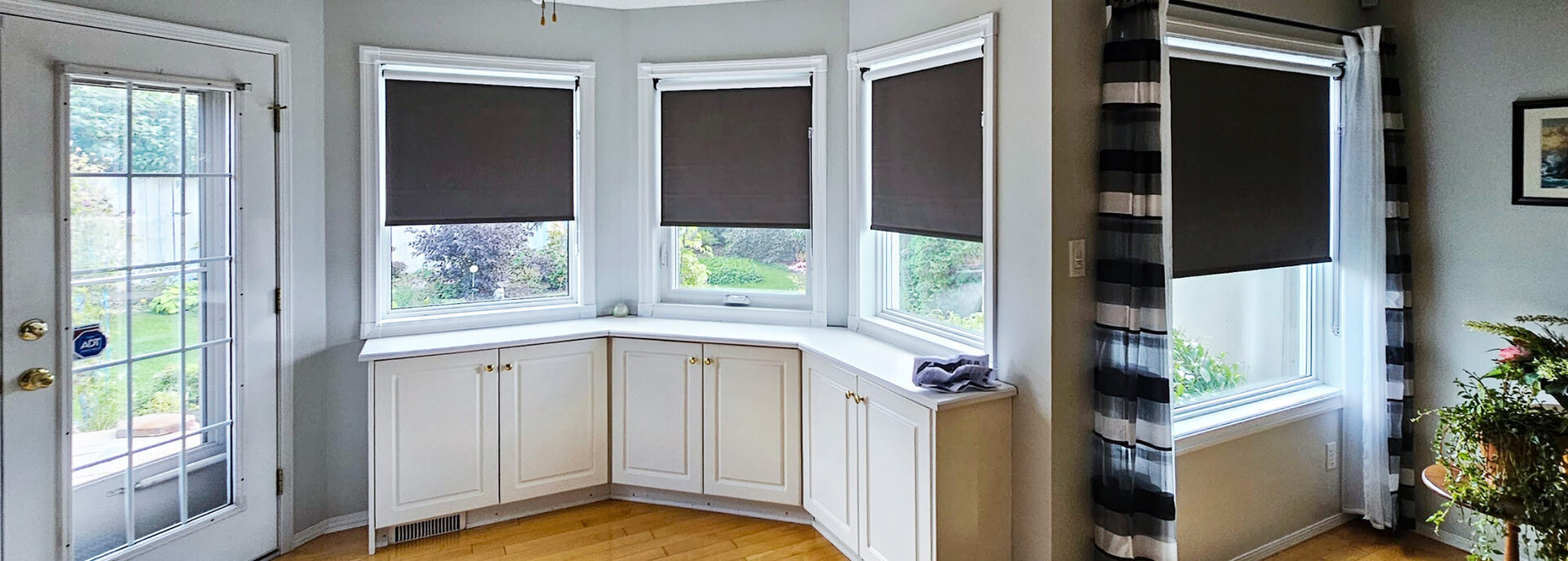
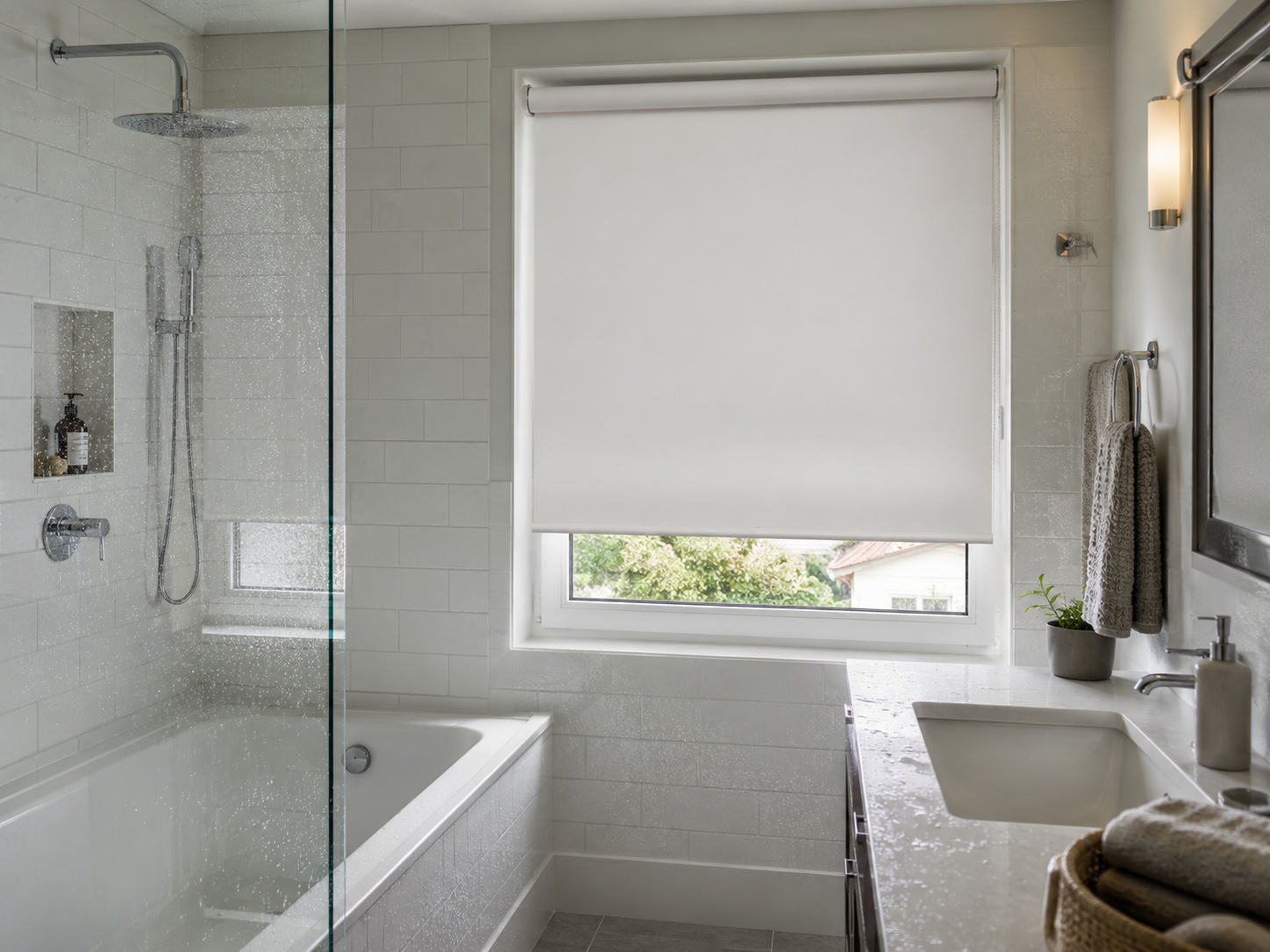
Roller shades are built simply, with one piece of fabric rolling around a tube above the window. This simple design helps keep prices predictable, especially for standard-size windows.
They are a practical choice if you mainly want privacy, less glare, or a darker room without a complicated look. Roller shades come in many fabrics, so prices can go up if you choose blackout material or add motorisation.
For example, a light-filtering roller shade starts around $285, while a room-darkening version of the same size starts around $345.
Zebra Blinds
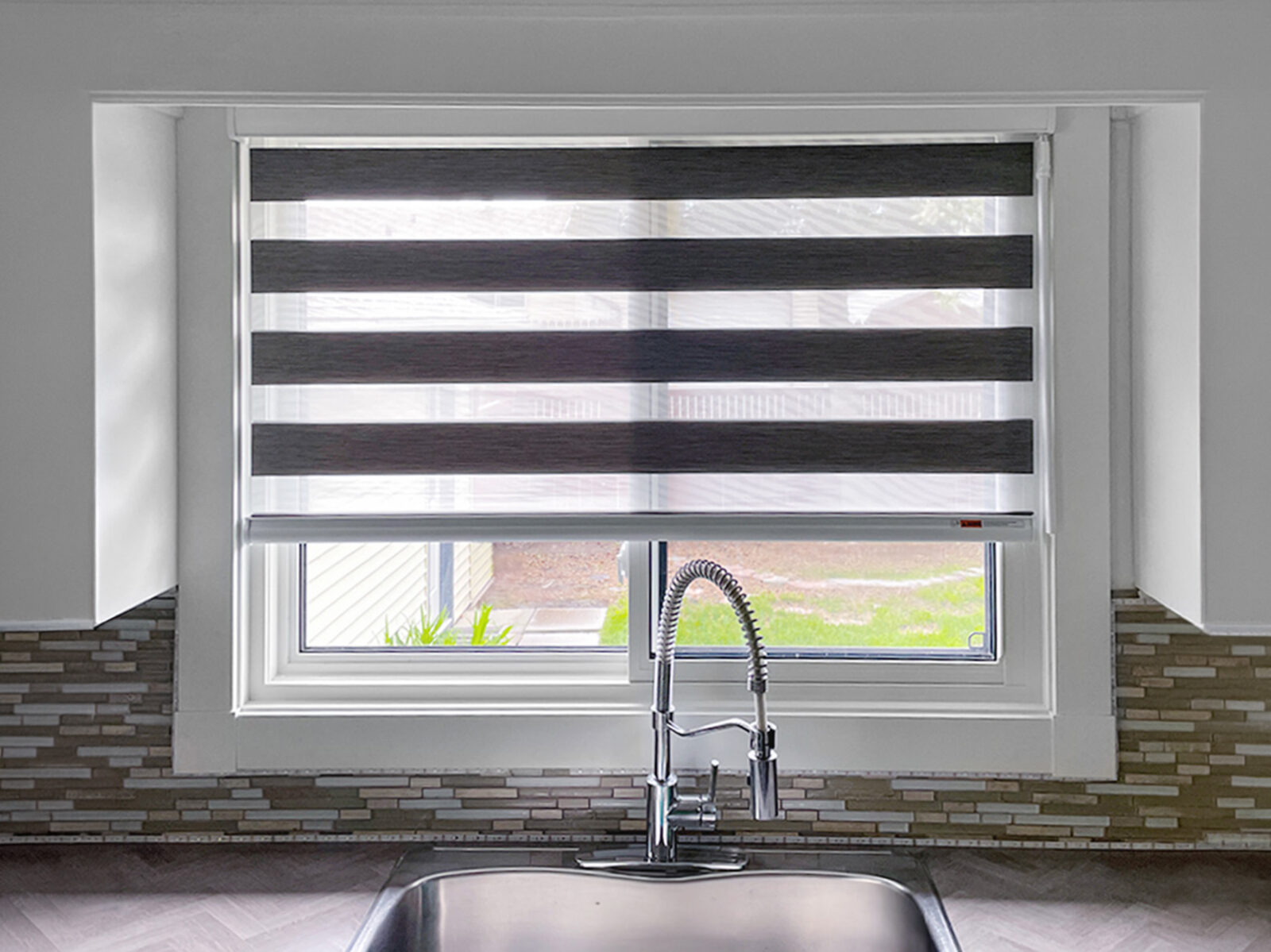
Zebra blinds have alternating sheer and solid fabric bands that slide past each other. This lets you adjust both daylight and privacy without raising the blind all the way.
Despite the more complex construction, they are not automatically more expensive than roller shades. A medium-sized light-filtering zebra blind starts at $260, slightly below the same-sized roller shade.
That’s why it’s better to compare the exact setup instead of assuming one type of blind is always the cheapest. Zebra blinds work especially well in living rooms, dining rooms, and street-facing spaces where the light changes during the day.
Cellular Shades
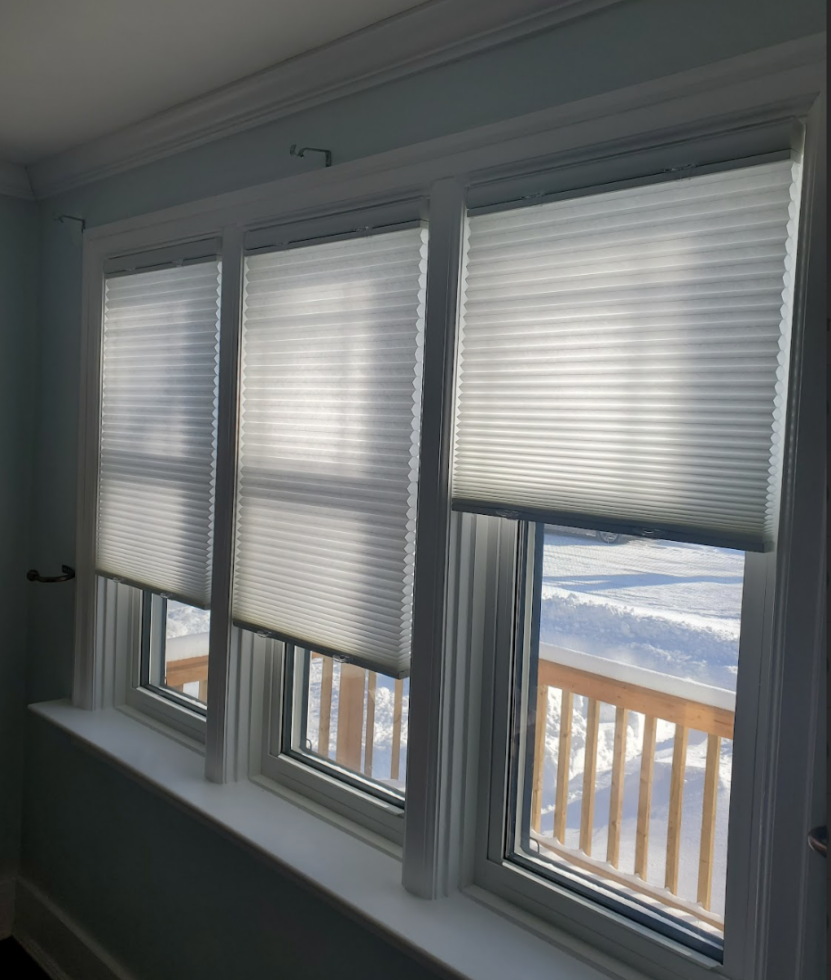
Cellular shades are made differently. Their honeycomb-shaped pockets trap air between the room and the window, making them a popular choice for bedrooms and homes where maintaining a comfortable temperature matters.
A small light-filtering cellular shade can start around $197, while models for large windows or patio doors can reach $1,000 before moving to blackout fabric or upgraded controls.
Vertical Blinds
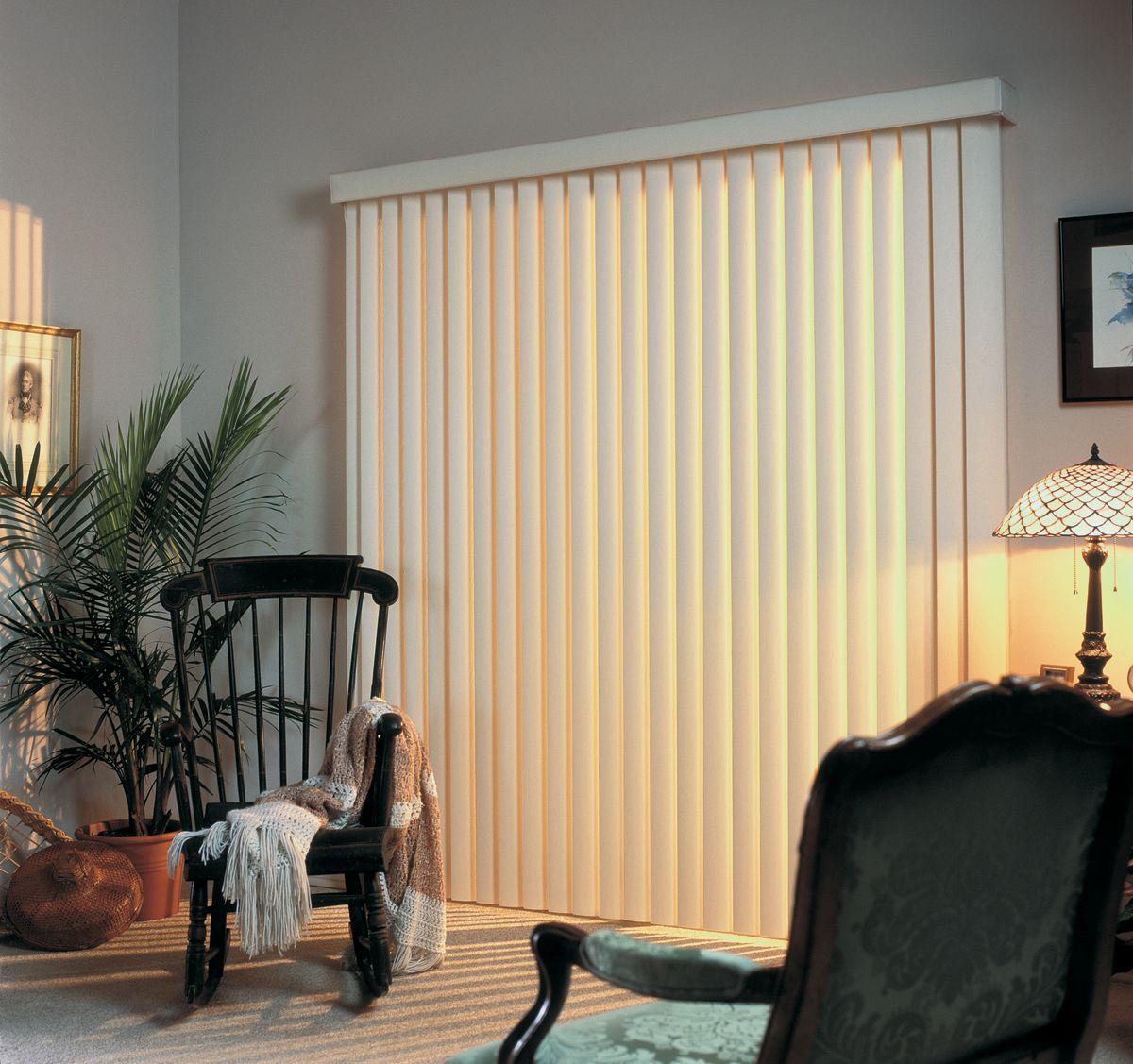
Vertical blinds are still one of the best options for sliding patio doors and wide openings. Instead of lifting the whole blind up, the individual slats move sideways, which fits well with how sliding doors work.
Custom vertical blinds start at around $250 for a small opening and go up to $615 for a large window covering.
For a standard bedroom window, picking between these styles might change the price by a few tens or hundreds of dollars. But for a large picture window or patio door, the difference can be much bigger.
This brings up the factor that most often affects custom-blind pricing: the width and height of your window.
How Window Size Affects the Total Cost of Your Blinds
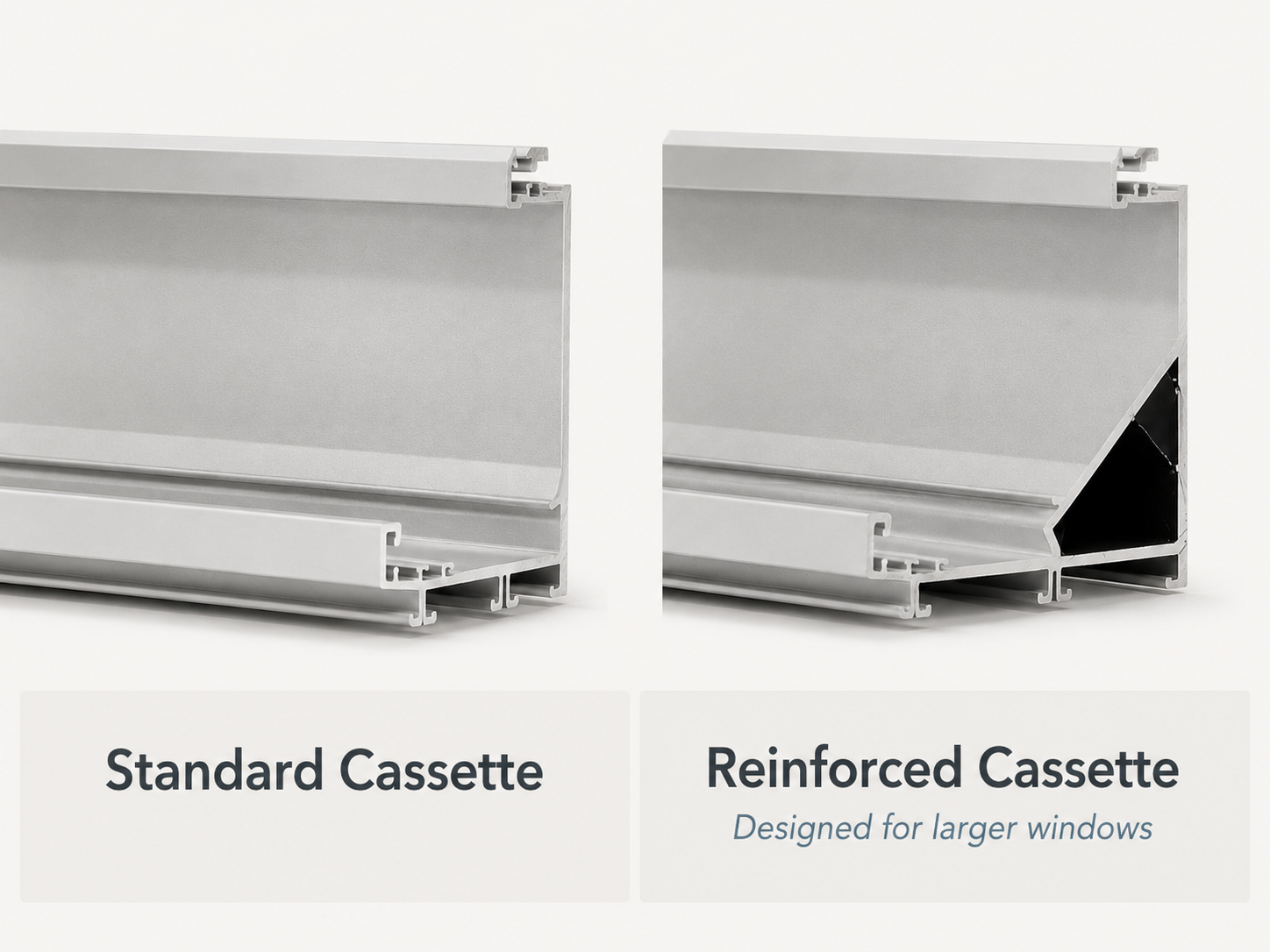
For custom blinds, window size is usually the biggest factor in the price. Larger windows need more fabric or material, and very wide blinds may also need stronger tubes, brackets, or upgraded parts to prevent sagging and ensure smooth operation.
| Type | 20″ × 25″ | 50″ × 50″ | 90″ × 90″ | Increase from small to large |
| Roller shades | $260 | $285 | $485 | +$225 |
| Zebra blinds | $250 | $260 | $390 | +$140 |
| Cellular shades | $197 | $440 | $1,000 | +$803 |
| Vertical blinds | $250 | $330 | $615 | +$365 |
Blinds and shades prices don’t always increase at the same rate as window area. A 90″ × 90″ cellular shade, for example, starts around five times the price of the 20″ × 25″ version in the example above.
The equivalent zebra blind increases much more gradually. This happens because each blind system has its own limits for fabric weight, span, hardware and operation.
Why width matters more than you might think
A few extra inches of width might not seem like much, but wide blinds put more strain on the hardware than narrow ones. The roller tube or headrail has to hold more material, and the operating system has to move the extra weight smoothly.
At larger sizes, a manufacturer may therefore need to use:
- a larger or reinforced tube
- heavier-duty brackets or headrails
- stronger motors
- different fabric limitations
- multiple blinds instead of one oversized unit
That’s why it can be misleading to price window coverings based only on square footage. A 60″ × 60″ blind and a 30″ × 120″ blind have the same area, but they might not cost the same. The longer, narrower blind puts different demands on the hardware.
Large windows and patio doors need their own budget
When replacing blinds for the entire house, homeowners often underestimate the cost of the living room or patio door by using the price of a standard bedroom window in their calculations.
A standard bedroom blind may fall comfortably in the $200 – $400 range, while a large cellular shade, dual shade or motorised treatment for an oversized opening can approach or exceed $1,000.
For very wide openings, it is also worth asking whether one large blind or two smaller blinds makes more sense. Dividing a large opening can sometimes make operation easier and give you more control over daylight, although it can also change the visual appearance and total hardware cost.
The best way to budget is to measure each window or door separately, rather than multiplying the number of windows by an average price.
Once you have the measurements, the next big factor is the blind material. Two blinds with the same size and operating system can still cost very different amounts, depending on the fabric, opacity, or material you choose.
Fabric & Materials May Significantly Bump the Blinds Cost
After you’ve chosen the size and type of your window coverings, fabric is the next big factor in the price. The cost difference might be small for a standard window, but it can be much bigger for a large window because every extra square foot uses more upgraded material.
Light-filtering fabrics are usually the most affordable. They soften daylight and give you privacy during the day while still letting in some light. On the other hand, room-darkening or blackout fabrics use thicker materials or extra backing, so they usually cost more.
The difference becomes clear when we compare the same blind type and size:
| Type | Light filtering | Room darkening / blackout | Added cost |
| Roller shades | $285 | $345 | +$60 |
| Zebra blinds | $260 | $297 | +$37 |
| Cellular shades | $440 | $500 | +$60 |
Note: Current blinds and shades prices are approximate. Final prices may vary by fabric collection, colour, operating system and dimensions.
Light filtering vs. blackout blinds for windows: which are worth paying for?
For living rooms, kitchens, and home offices, light-filtering fabric is usually enough. It reduces glare and gives you privacy without making the room feel dark during the day.
Blackout or room-darkening material makes more sense where controlling light has a practical purpose, such as:
- bedrooms
- nurseries
- media rooms
- shift workers’ bedrooms
- rooms with strong morning or evening sun
A blackout window blind blocks most light through the fabric, but light can still come in around the sides if the blind is mounted inside the window frame. For maximum darkness, you may need wider fabric, an outside mount, and side channels.
Premium fabric does not always mean better performance
Prices can also go up because of the fabric collection. Textured weaves, special colours, designer patterns, and premium finishes may cost more, even if they block light just as well as standard fabrics.
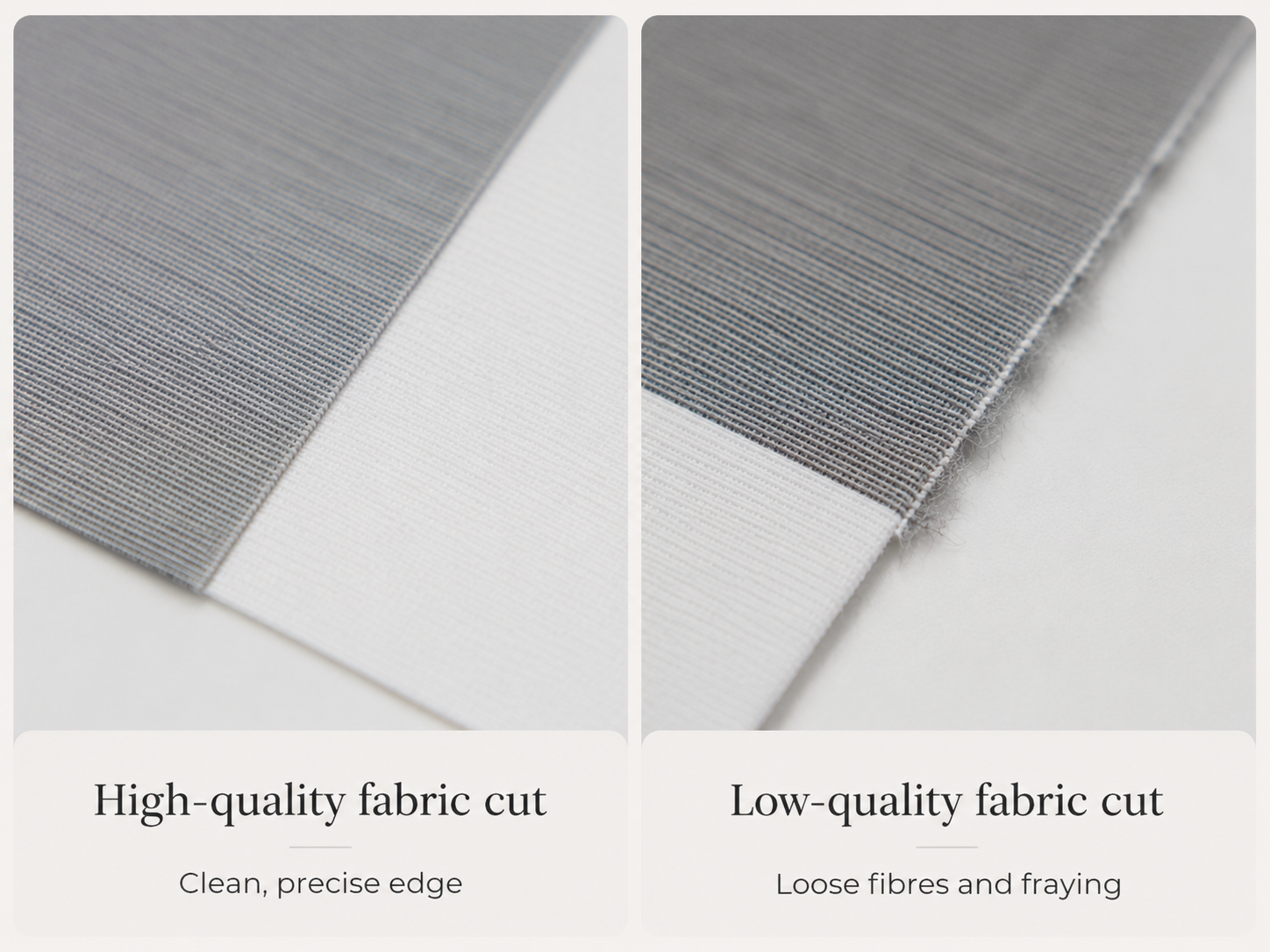
That’s why it helps to think about how you use each room. Paying more for a special fabric in the living room can make sense since you see it every day. But spending extra on a basement utility-room window probably won’t change how the blind works.
The same idea applies to the whole house: upgrade the fabric where it makes sense for function or looks, instead of picking the same option for every room since materials can add tens or even hundreds of dollars to the price, especially for large blinds.
Operating System: Cordless, Motorised and Smart Blinds
The operating system can make one of the biggest differences in custom blinds price. Once you’ve picked the type, size, and fabric, changing how the shade opens and closes can add anywhere from a few dozen to several hundred dollars.
Let’s check out the real pricing example for this 45″ × 45″ light-filtering zebra blind available at Ecoline:
| Operating system | Price | Added cost vs. base |
| Corded | $241.70 | Base |
| Cordless | $287.27 | +$45.57 |
| Wi-Fi motor | $414.73 | +$173.03 |
| Motorised | $435.40 | +$193.70 |
| Motorised + smart-home integration | $727.05 | +$485.35 |
In this example, moving from the basic operating system to cordless adds less than $50. Full smart-home integration pushes the same window covering to roughly three times the base price, without changing the dimensions or fabric.
How Much Do Motorised Blinds Add?
Motorisation means the blind is operated by an electric motor, usually controlled by a remote or an app.
For the 45″ × 45″ zebra blind above, moving from the $241.70 base configuration to motorisation increases the price to about $415 – $435, depending on the motor system.
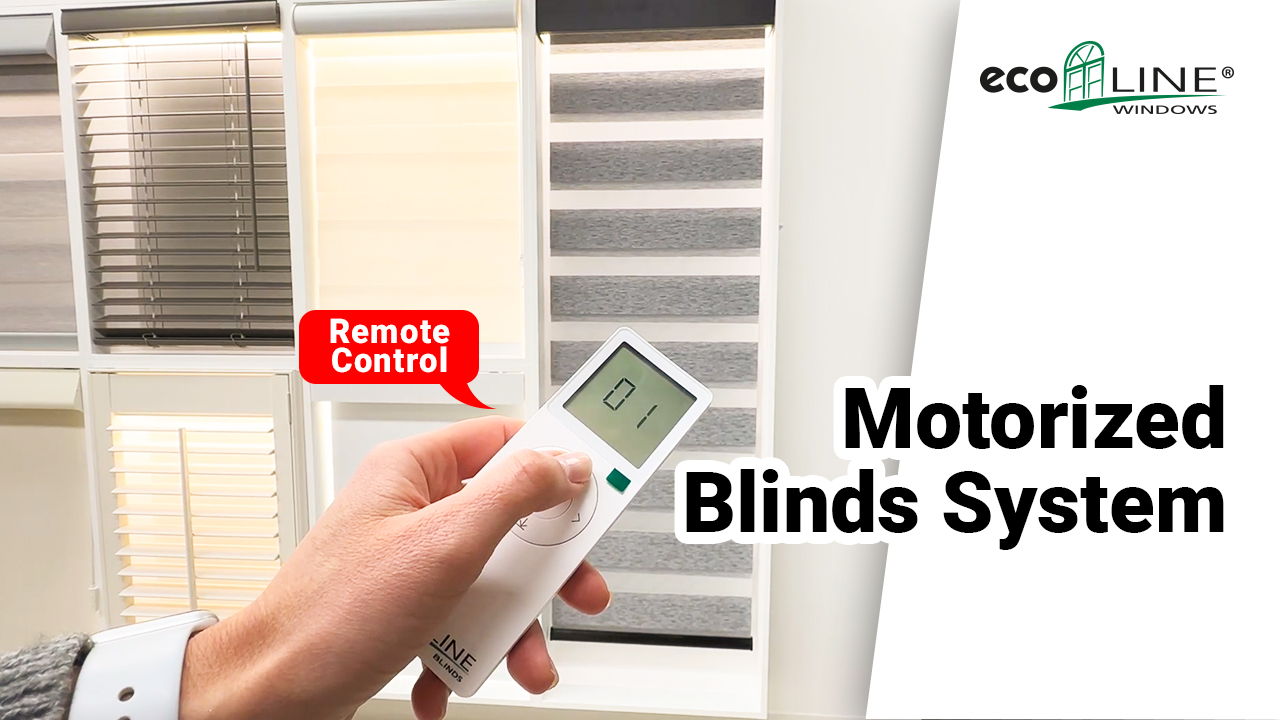
This high-end feature makes the most sense for:
- large or heavy blinds
- high or difficult-to-reach windows
- windows where shades are opened and closed several times a day
- groups of blinds homeowners want to operate together
For a standard bedroom window that’s easy to reach, motorisation is mostly for convenience. But for a tall stairwell window or a wall of large living-room blinds, it can solve a real usability problem.
Window Blinds Installation and Other Costs That Can Change the Final Quote
Two quotes for your home blinds can look very different, even if the products seem similar, because not every company includes the same services in the price. One quote might cover just the product, while another includes measuring, delivery, installation, and warranty.
This difference matters most with custom blinds. Even a small measurement mistake can make an inside-mounted blind too wide or leave gaps at the sides, so professional measuring and installation are valuable for bigger or more expensive orders.
What should be included in a custom blind quote?
| Item | Covered by Ecoline | Why it matters |
| In-home measurement | Yes, free | Confirms the finished blinds will fit the actual opening |
| Custom manufacturing | Yes | Covers made-to-measure dimensions rather than a stock size |
| Delivery | Yes | Can add to a large whole-home order |
| Installation | Yes but you can order supply-only too | Especially important for oversized and motorised blinds |
| Motor / remote | Usually configuration-specific | Confirm exactly which controls are included |
| Smart-home hardware | Often extra | A hub or additional components may be required |
| Removal of old blinds | Yes | Useful when replacing coverings throughout the house |
| Warranty | 7 Years | Check product, motor and labour coverage separately |
That’s why you should be careful when comparing a $250 blind that’s just the product with a $350 blind that includes installation. The second quote might seem $100 higher, but it could actually be a better deal once you add up the cost of measuring, installation, and other services.
How Much Should You Budget for New Blinds?
For most homeowners, it’s better not to use one flat price per window. Your house might have several small bedroom windows, a big living-room window, and a patio door, and each one could need a different type of blind.
A more realistic way is to budget by room and by what you need each blind to do.
| Room | Practical starting point | Upgrade worth considering | Where you can usually save |
| Guest bedroom | Roller or zebra | Room-darkening fabric | Manual operation |
| Master bedroom | Roller, zebra or cellular | Blackout fabric, cordless or motorised | Smart integration if rarely adjusted |
| Living room | Zebra or roller | Premium fabric, motorisation on large windows | Avoid upgrading every blind automatically |
| Home office | Roller or zebra | Glare-control fabric | Standard manual operation |
| Patio door | Vertical or suitable wide-opening system | Motorisation if frequently used | Skip decorative upgrades that add little function |
| Large picture window | Roller, zebra or cellular | Stronger hardware, motorisation | Keep fabric collection simple if size already drives up cost |
| Basement / utility room | Basic roller | Usually unnecessary | Stock or simpler custom configuration |
A basic bedroom blind might cost a few hundred dollars, while a large cellular or smart motorised shade can cost $1,000 or more. That’s why you shouldn’t estimate a whole-home project by just multiplying the cost of one sample blind by the number of windows.
A Simple way to build a realistic window blinds installation budget
Before you ask for quotes, write down these five things for every window or door:
- Width and height
- Blind type
- Light-filtering or blackout fabric
- Manual, cordless or motorised operation
- Whether professional installation is included
This turns a vague question like “How much will blinds for my house cost?” into something suppliers can price accurately.
For example, if you’re replacing eight blinds, you might pick basic cordless rollers for four bedrooms, blackout shades for two sleeping areas, a motorised zebra blind for the living room, and a vertical blind for the patio door. This mix can give you a better result than choosing the same expensive option for every window.
The goal isn’t to buy the cheapest blind for every room. It’s to spend more where upgrades improve privacy, comfort, or ease of use, and keep things simple where they don’t.
Once you know the size, product type, fabric, and operating system, your custom quote will be much more meaningful and easier to compare between suppliers.
FAQ
How much do custom blinds cost per window in Canada?
Custom blinds and shades usually start at about $200 to $500 for a standard window. Larger, premium, or motorised blinds can cost $600 to $1,000 or more. Actual prices depend on the size and features you choose.
Are custom blinds more expensive than ready-made blinds?
Custom blinds tend to cost more than ready-made blinds because they are made to fit your windows exactly. They may also include professional measuring, installation, better fabrics, and warranty coverage. Ready-made blinds are less expensive since they come in standard sizes and simpler styles, so they work well if your windows are a common size.
How much do motorised blinds cost?
Motorised blinds cost more because you pay for the motor, controls, and installation on top of the base price. Most custom blinds with motorisation cost about $450 to $1,200 per window installed. If you have large windows, premium fabrics, hardwiring, or smart-home features, the price can be even higher.
How much does it cost to install blinds in a whole house?
The cost to install blinds throughout your home depends more on the types of windows you have than the number. At Ecoline, the average price for custom blinds and installation on seven windows is around $2,200. If your home has patio doors, blackout fabrics, cellular shades, or motorised blinds, the total cost can go as high as $3,500 – $4,100


1750 Coast Meridian Rd #102,
Port Coquitlam, BC V3C 6R8
100, 17866 106A Avenue,
Edmonton, AB, Canada,
T5S 1V3
3307 Dunmore Rd SE #12,
Medicine Hat, AB,
Canada, T1B 3R2
2081 Merivale Rd #201, Ottawa, ON, Canada, K2G 1G9
by appointment only
108, 55 Akerley Blvd, Dartmouth,
NS, Canada, ВЗВ 1M3