


-RATED BY




Built in Canada
All Ecoline windows and doors are built in Ontario, Canada
- Top-of-the-line machinery (Forel, Gracco, Bottero) to produce the best products
- Over 60,000 sq. ft manufacturing plant
- Energy Star-rated and NAFS-11-tested
- Manufactured for local weather conditions
Cheap vs. High-Quality Window Blinds: What Are You Really Paying For?
Jul 31, 2026
18 min read
36
“Why should I overpay for custom window blinds when I can buy stock ones much cheaper?”
At Ecoline, we get this question a lot. Homeowners usually ask this when shopping for new window treatments after replacing their windows or when their old blinds start to sag, fray, or get hard to use.
And that’s really a fair question. A custom roller or zebra shade might cost a few hundred dollars per window, while a basic stock model from a big-box store might be 5 times cheaper. From far away, they might even look alike.
However, the actual differences become apparent when you go beyond just the fabric.
The cassette could bend. The roller tube may flex as well. When the fabric is held in place by simple adhesive, it might shift or come loose. The plastic components inside can cause the mechanism to become stiff and noisy. Edges which have not been cut properly may start to fray quickly.
And while these issues are difficult to see in showrooms or online, they do affect the appearance and performance of your blinds after several months of use, becoming a major pain point if you install low-quality models.
Blinds of higher quality cost more because of parts that aren’t visible; these include stronger hardware, better fabric attachment, smoother mechanisms, more accurate cutting, stronger brackets, and components selected to fit the size of your window.
In this guide, our experts break down the most important construction details, when paying more for custom blinds is worth it, and when a cheaper solution might still work for you.
Cheap vs. Quality Blinds and Shades: Side-by-Side Comparison
| Component | Low-quality blinds | High-quality blinds by Ecoline | Key difference |
| 1. Cassette strength | A basic cassette that may flex across wider windows | A reinforced cassette with an internal strengthening component | Helps prevent bending, sagging and an uneven appearance |
| 2. Mounting brackets | Small brackets or components made mostly from plastic | Heavy-duty metal brackets with a clean protective cover | Provides stronger support without leaving bulky hardware exposed |
| 3. Fabric attachment | Fabric attached to the roller tube mainly with adhesive tape | Fabric secured inside grooves built into the tube | Keeps the fabric straighter and reduces the risk of separation |
| 4. Bottom rail connection | Fabric glued or taped to the bottom component | A cleaner, more secure connection designed for the shade system | Helps the lower edge remain even and properly aligned |
| 5. Operating mechanism | A stiff or noisy mechanism that may be difficult to turn | A smoother mechanism made with better-fitting components | Makes the blind easier and more pleasant to use every day |
| 6. Internal components | Basic plastic load-bearing pieces | Internal components reinforced with metal parts | Improves stability and reduces strain on frequently used mechanisms |
| 7. Cordless system | A simple spring mechanism with limited sizing options | A more robust cordless system designed for consistent operation | Offers smoother control, better reliability and more size flexibility |
| 8. Cord safety component | A large, bulky cord guide that remains visible beside the window | A compact safety component with a cleaner profile | Meets an important functional need without dominating the window frame |
| 9. Motor and controls | A basic motor, limited remote and proprietary charging cable | A higher-quality motor, upgraded controls and convenient USB-C charging | Makes operation, charging and future replacement accessories easier |
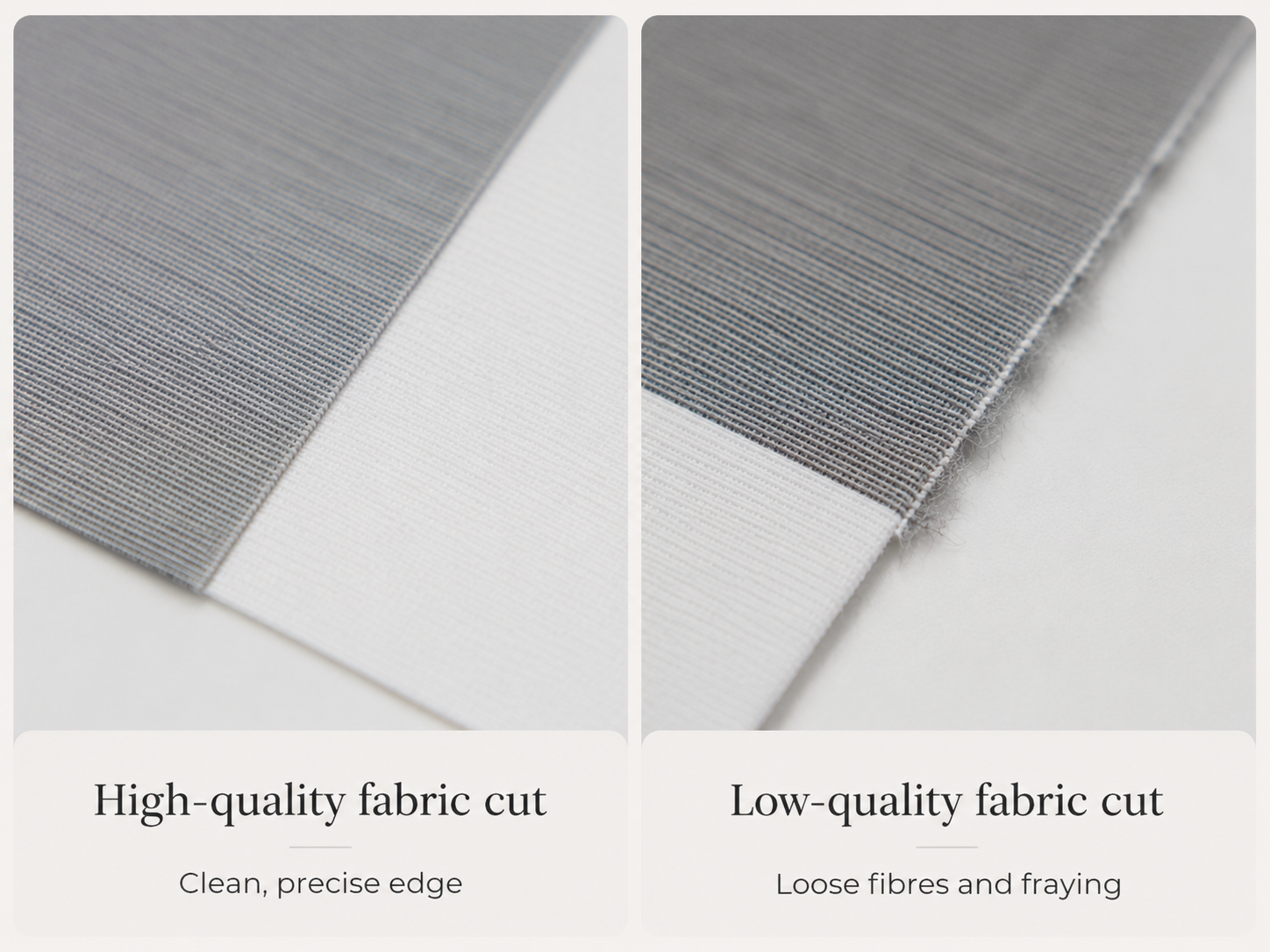
| 10. Cutting and finish | Uneven fabric edges, loose threads or mismatched components | Precisely cut fabric with coordinated cassette and bottom-rail finishes | Gives the installed covering a cleaner, more consistent appearance |
1. Reinforced Blind Cassettes & Large Windows
A roller or zebra shade that works well on a narrow bedroom window may perform very differently across a wide living-room opening.
The larger the shade, the more weight the cassette, roller tube and mounting brackets must support. Blackout fabrics, layered zebra materials and motorized systems can add even more load. If the cassette is too light for the span, it may gradually bend in the centre.
Once that happens, your window coverings can begin to sag, ripple or roll unevenly. The fabric may look lower in the middle, the bottom rail may no longer sit level, and the shade can start rubbing against nearby components as it moves.
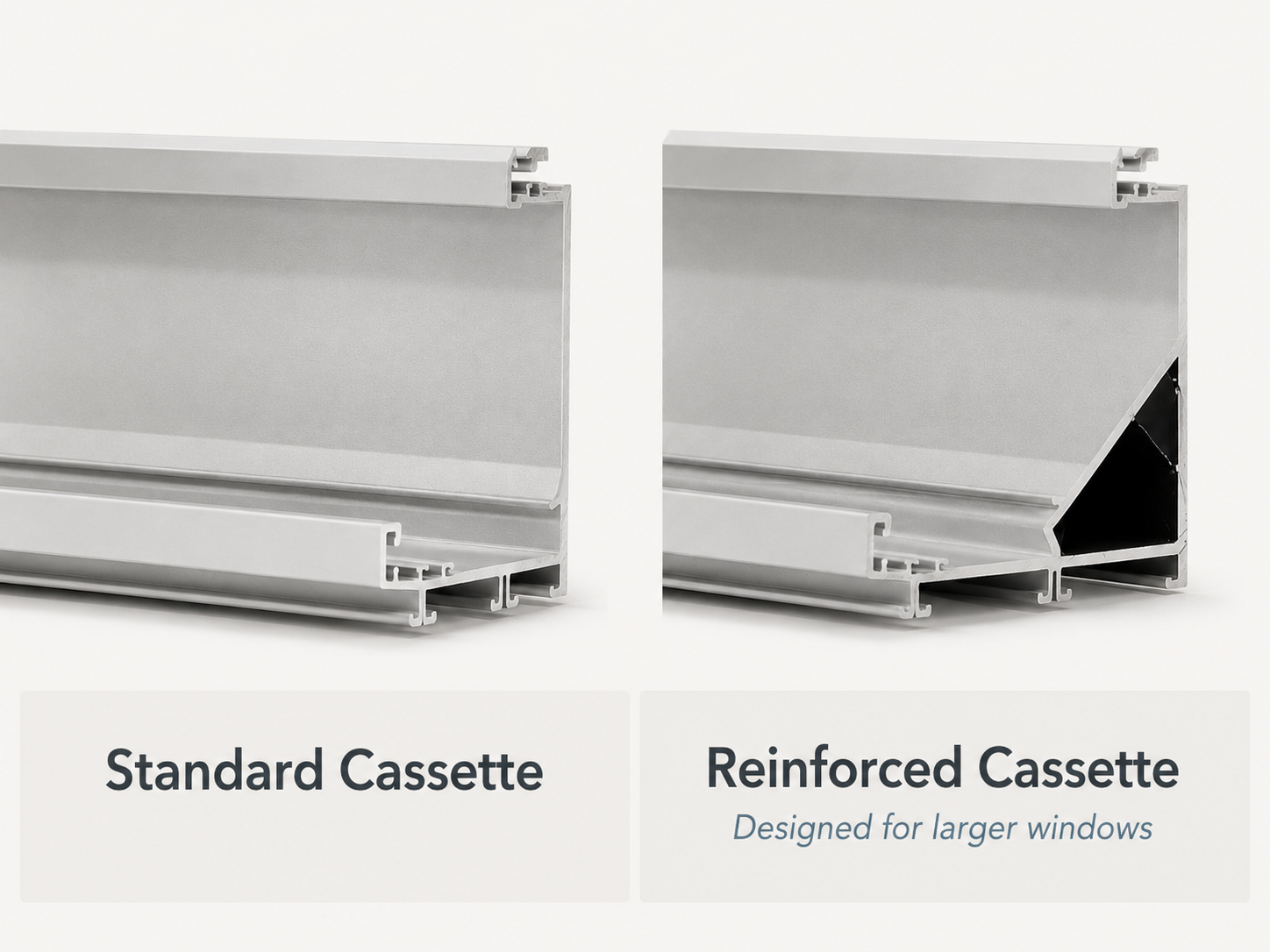
This is one of the main differences between cheaper blinds and those custom-made for bigger windows. Many basic blinds use the same cassette for all sizes. This saves on manufacturing costs, but it doesn’t always give enough support for wide windows.
At Ecoline, all our roller blinds and zebra shades use a reinforced cassette with an additional strengthening component inside. This reinforcement helps the cassette maintain its shape and allows the shade to be manufactured in larger widths without relying on an overly flexible housing.
The brackets carry more weight than homeowners realize
The security of the cassette depends entirely on the hardware that holds it in place against the window.
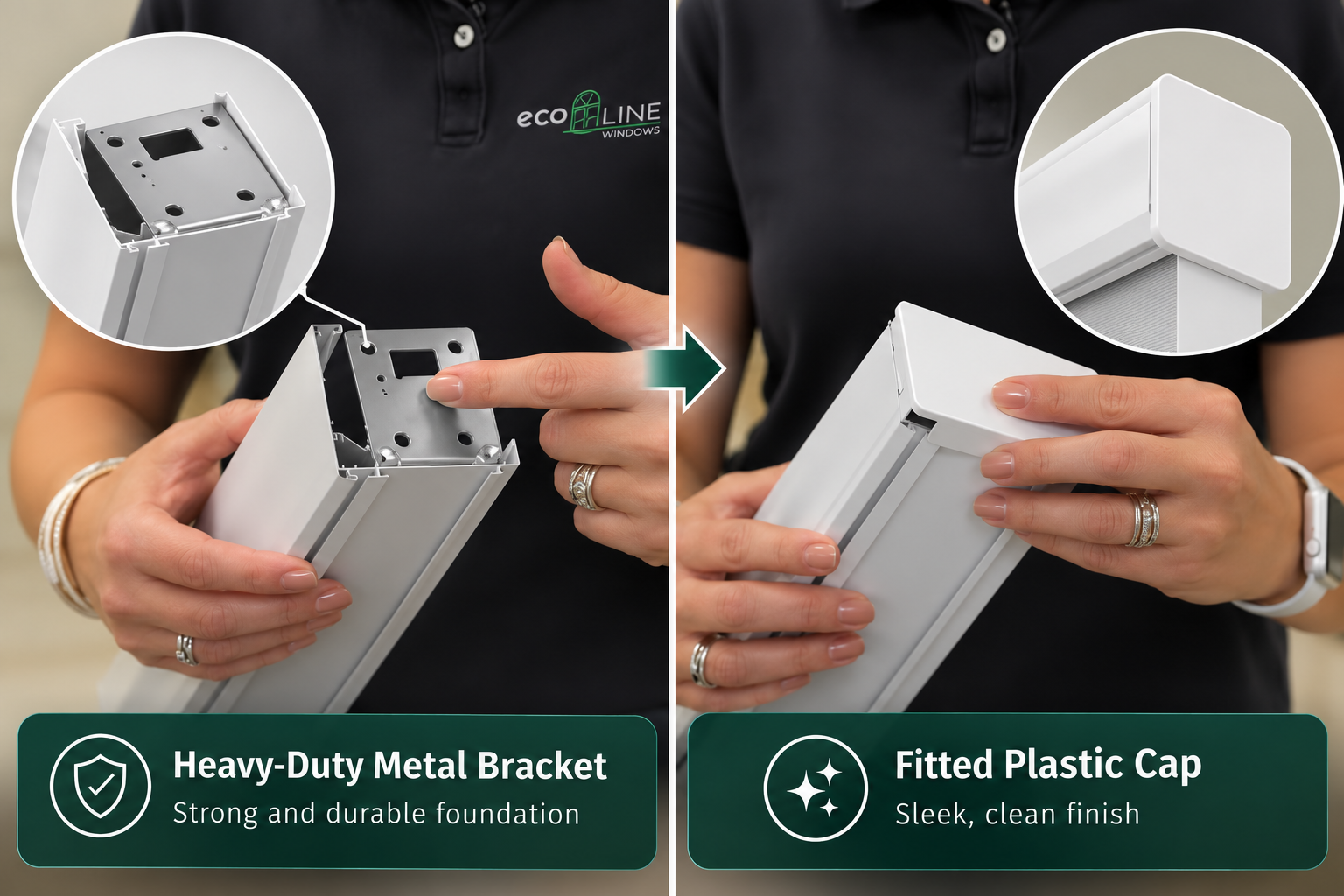
Certain cheaper shades make use of very small brackets or mounting components which are mostly made of plastic. In some cases these will be enough for a lightweight and narrow shade, but they can appear less substantial when the blind becomes wider or heavier.
Consider a 2.5-metre-wide living-room window. A basic stock shade may look acceptable immediately after installation. If the cassette and tube are not designed for that span, the centre can begin to deflect under the weight of the fabric. A reinforced cassette, correctly sized tube and metal brackets provide a much more stable foundation.
With small windows, the difference may go unnoticed, but with large windows you should raise the question about it right away.
That’s why always look for products with a heavy-duty metal mounting bracket. A fitted plastic cap covers the bracket after installation, so the structural component remains strong while the finished hardware looks clean and coordinated.


Protective film prevents damage before the shade is even used
The cassette can also pick up scratches, fingerprints and marks while it is being transported, measured and installed.
All blind cassettes manufactured by Eoline come with a protective film on the visible surface, and the installer removes this after the blind has been secured, thus lowering the chance of having to hand over a new product with cosmetic damage.
Yes, this might seem like a minor detail, but major details don’t make a premium product.
2. Fabric Attachment and Cutting Affect How Long Blinds Look New
Most homeowners pick blinds based on fabric colour, texture, and how much light they let through. But it’s even more important to look at how the fabric is attached, cut, and held in place.
- On many lower-cost roller shades, the fabric is fixed to the roller tube with adhesive tape. This can work when the adhesive is applied evenly, and the product is designed correctly. Problems appear when the bond is weak, the fabric is attached slightly off-centre, or the shade is used frequently.
The fabric could eventually start to shift, pull away from the tube, or roll unevenly, and even a minor alignment issue might cause the shade to lean to one side when it is moved.
- Ecoline roller tubes include specially designed grooves that hold the fabric directly in place. This creates a more secure and consistent connection across the width of the shade. The fabric remains straighter on the tube and is less likely to separate during regular operation.
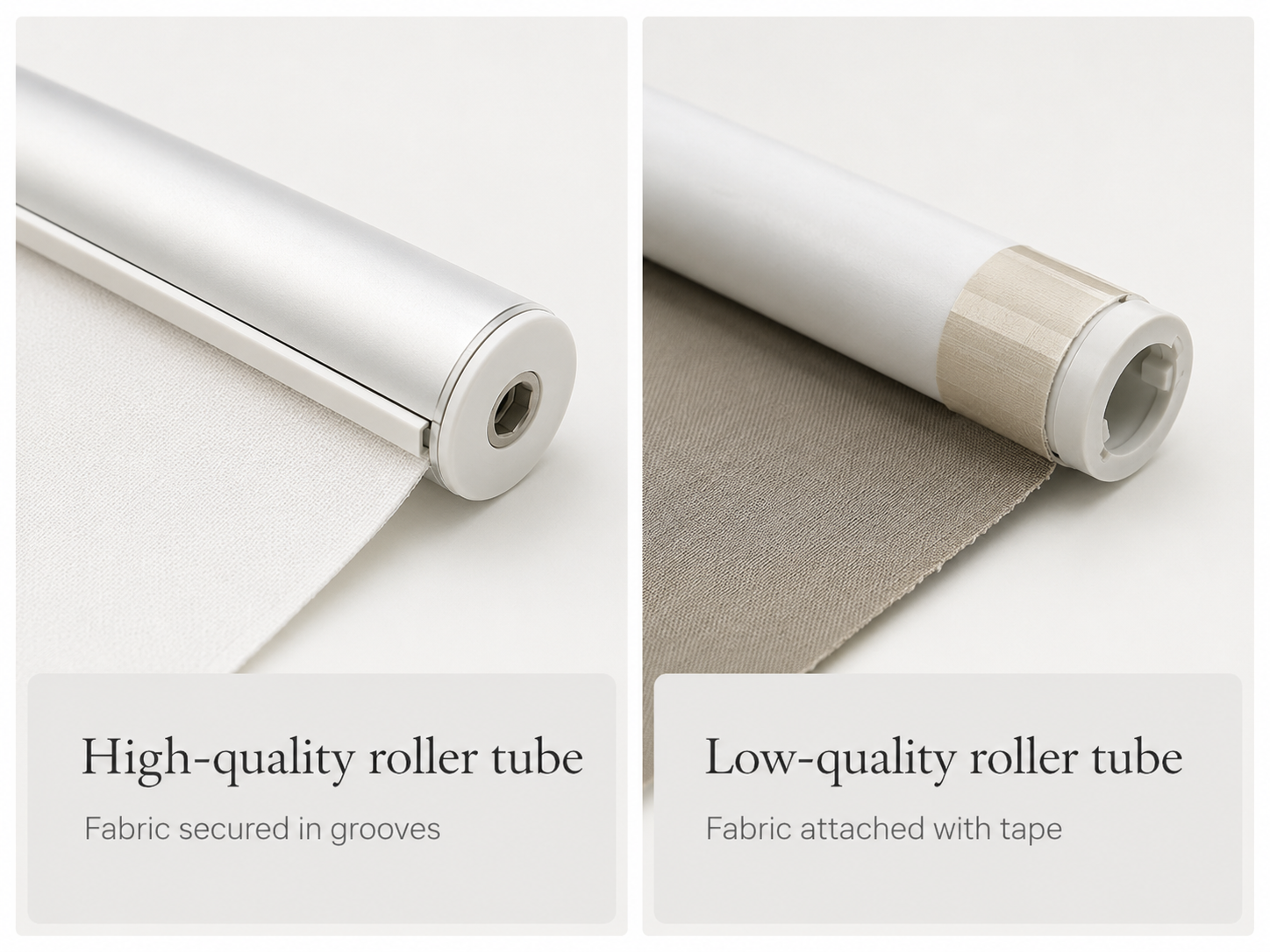
The same reason applies to the connection at the bottom rail. Certain cheap shades place a great deal of reliance on the adhesive along the lower edge, and if that connection becomes loose, the fabric might wrinkle, lift or sit unevenly above the rail.
Clean edges are a sign of better fabrication
It’s also easy to miss how the fabric is cut until you see the shade in bright daylight. If the edges aren’t cut well, you might see loose threads, uneven spots, or fraying right away. This can make a new shade look old before it’s even used much.
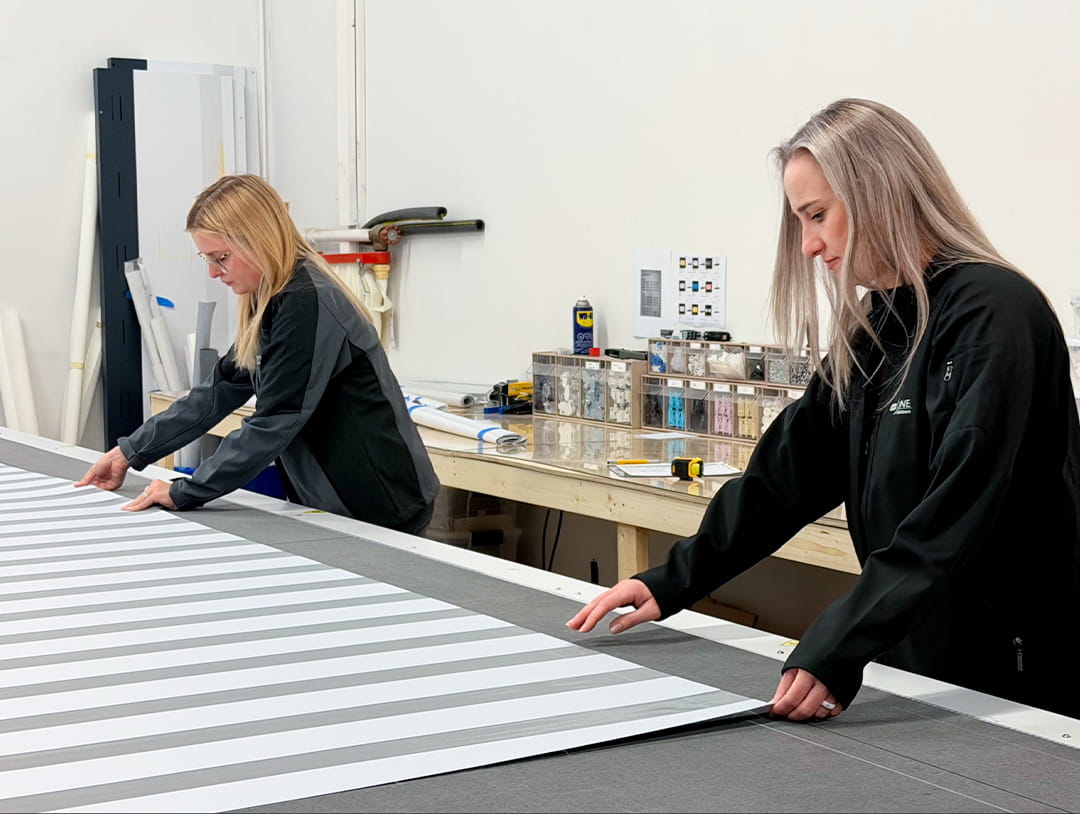
At Ecoline, we use expensive precision-cutting CNC machines to produce clean, even fabric edges that serve homeowners for at least 5 years, considering everyday use. Better cutting does not only improve appearance. It also reduces loose fibres that can catch, fray further or become more noticeable as the shade moves.
Homeowners should inspect the edges of a full-size sample rather than relying only on a small swatch. Look closely at both sides of the fabric, the attachment to the tube and the connection to the bottom rail.
Even excellent fabric can result in a disappointing blind if it is cut badly or attached carelessly. The method used in making the shade is just as important as the material itself.
3. A Better Operating Mechanism Feels Smoother Every Day
A blind may appear perfect when it’s fully lowered, but you’ll see the difference in quality once you begin to use it every day.
Lower-cost operating mechanisms can feel stiff, uneven or difficult to control. Some produce clicking, scraping or rattling sounds as the shade moves. Others require more force to raise and lower, especially after regular use.
This usually comes down to the quality and fit of the components inside the mechanism.
Many budget systems rely heavily on basic plastic parts. Plastic is not automatically a poor material, and well-engineered components can perform reliably. The concern is how much load those parts carry, how precisely they fit together and whether the mechanism was designed for the size and weight of the shade.
What we do at Ecoline is supply our operating systems with metal internal components in areas where additional strength and stability are useful. This helps the mechanism turn more easily, produce less noise, and give homeowners better control over the shade’s position.
This difference really matters if you use the blind every morning and night. A stiff mechanism might not seem like a big deal at first, but after hundreds of uses, it can be the thing you notice most.
Cordless systems are not all built the same
Cordless blinds are popular since they give a neater look and make it unnecessary to have a long operating cord; they can also be a sensible option in houses with children as long as the product is properly chosen and installed.
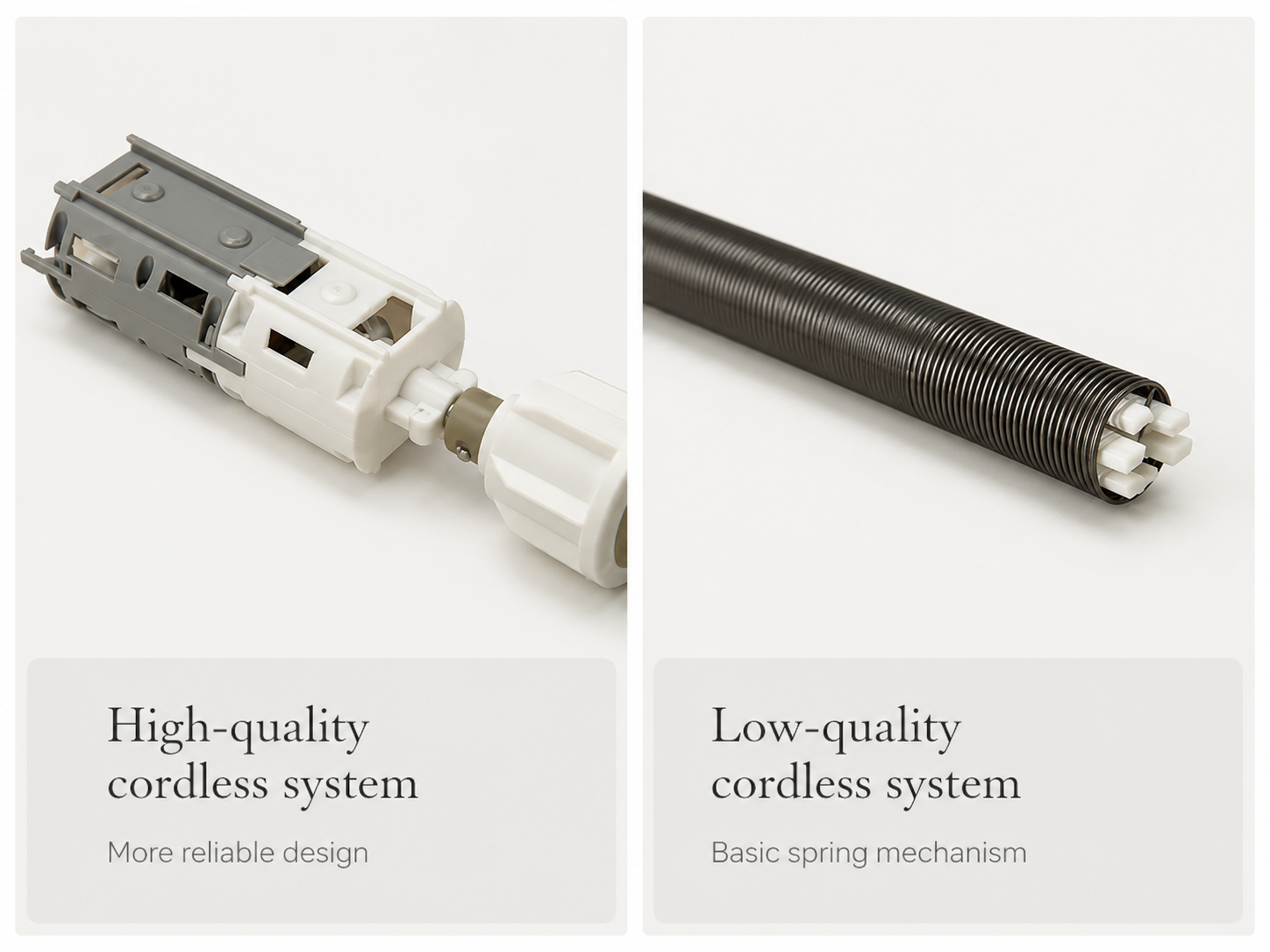
Many inexpensive cordless shades use a simple spring-based mechanism. These systems may work well initially, although lower-quality versions can lose tension, stop at uneven heights or become difficult to control.
High-quality blinds should be designed with a better internal structure to ensure more consistent performance and enable cordless shades to be made in smaller sizes than some conventional spring systems.
4. Motor Quality Matters More Than Smart Features
Homeowners often compare motorised blinds by looking at the remotes, apps, and automation features. These are helpful, but the motor itself is what really makes your window shade work smoothly and reliably.
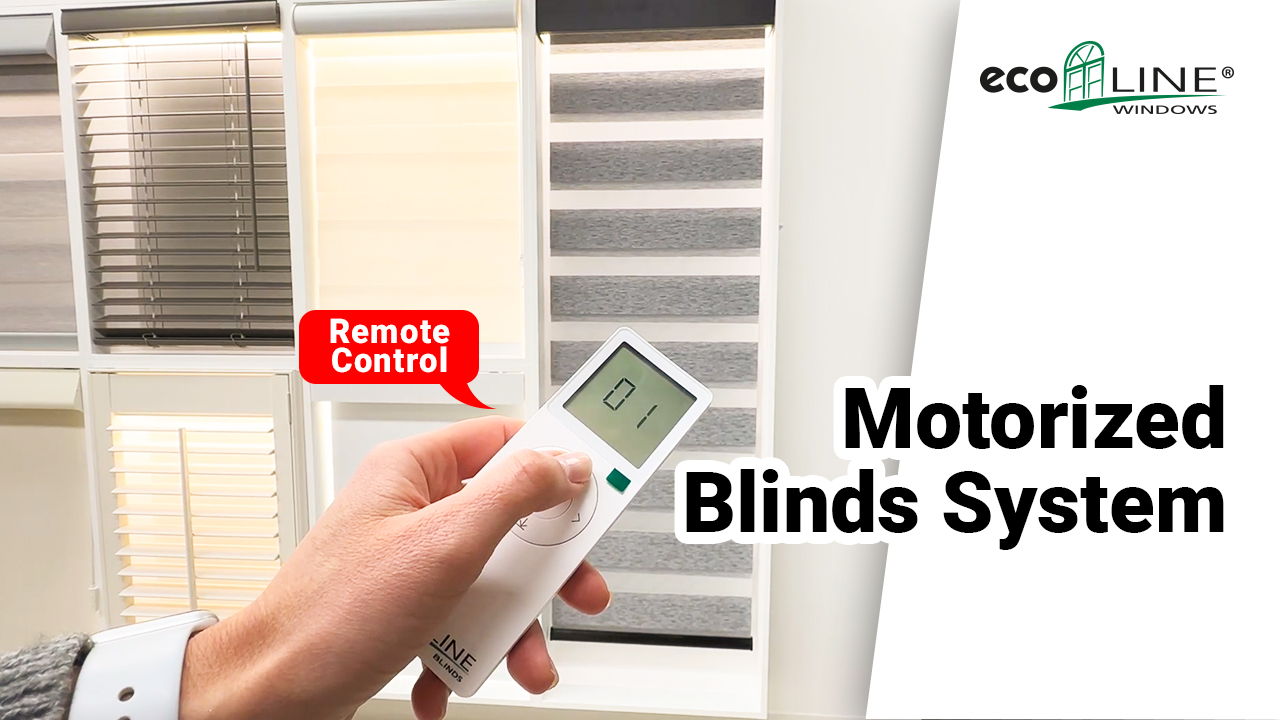
A lower-cost motor may be adequate for a small, lightweight blind. Problems are more likely when the same system is used on a wide shade, a heavier blackout fabric or a window covering that is opened and closed several times a day.
- The motor needs enough torque for the size and weight of the shade. It should raise the fabric evenly, stop consistently and operate without jerking or excessive noise. The cassette, roller tube and brackets must also be designed to support the additional weight of the motorized system.
At Ecoline, we incorporate higher-quality motors chosen for reliable performance over a long period of time; the movement is smoother, and the system is constructed to cope with ordinary daily use without subjecting the shade to unnecessary strain.
USB-C charging removes a common inconvenience
Many rechargeable blind motors need a special charger. This might not seem like a big deal at first, but it can be annoying if the cable gets lost, damaged, or packed away during a move.
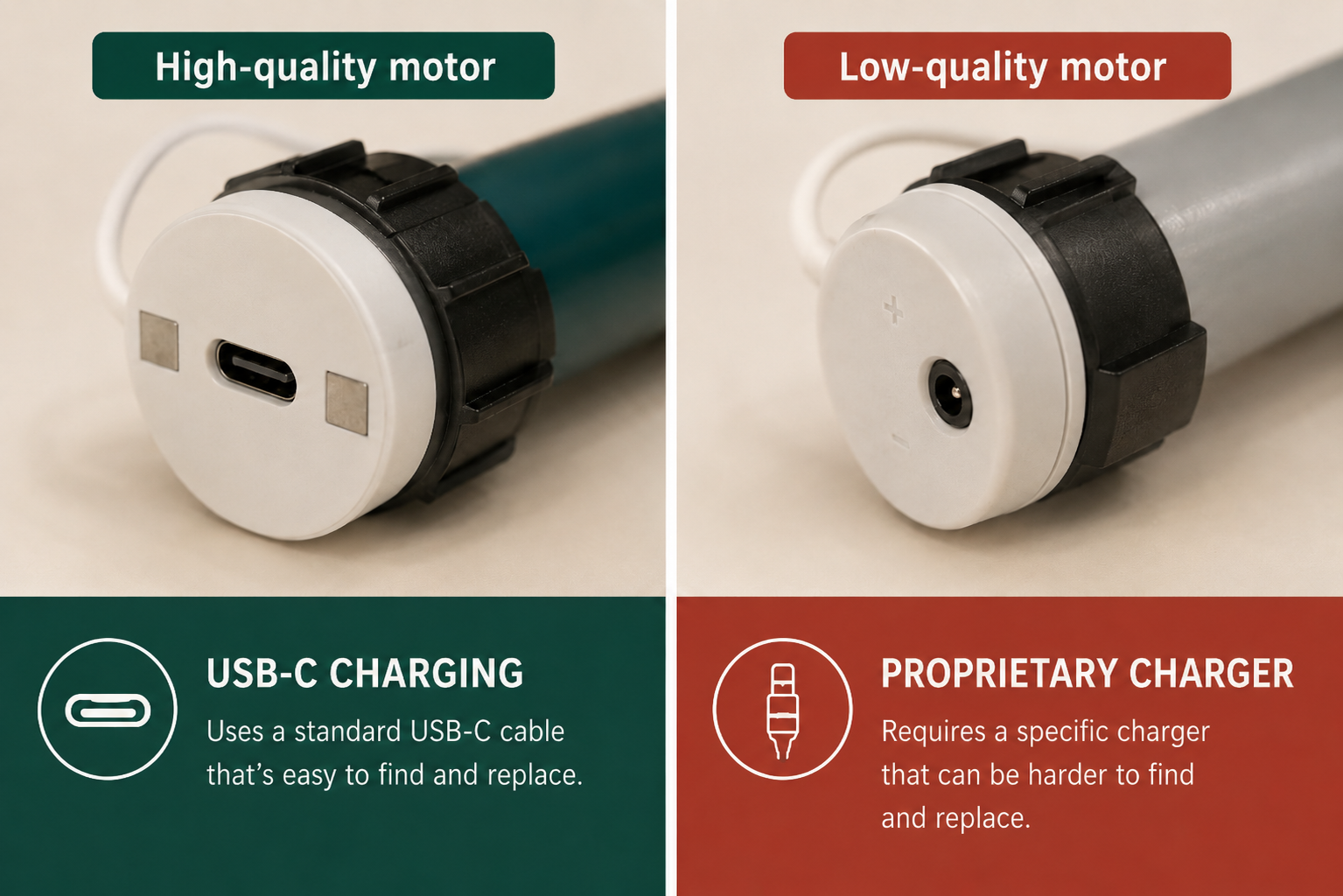
To get a replacement, you’ll need to work out the motor model, get in touch with the supplier, and wait for the special cable to turn up.
- Instead, higher-quality motorised blinds come with USB-C charging. Most households already have compatible chargers for phones, tablets, headphones and other devices, which makes the blind easier to recharge without keeping track of another unique accessory.
You should still think about how you’ll charge the blind before installing it. For tall or hard-to-reach windows, ask how often you’ll need to charge the motor and if the charging port will be easy to reach.
A better remote should make control simpler
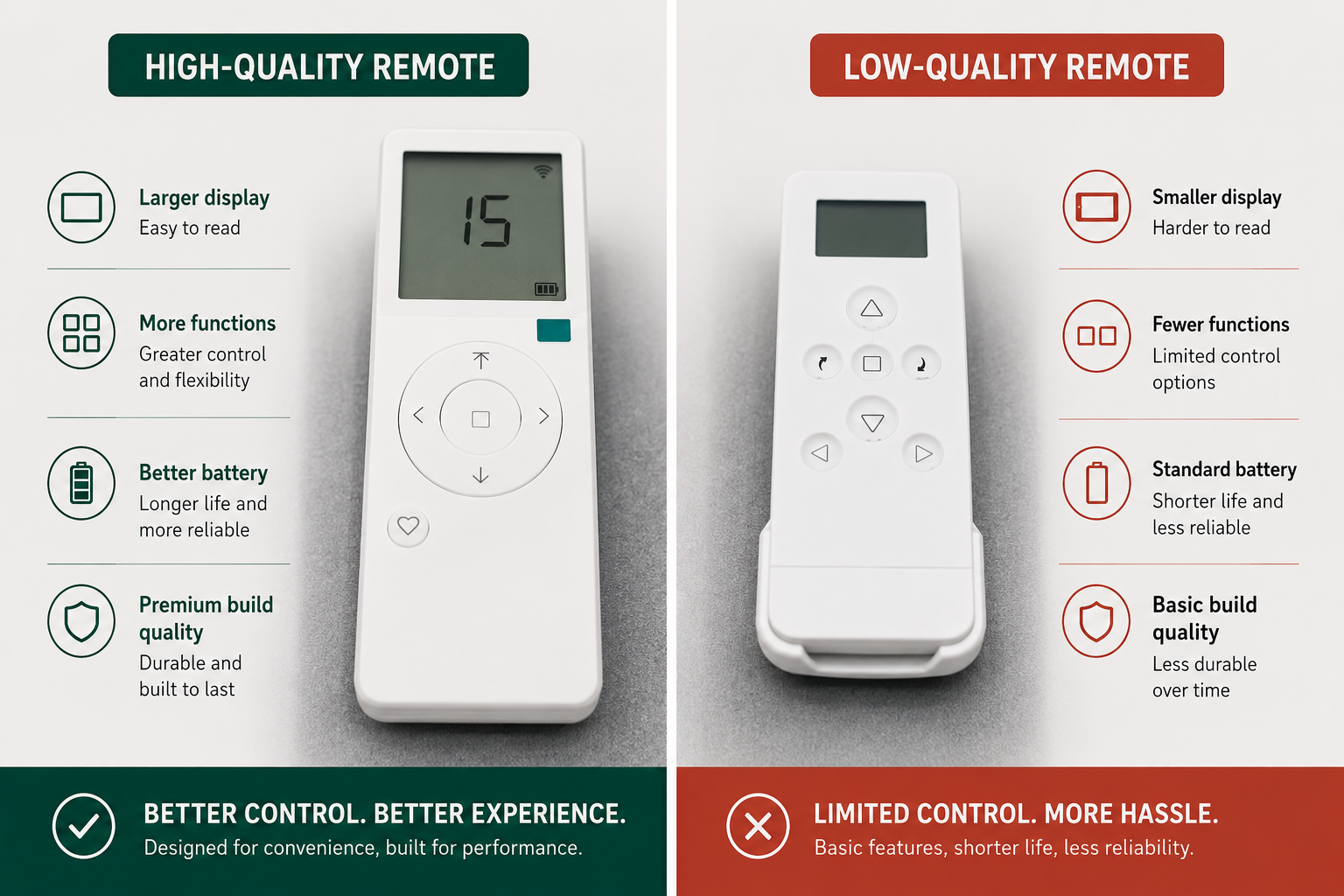
Some older blind remotes have small screens, limited buttons, and confusing channel settings. They work, but programming several blinds or adjusting each one can feel more complicated than it should.
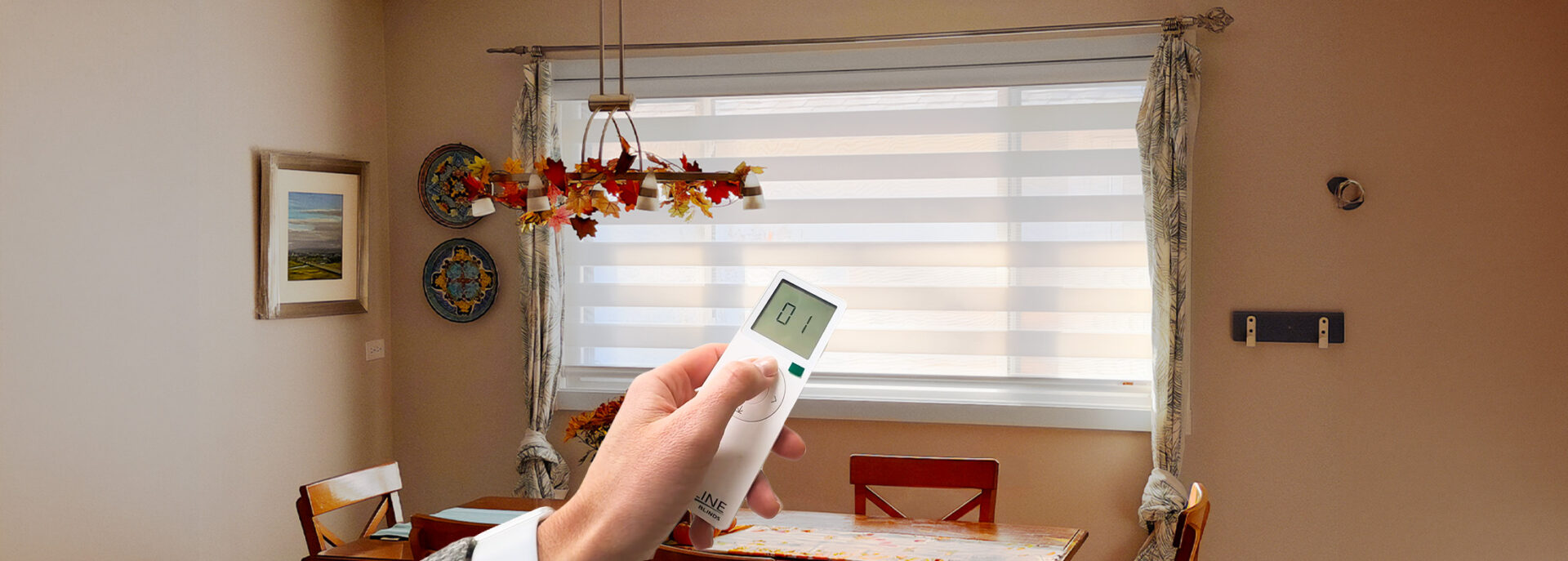
Ecoline’s upgraded remote has a larger display and provides access to more functions and settings. This makes it easier to control one shade, organize several shades into groups and understand which window covering is being adjusted.
Homeowners comparing motorized blinds should ask five practical questions:
- How is the motor charged?
- Is it easy to order replacement remotes and chargers?
- Can several shades be controlled both individually and as a group?
- What will occur if the motor requires servicing?
- Does the warranty on the product include the motor and the controls?
Motorised blinds are most useful when it comes to large, high or frequently used windows; for a small window beside the sofa, a good manual or cordless blind would be more appropriate. It is worth paying extra whenever the motor really does solve a problem, and the motor is supported by good parts and service.
5. Matching Finishes and Small Details Change the Final Look
You can usually see the difference between budget and quality blinds best after they’re installed, when you see all the parts together instead of just in a catalogue.
On some lower-cost shades, the cassette and bottom rail are close in colour without being an exact match. A white cassette may have a noticeably warmer or cooler bottom rail. Dark finishes can reveal the difference even more clearly.
A small mismatch might not seem like a big deal on a sample. But across several windows in an open living room, it can make the blinds look mismatched instead of well-designed.
Matching the colour of the bottom rail with that of the cassette to achieve a more uniform appearance from top to bottom is what really differentiates your regular model from a custom-quality window treatment; the brackets are fitted with caps, the cord safety feature has a compact design, and the cassette is kept covered by film until installation is finished.
These features don’t change how much light comes in. But together, they decide if your shade looks polished or just basic.
Cheap vs. quality window shades: sizing matters
Stock blinds are available in only a few standard widths and lengths, which helps keep the price low and lets homeowners take the product home.
The trade-off is how well they fit.
A stock shade may be slightly narrower than the window opening, leaving larger light gaps on both sides. It may also include far more fabric than the window requires, creating a bulky roll at the top or unnecessary material when the shade is lowered.
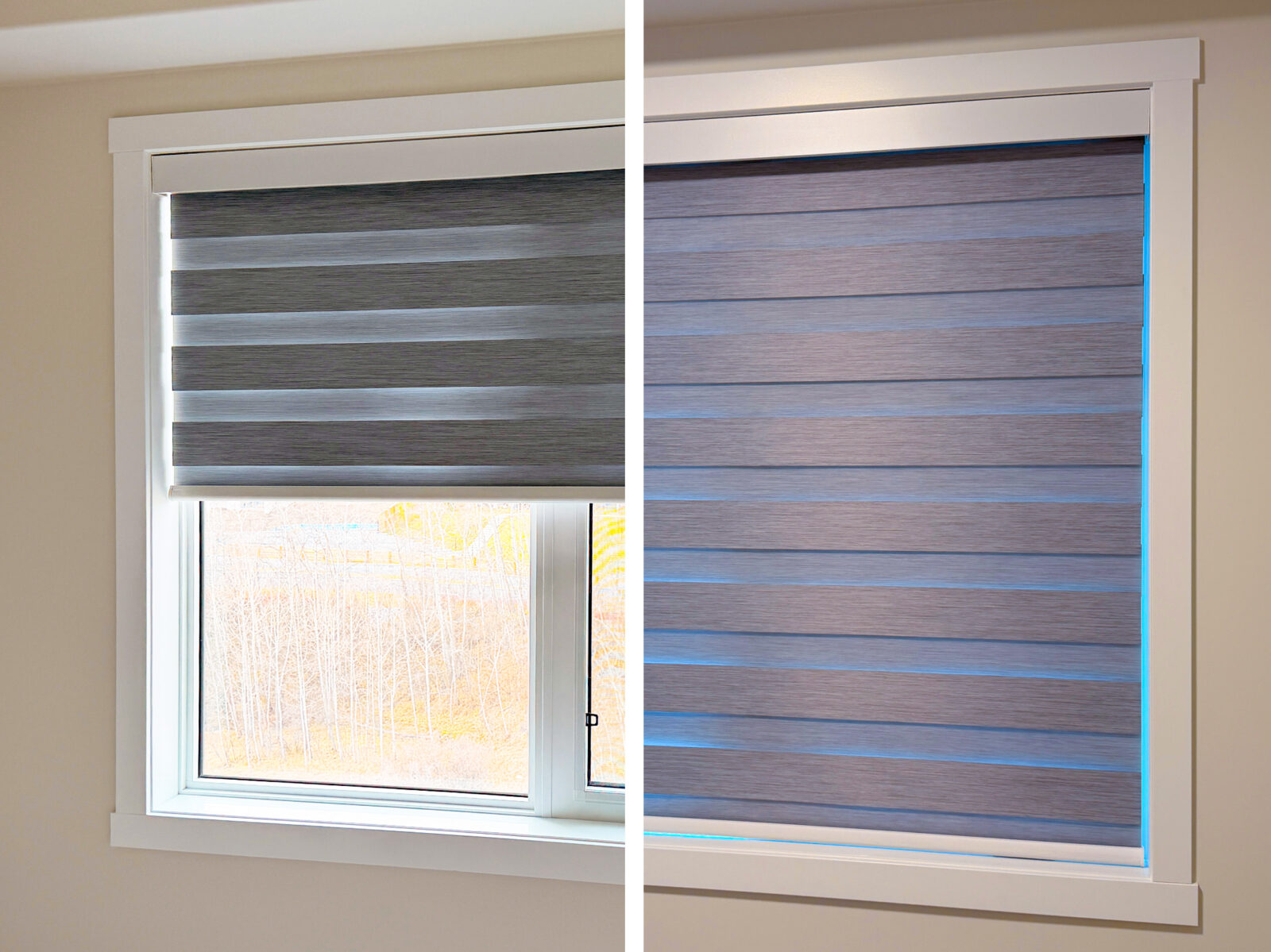
Some stock blinds can be trimmed, but the results depend on the design and how carefully they’re cut. Cutting off too much can mess up the fabric alignment, bottom rail, or how the blind works.
Custom blinds are manufactured for the measured opening. The installer can account for:
- inside or outside mounting
- window depth and frame obstructions
- handles and hardware
- desired side coverage
- cassette dimensions
- finished shade length
- access to the motor or controls
Accurate sizing is especially important for zebra shades. Their alternating sheer and solid fabric bands need to align properly for the homeowner to control privacy and light as intended.
Installation quality still affects a well-made product
Even if the cassette is good and the fabric is well cut, the blinds will not function well if the brackets are not level or not firmly secured.
A slight mounting error may cause the bottom rail to sit unevenly. Incorrect bracket spacing can place unnecessary stress on the cassette. A shade installed too close to a handle may rub every time it moves.
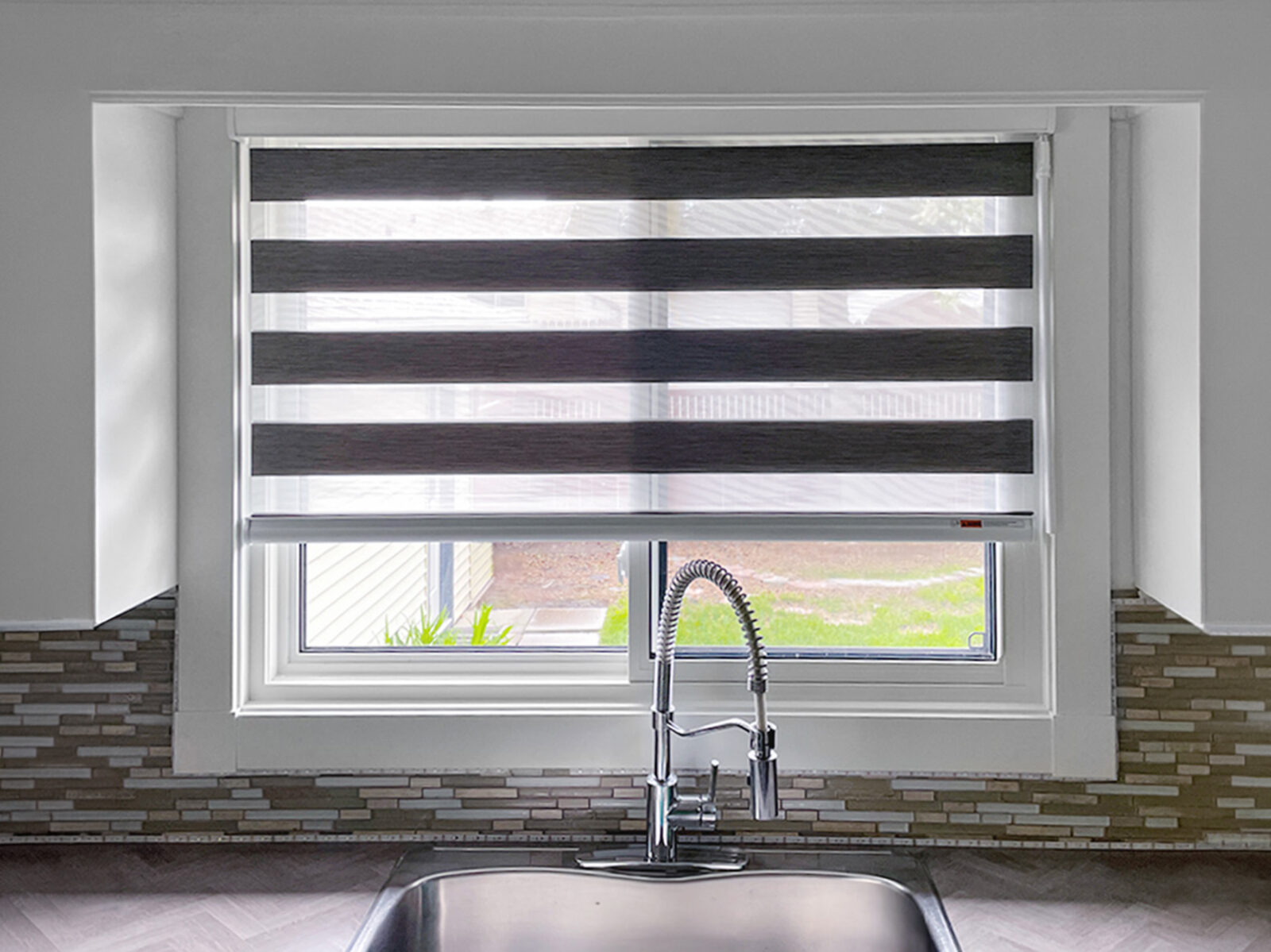
That’s why many custom blind quotes include professional measuring and installation. The cost covers more than just putting the blind on the wall. It helps avoid ordering the wrong size, picking the wrong mount, or finding a problem after the shade is made.
With a standard basement window, a well-measured store blind might be all that you need, but with a row of living room windows, a wide patio door, or new custom windows, it is much more important to get the size and finish correct.
Are High-Quality Blinds Worth the Extra Cost?
The real answer depends on your window, how often you’ll use your blinds and shades, and how long you plan to keep them.
Premium blinds are most valuable where weak construction would show or cause problems. Large windows, daily use, heavy fabrics, and motorized systems put more stress on every part. In these cases, stronger hardware and careful manufacturing can prevent costly or hard-to-fix issues later.
For instance, consider a large window in the living room that opens onto the street. You need privacy at night and would like to draw the blinds each morning. Although a cheap blind may appear to save money initially, daily annoyance will result if the cassette bends, the mechanism makes a noise, or the fabric shifts.
In the case of a small window in a basement which you hardly ever change, a standard type of shade would be quite adequate.
Higher-quality custom blinds are usually worth considering for:
- wide or unusually shaped windows
- open-concept rooms where several shades are visible together
- blinds operated once or more every day
- blackout shades with heavier fabric
- motorized or hard-to-reach installations
- newly replaced windows that require accurate mounting
- homes where the coverings are expected to remain for many years
- rooms where colour consistency and finish are important
A lower-cost stock blind may be enough for:
- a temporary privacy solution
- a short-term rental or property being prepared for sale
- a rarely used room
- a small window that closely matches a standard product size
- a space scheduled for renovation in the near future
- a homeowner comfortable measuring, trimming and installing the product
Stock blinds can be a great value if they fit well and you know what to expect. But their downsides matter more if you try to use them as a long-term fix for big or tricky windows.


1750 Coast Meridian Rd #102,
Port Coquitlam, BC V3C 6R8
100, 17866 106A Avenue,
Edmonton, AB, Canada,
T5S 1V3
3307 Dunmore Rd SE #12,
Medicine Hat, AB,
Canada, T1B 3R2
2081 Merivale Rd #201, Ottawa, ON, Canada, K2G 1G9
by appointment only
108, 55 Akerley Blvd, Dartmouth,
NS, Canada, ВЗВ 1M3