


-RATED BY




Built in Canada
All Ecoline windows and doors are built in Ontario, Canada
- Top-of-the-line machinery (Forel, Gracco, Bottero) to produce the best products
- Over 60,000 sq. ft manufacturing plant
- Energy Star-rated and NAFS-11-tested
- Manufactured for local weather conditions
Best Blinds for Large Windows: What Actually Works
Sep 11, 2026
16 min read
474
A covering that works well on a regular bedroom window can become heavy, uneven, or hard to use when covering eight or ten feet of glass. For large windows, the main concern isn’t just appearance. It’s whether the tube, headrail, brackets, fabric, and operating system are strong enough for the size and weight.
For most large home windows, roller, zebra, cellular, vertical, and panel-track blinds can all work, but each fits different needs. A wide window might need a bigger roller tube, stronger hardware, motorisation, or two matching blinds instead of one very large one.
The goal isn’t to get the biggest blind possible. It’s to pick a setup that stays straight, works smoothly, and is easy to use every day.


What Usually Works Best for Large Windows?
| Your window | Good starting point | Why |
| Wide picture window | Roller shade | Simple construction and minimal hardware |
| A setup with 2-3 windows | 2 – 3 coordinated roller or zebra shades | Lower individual loads and natural places to split the blinds |
| Large window where insulation matters | Cellular shade | Lightweight construction with an insulating air layer |
| Extra-wide patio door | Vertical or panel-track system | Moves sideways instead of lifting a large covering vertically |
| Tall or hard-to-reach windows | Motorised shades | Easier daily operation |
| Wide bedroom window | Blackout roller or cellular shade | Strong light control when gaps are planned properly |
There’s no single maximum width for blinds. The best setup depends on the type of blind, fabric weight, hardware, how it operates, and how it’s installed.
Why Large Windows Change Your Blind System
Blind width definitely affects how it works. For example, with roller shades, the tube is held up at both ends but not in the middle. As the shade gets wider, the tube can bend under the fabric’s weight. This can cause uneven rolling, poor tracking, or an uneven bottom rail.
Height adds weight too, since taller blinds use more material. But very wide blinds are especially challenging because the structure needs to stay firm across a long stretch without support.
The type of fabric matters too. A light solar screen puts less strain on the system than a heavy blackout fabric of the same size. Zebra shades use even more fabric because their sheer and solid bands run in a loop.
This brings us to one of the most important rules when choosing blinds for large windows:
- The maximum size your blinds can be manufactured at is not necessarily the size we would recommend for your window.
A window treatment may be available in a certain width, but the fabric, drop, mechanism, or mounting could make two smaller shades a better choice in the long run.
So, instead of just asking, “Can you make this blind this wide?”, our experts recommend checking the maximum size companies can manufacture.
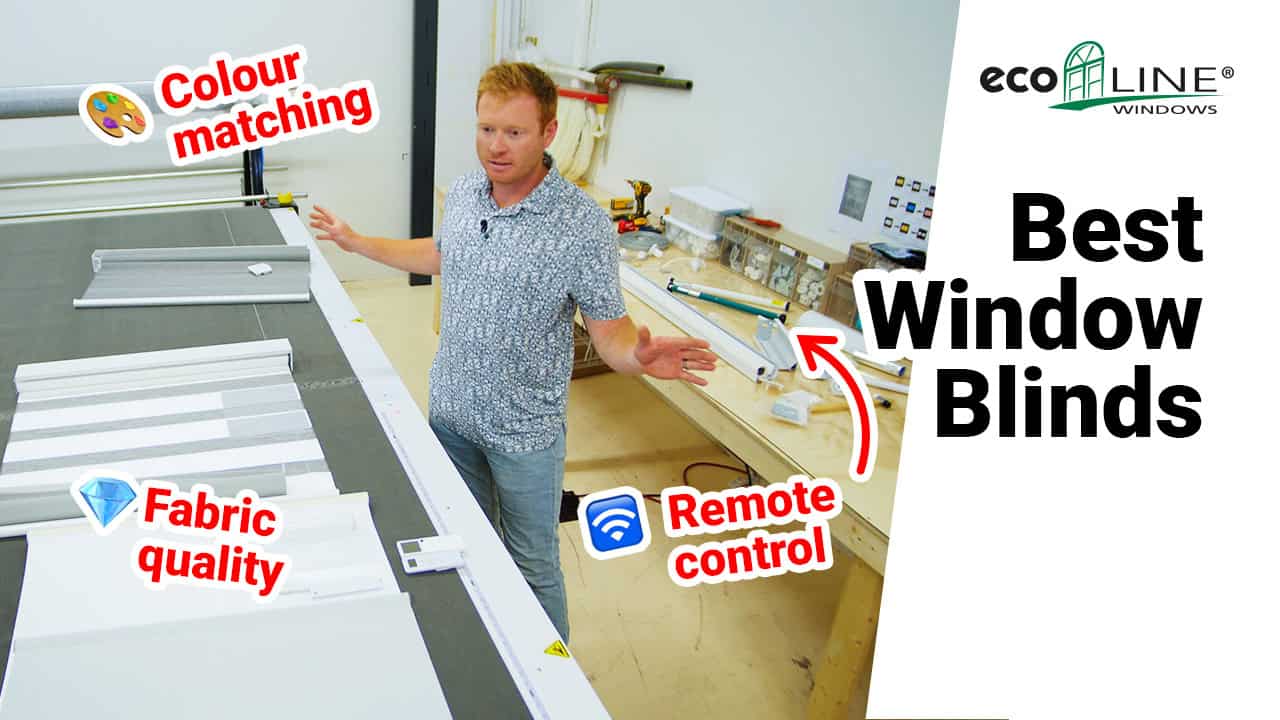
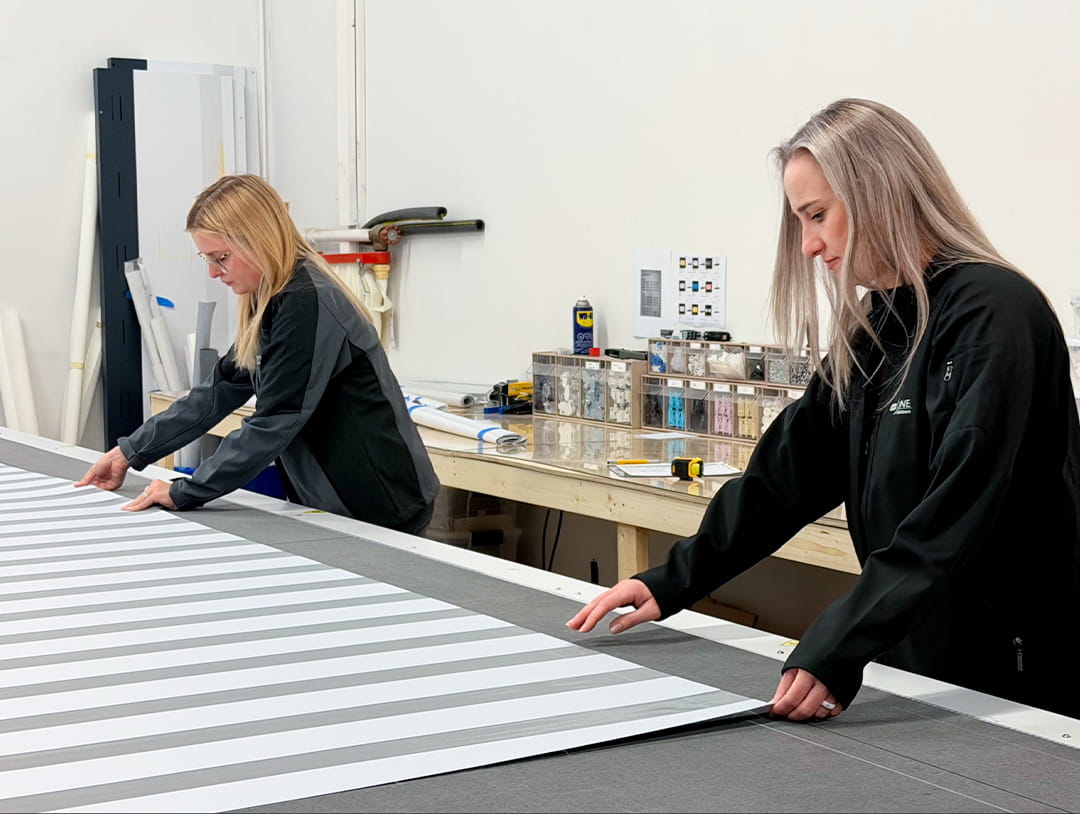
For example, as we have our own manufacturing facility and cutting-edge computerised cutting, Ecoline can manufacture 90″x 90″ window blinds or even bigger options that are frequently used for new construction or office spaces.
One Large Window Blind or Several Smaller Ones?
A single blind usually looks the cleanest. There’s just one cassette or headrail, one bottom rail, and no gaps between pieces of fabric.
This makes a single, continuous shade a good choice for a large picture window where you want to keep the view clear.

A single blind works best when:
- it stays comfortably within the system’s size limits
- the tube or headrail is designed for the span
- the fabric is appropriate for the width
- the mounting surface can support the complete assembly
- the operating mechanism can move the load comfortably
But for very wide windows, using two or three matching blinds can be a better solution.
Example: A 96-Inch three-panel living-room window
Instead of using one shade across the whole 96-inch window, you can use three shades that line up with the window’s sections.
Each shade holds less fabric and puts less strain on its hardware. You also get separate light control. For example, if the sun hits only one side of the room in the afternoon, you can lower just that shade and leave the others open.

It’s also easier to fix problems. If one motor or mechanism has an issue, it doesn’t affect the whole window covering.
The main downside is the gap between shades. Separate roller and zebra blinds need space for brackets and hardware, so there’s usually a small gap between the fabrics.
This matters more in a bedroom, where you want it dark, than in a living room, where keeping the view is a bigger concern.
Large Window Blinds: Top-Rated Styles
The best choice depends on how your window coverings hold their weight and how they operate.
| Type | Large-window performance | Main engineering concern | Best use case |
| Roller shades | Excellent with suitable hardware | Tube flex and fabric tracking | Picture windows and tall modern glazing |
| Zebra shades | Very good within system limits | Double fabric layer and band alignment | Living rooms and adjustable privacy |
| Cellular shades | Very good because they are relatively lightweight | Product-specific width and drop limits | Bedrooms and windows where insulation matters |
| Vertical blinds | Excellent across broad openings | Track quality and stack space | Sliding doors and very wide glazing |
| Panel-track blinds | Excellent | Panel stacking and track depth | Large modern windows and walls of glass |
Roller Shades for Large Windows
Roller shades are often the most practical choice for large windows because they have a simple mechanism. One piece of fabric rolls up around a tube above the window.
The tube is the key part.
A tube that works for a 48-inch shade might not be strong enough for a much wider one. As the shade gets wider and heavier, the tube may need to be bigger or stronger to avoid bending.
Roller shades are great for large picture windows and floor-to-ceiling glass, especially if you want the shade to look minimal when it’s open.
Heavy blackout fabric can limit how wide a single shade can be, compared to lighter solar screens. For very wide blackout shades, you might need stronger hardware or more than one shade.
Zebra Shades for Large Windows
Zebra shades let you adjust privacy with their alternating sheer and solid bands.
This means the mechanism uses a continuous loop of fabric instead of a single sheet. For large windows, the cassette, tube, and operating system have to handle more material.
Alignment is important too. When you have several zebra blinds next to each other, the horizontal bands should match up. Even small height differences are easy to spot on a big window.
That’s why careful measuring and sturdy hardware become even more important as the window gets wider.
Cellular Shades for Large Windows
Cellular shades have honeycomb-shaped air pockets between the room and the glass. They’re lightweight, so they work well for large windows and add extra insulation.
Controlled research found that cellular shades reduced heating energy use by up to 20% and total heating and cooling energy use by up to 15% compared with having no shade under the study and modelling conditions. Actual savings depend on climate, glazing, installation and how the shades are operated.

The maximum size for cellular shades depends a lot on the fabric, cell design, and operating system. Always check the exact product limits instead of relying on a general maximum width.
Vertical Blinds for Large Windows
These blinds handle wide windows differently. Instead of lifting a big sheet of fabric up and down, these blinds move sideways along a track. This makes them especially useful for sliding patio doors, glass walls, and other very wide spaces.
Traditional vertical blinds use individual vanes. Panel-track systems use fewer, wider fabric panels for a cleaner contemporary appearance.

The main thing to think about is stack-back. When the blind is open, the vanes or panels need space to rest. Check how much glass stays covered and if the stack gets in the way of doors, handles, trim, or furniture.
For very wide windows, the idea is simple: don’t pick a blind first and then ask if it can be made big enough. Start with your window and how you want the covering to move, then choose the system designed for that job.
Engineering Behind Large Window Blinds
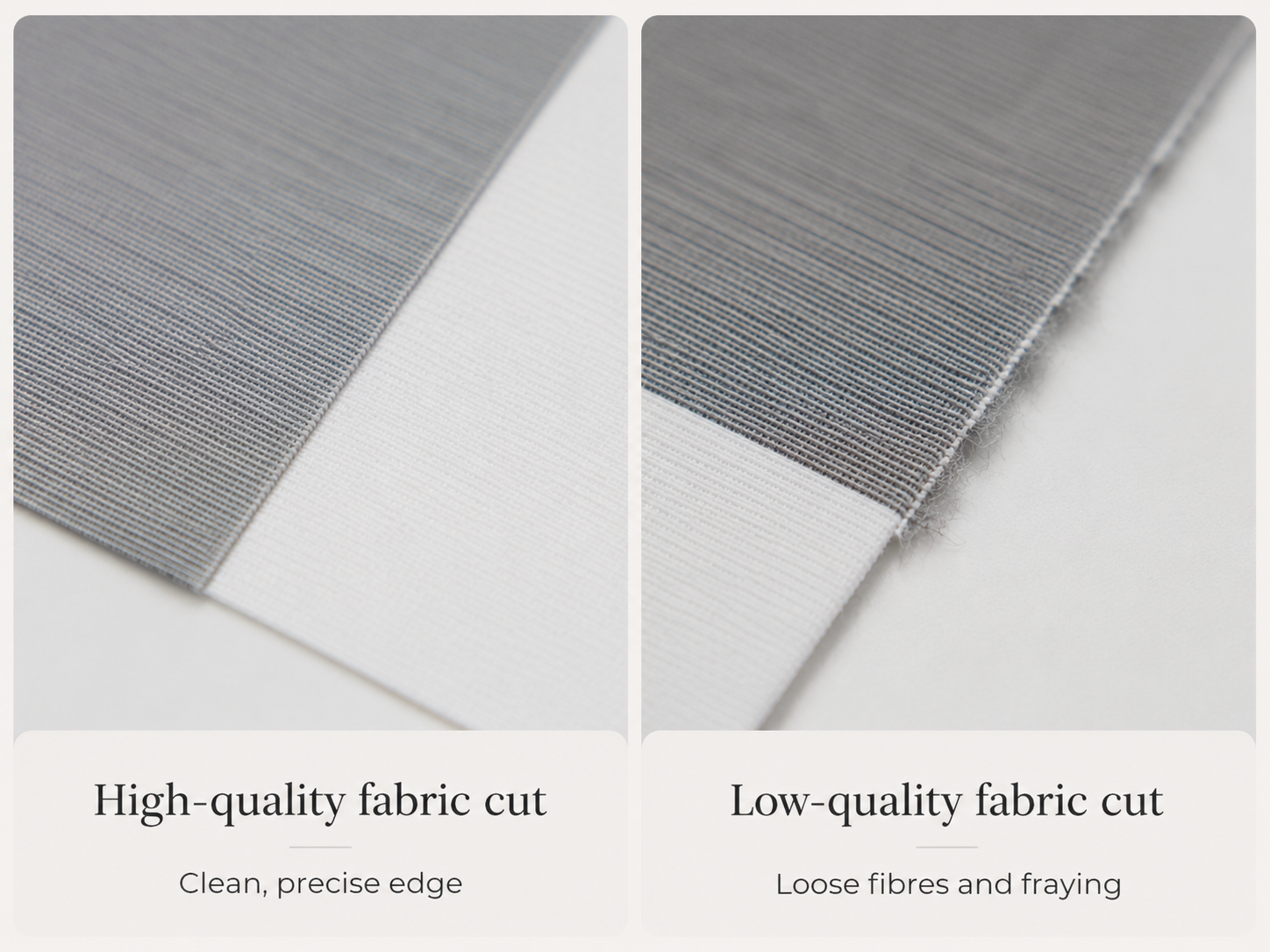
For large window blinds, the hardware behind the fabric can matter more than the fabric itself. And this is exactly where the difference between cheap and high-quality blinds is visibile.
| Component | What to look for | Why it matters |
| Roller tube | Tube sized for the span and fabric weight | Helps reduce centre deflection |
| Cassette/headrail | Rigid, reinforced construction | Keeps the system straight |
| Brackets | Heavy-duty metal hardware and secure mounting | Carries the combined load |
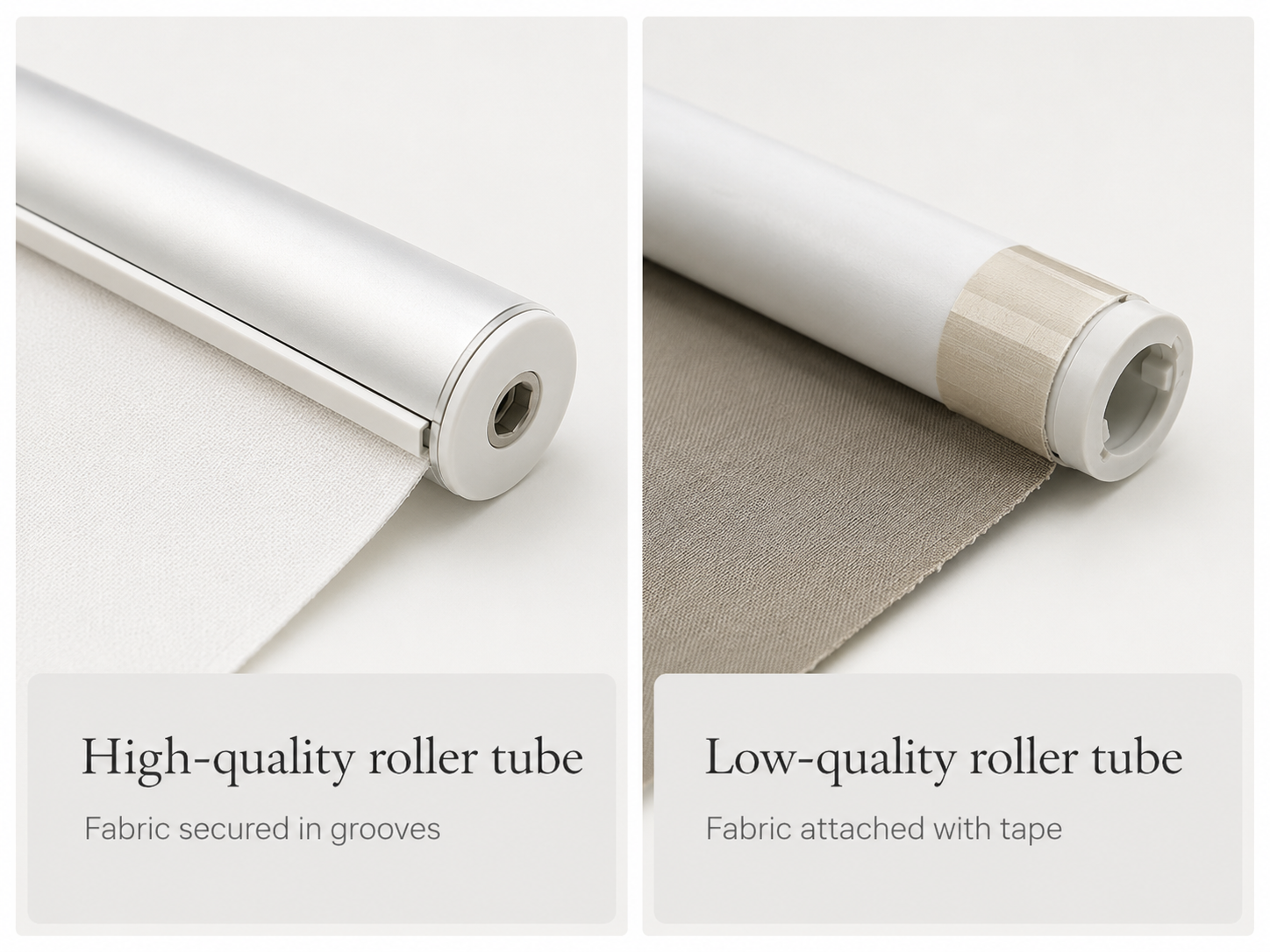
| Fabric attachment | Secure connection to the roller | Helps maintain consistent tracking |
| Bottom rail | Straight, properly weighted construction | Keeps the fabric level |
| Motor | Torque matched to the completed shade | Prevents slow or strained operation |
Ecoline’s custom roller and zebra systems use reinforced cassettes, heavy-duty metal brackets, and roller tubes designed for the installation dimensions rather than treating every shade as the same product at a different width.
Use-Case: A 96-inch blackout roller shade
Suppose a homeowner wants one 96-inch blackout shade. The fabric might come in that width, but heavy material puts more strain on the system than a light-filtering screen.
So, a good setup might need:
- a stronger or larger roller tube
- reinforced cassette
- heavier-duty brackets
- a cordless or motorised mechanism rated for the complete load
The key question to ask here is: “What changes in the hardware at this width?” And if the hardware doesn’t change as blinds get bigger, it’s definitely a red flag.
Motor Torque Matters More Than the App
For large blinds, motorisation can make them much easier to use. Smart-home features are a bonus, but not the main reason to choose motorisation.
A large blackout shade needs more lifting power than a light screen of the same size. Choose the motor for the finished blind, not as an add-on.
Before ordering, ask:
- Is the motor suitable for this exact size and fabric?
- Can several adjacent shades stop at the same height?
- Is the charging point easy to reach?
- Can the motor be serviced if necessary?
Motorisation is especially useful for heavy shades, high windows, blinds you use often, and groups of shades that need to move together.
Canadian regulations are another reason modern cordless and motorised systems matter. Health Canada limits reachable cords on window coverings to 22 cm, while reachable loops cannot exceed 44 cm in perimeter under the Corded Window Coverings Regulations.
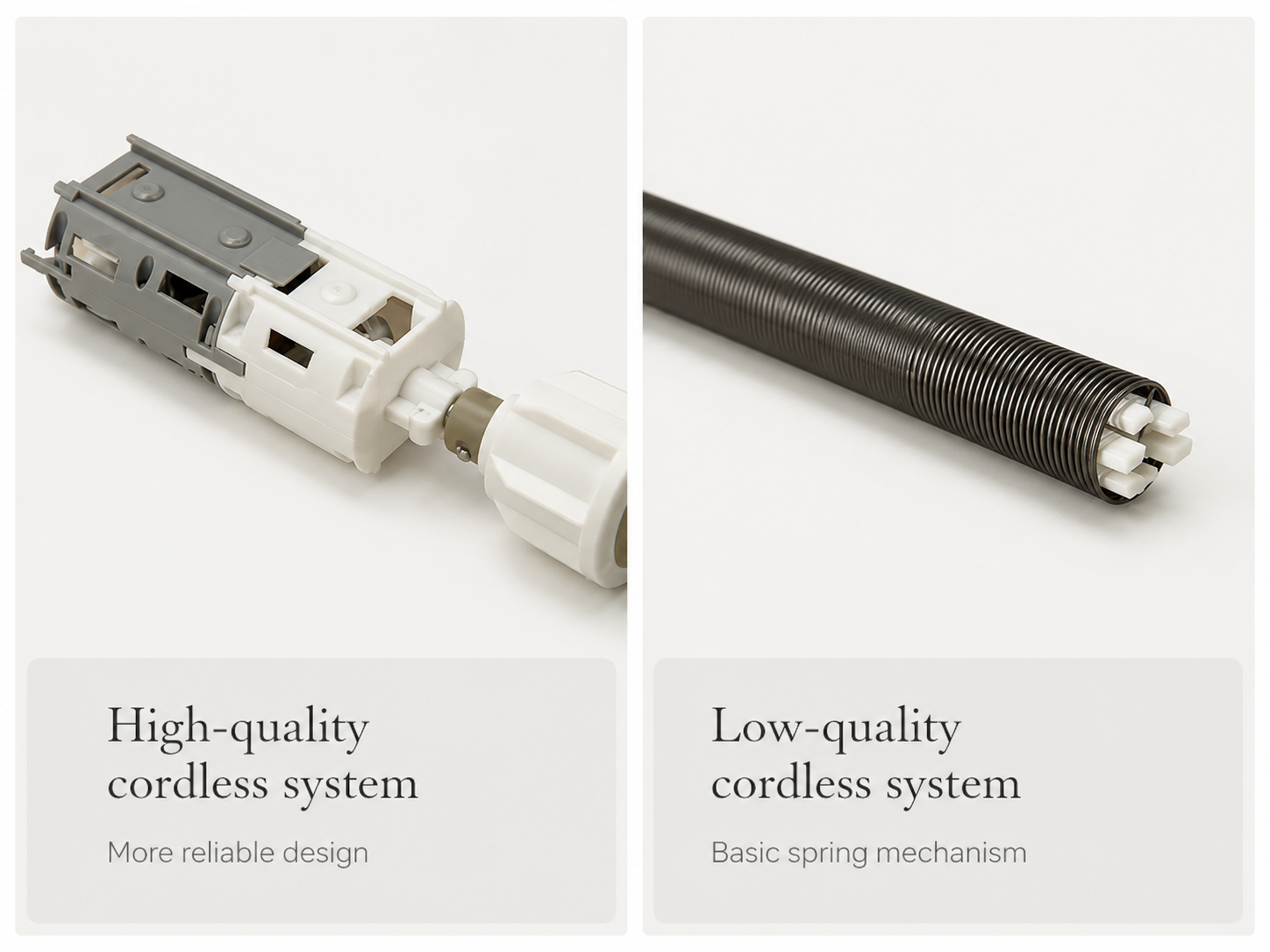
But for a large window you can reach easily and with light fabric, a good cordless system might be the simpler option.
Match the Blinds Fabric to the Large Glass
Large windows make the glass’s effects more noticeable. More glass can mean more glare, stronger afternoon sun, and more sensitivity to cold in winter. Pick the fabric based on how much sun the window gets and what you need, not just the room’s name.
| Use-case | Starting point | What matters most |
| South- or west-facing window | Solar roller shade | Glare, heat and preserving the view |
| Wide bedroom window | Blackout roller or cellular shade | Edge and centre light gaps |
| Floor-to-ceiling window | Solar roller or coordinated motorised shades | Glare, privacy and accessibility |
| Cold-climate window | Cellular or insulating shade | Comfort without trapping condensation |
| Daytime privacy needed | Zebra or lower-openness screen | Balance between privacy and daylight |
West-facing windows: control glare without losing the view
A large west-facing window can get uncomfortable in the late afternoon, even if you want to keep the view.
Solar-screen fabrics are designed to address this problem. Their openness factor describes how open the weave is. Lower openness generally provides stronger light and glare control with less visibility through the material, while higher openness preserves more of the view.
So, the choice isn’t just between a solar shade and a blackout shade. It’s about how much daylight and view you’re willing to give up for better glare control.
Bedroom windows: blackout fabric is not a blackout installation
This difference is important for large windows. Blackout refers to how much light the fabric blocks. It doesn’t stop light from coming in around the edges of an inside-mounted blind or through gaps between shades.
For better room darkening, consider:
- outside mounting for greater overlap
- locating shade splits over window mullions
- side-channel systems where available
- avoiding unnecessary gaps between individual units
The setup that works best mechanically isn’t always the one that makes the room darkest.
Inside or outside Mount?
| Choose an inside mount when… | Choose an outside mount when… |
| The frame has enough depth | The opening is too shallow |
| Keeping the trim visible matters | Better light coverage matters |
| A built-in appearance is preferred | You want to reduce edge gaps |
| Handles and hardware do not interfere | Window hardware limits an inside installation |
For large blinds installation, also check the cassette depth, handle clearance, and how easy it is to reach the motor or charging point before choosing a mounting style.
How Much Do Blinds for Large Windows Cost in Canada?
Large blinds cost more than just the extra fabric. Wider windows may need stronger tubes, heavier hardware, bigger headrails, or better operating systems.
At Ecoline, custom blinds for standard residential windows generally start around $200 per window, while large, blackout, or motorised configurations can reach roughly $600 – $1,000+, depending on the setup.
Here is what the size difference looks like using the same 90″ × 90″ opening:
| Custom covering type | Ecoline starting price for 90″ × 90″ |
| Roller shade | From $485 |
| Zebra shade | From $390 |
| Cellular shade | From $1,000 |
| Vertical blind | From $615 |
These are just starting prices, not fixed quotes. The fabric, opacity, operating system, and installation can all affect the final cost.
One key thing to remember: price doesn’t increase only by square footage.
A 60″ × 60″ blind and a 30″ × 120″ blind cover the same area, but their shapes put different demands on the hardware. A wider blind may need a stronger tube, a different headrail, or a different operating setup.
Splitting a large window into two shades doesn’t always save money. Each shade is smaller, but you’ll need extra hardware and maybe another motor.
For a whole-home project, budget separately for large living-room windows and patio doors. Don’t just multiply the price of a standard bedroom blind by the number of windows.
How to Choose Blinds & Shades for Big Windows
Choose the best blinds and shades for oversized windows based on the window itself, not just by picking a fabric sample first. Begin by looking at the width, height, window layout, and how you’ll use the shade. Then consider the fabric weight, tube or headrail, brackets, and operating system.
For very wide windows, several matching shades may work better than one big one. For tall or hard-to-reach windows, motorisation can make daily use much easier.
If you’re replacing blinds, Ecoline can measure your windows, compare the best options, and recommend custom blinds sized to each window’s exact needs.
What are the best blinds for large windows?
Roller shades are one of the strongest all-round choices for large picture windows because their construction is simple and can be engineered with stronger tubes and hardware. Cellular shades work well where insulation matters, while vertical and panel-track systems are particularly practical for very wide patio doors and walls of glass.
Should large window blinds be motorised?
Motorisation is worthwhile when a blind is particularly wide or heavy, installed high above the floor, operated frequently or part of a group of shades that should move together. An accessible large window with lightweight fabric can still work perfectly well with a properly engineered cordless operating system.
What blinds work best for floor-to-ceiling windows?
Roller shades are usually a strong option for tall floor-to-ceiling glazing because they are visually minimal and can be divided into aligned sections across a wall of glass. For extremely wide openings, vertical or panel-track systems may be more practical because the covering travels sideways instead of lifting vertically.
How wide can a single window blind be?
There is no universal maximum width. It depends on the blind type, fabric weight, tube or headrail construction, operating system and overall drop. At Ecoline, we can manufacture 90″ x 90″ window blinds and bigger. But very wide openings may perform better with two or more coordinated shades.
Is one large blind better than two smaller blinds?
One large blind gives the cleanest uninterrupted appearance and avoids a centre fabric gap. Two smaller blinds reduce the load on each system, provide independent light control, and may be easier to service. If your window setup is divided into sections (2-3 windows), aligning the shade split with them usually produces the cleanest result.


1750 Coast Meridian Rd #102,
Port Coquitlam, BC V3C 6R8
100, 17866 106A Avenue,
Edmonton, AB, Canada,
T5S 1V3
3307 Dunmore Rd SE #12,
Medicine Hat, AB,
Canada, T1B 3R2
2081 Merivale Rd #201, Ottawa, ON, Canada, K2G 1G9
by appointment only
108, 55 Akerley Blvd, Dartmouth,
NS, Canada, ВЗВ 1M3