


-RATED BY




Built in Canada
All Ecoline windows and doors are built in Ontario, Canada
- Top-of-the-line machinery (Forel, Gracco, Bottero) to produce the best products
- Over 60,000 sq. ft manufacturing plant
- Energy Star-rated and NAFS-11-tested
- Manufactured for local weather conditions
Best Blinds for Sliding Glass Patio Doors: A Homeowner’s Buying Guide
Sep 23, 2026
14 min read
9
Sliding glass patio doors let in lots of natural light and make it easy to reach your backyard. But choosing the right blinds to work well here can be challenging. Some coverings look good when closed but might block the doorway, get in the way of the handle, or make it harder to go outside.
For most sliding patio doors, vertical blinds and panel-track systems are the best go-to options because they slide sideways, so you can use the door without moving the whole covering. Roller shades and cellular shades are also good alternatives, depending on your needs for privacy, insulation, and style.
In this guide, our team will compare the best blinds and shades for patio doors, break down their use cases, and help you find a solution that fits your space, lifestyle, and budget.


What Makes Sliding Patio Doors Different From Regular Windows?
Sliding patio doors are different from regular windows because they have large glass panels that slide open. Your blinds should give you privacy and control over light while still letting you use the doorway easily, especially if you go outside often.
Before choosing a particular blind type here, consider the following details:
- Door configuration: Most standard patio doors have one fixed panel and one sliding panel. Wider configurations may have multiple operable panels. The blinds should open in a direction that allows convenient access to the doorway.
- Stacking space: Vertical blinds and panel tracks gather to one side or split towards both sides when opened. Make sure the stacked covering does not block the doorway or interfere with nearby furniture.
- Door handles and clearance: The blinds need enough space to operate without catching on the handle, frame, or other hardware. This is particularly important for inside-mounted coverings.
- Daily use: If you frequently go outside, a sideways-sliding covering may be more convenient than a full-width roller shade that you have to raise every time you open the door.
Check how your patio door opens and measure the space around the frame before choosing a blind style. This way, you can avoid buying a covering that fits the glass but makes the door hard to use.
5 Best Blinds and Shades for Sliding Patio Doors
The best blinds for your patio door should offer privacy, light control, and easy access. Some coverings slide sideways with the door, while others look neater or add extra insulation. Here are six options available at Ecoline that we usually offer homeowners to consider for their projects:
Sliding Patio Door Blinds: Quick Comparison
| Type | Operation | Light control | Main limitation |
| Vertical blinds | Sideways | Adjustable vanes | Swinging vanes |
| Panel-track blinds | Sideways | Fabric opacity | Panel stack width |
| Roller shades | Up and down | Fabric opacity | Door access |
| Vertical cellular shades | Sideways | Fabric opacity | Specialised system |
| Sheer vertical shades | Sideways | Adjustable vanes | Limited sheer privacy |
1. Vertical Blinds for Easy Door Access
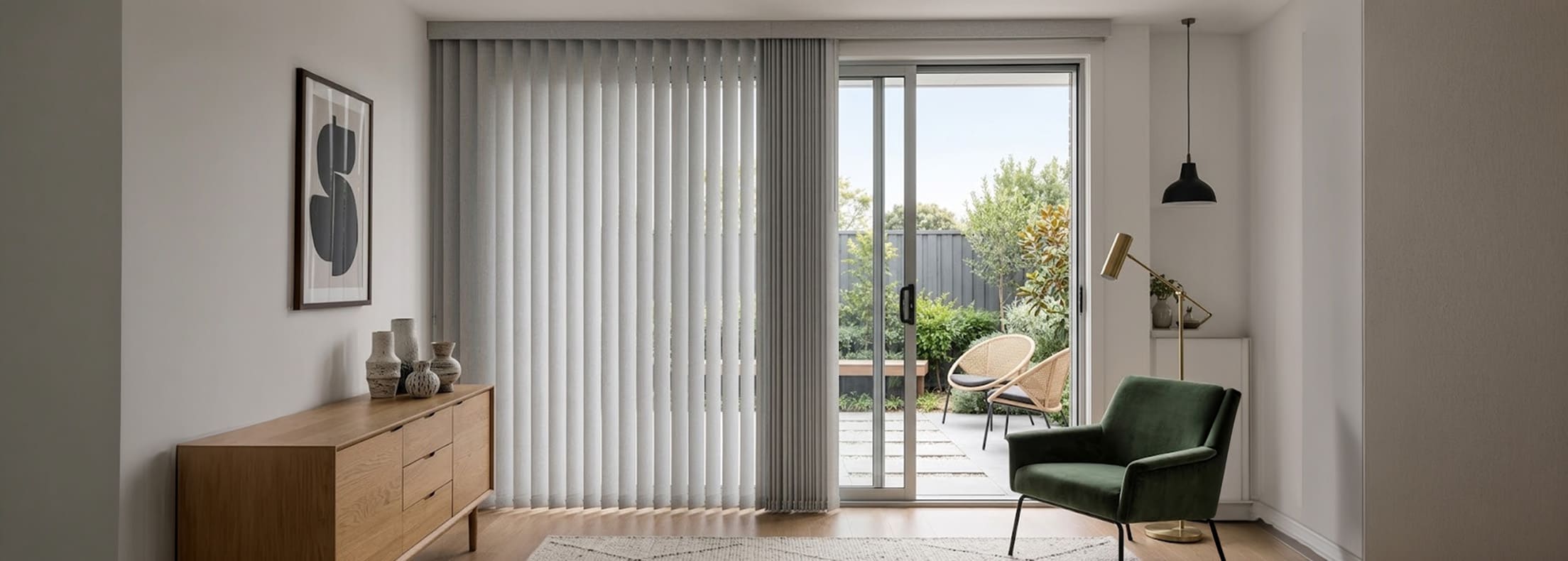
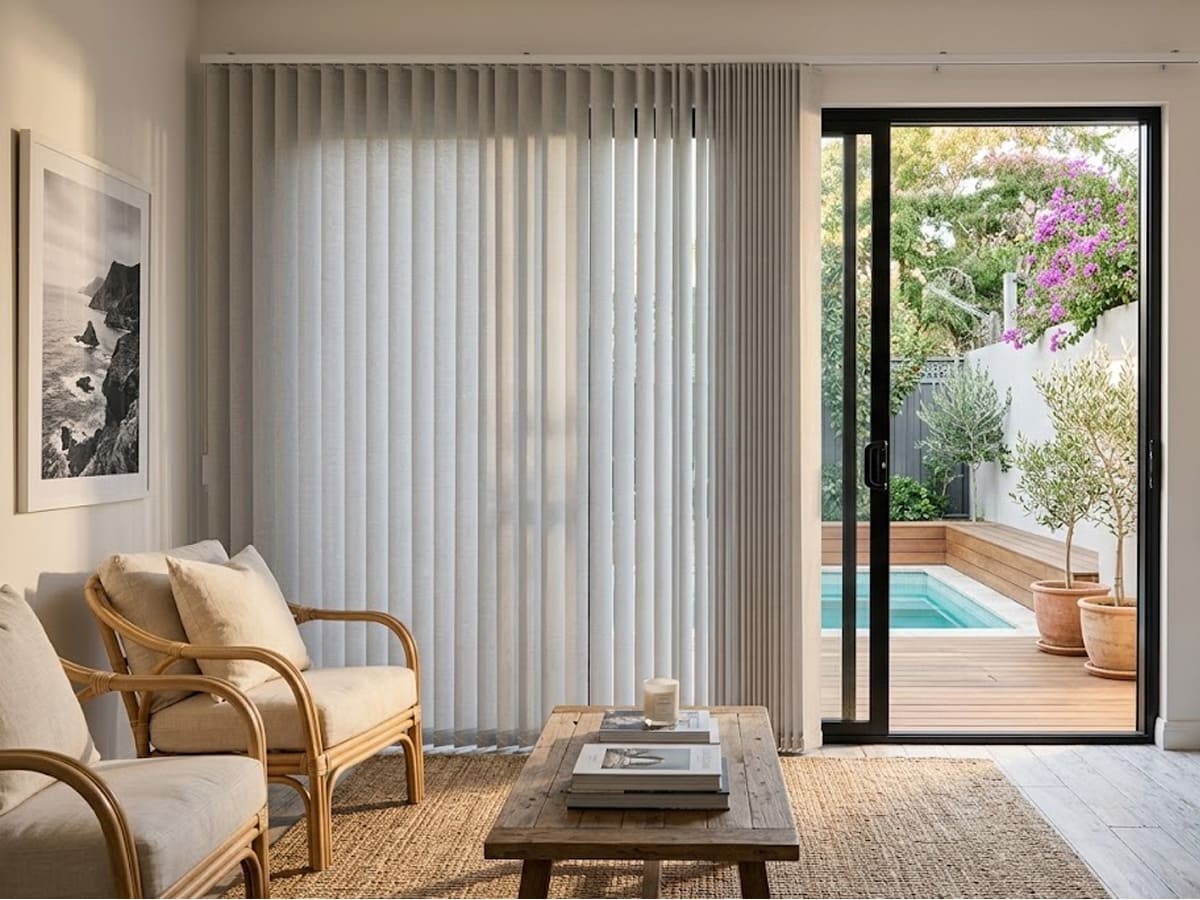
Vertical blinds are a practical choice for frequently used patio doors. Their individual vanes rotate to adjust light and privacy, while the entire covering slides sideways to clear the entrance.
PVC vertical blinds are great for busy homes because you can easily wipe them clean. Fabric vanes look softer, but cleaning depends on the material.
They work best in home areas such as kitchens, living rooms, and other high-traffic spaces where easy patio access matters.
Remember, the vanes can swing or get out of place if you push them aside often. Pick a stacking direction and operating system that keeps the doorway easy to use.
2. Panel-Track Blinds for Wide Patio Doors
Panel-track blinds feature wide, flat fabric panels that glide along a track. Their simple lines suit contemporary interiors and larger glass openings, including multi-panel patio doors.
Depending on the fabric, panel-track blinds can filter light, darken the room, or provide privacy. But unlike regular vertical blinds, most panel-track systems do not have vanes that rotate for detailed light control.
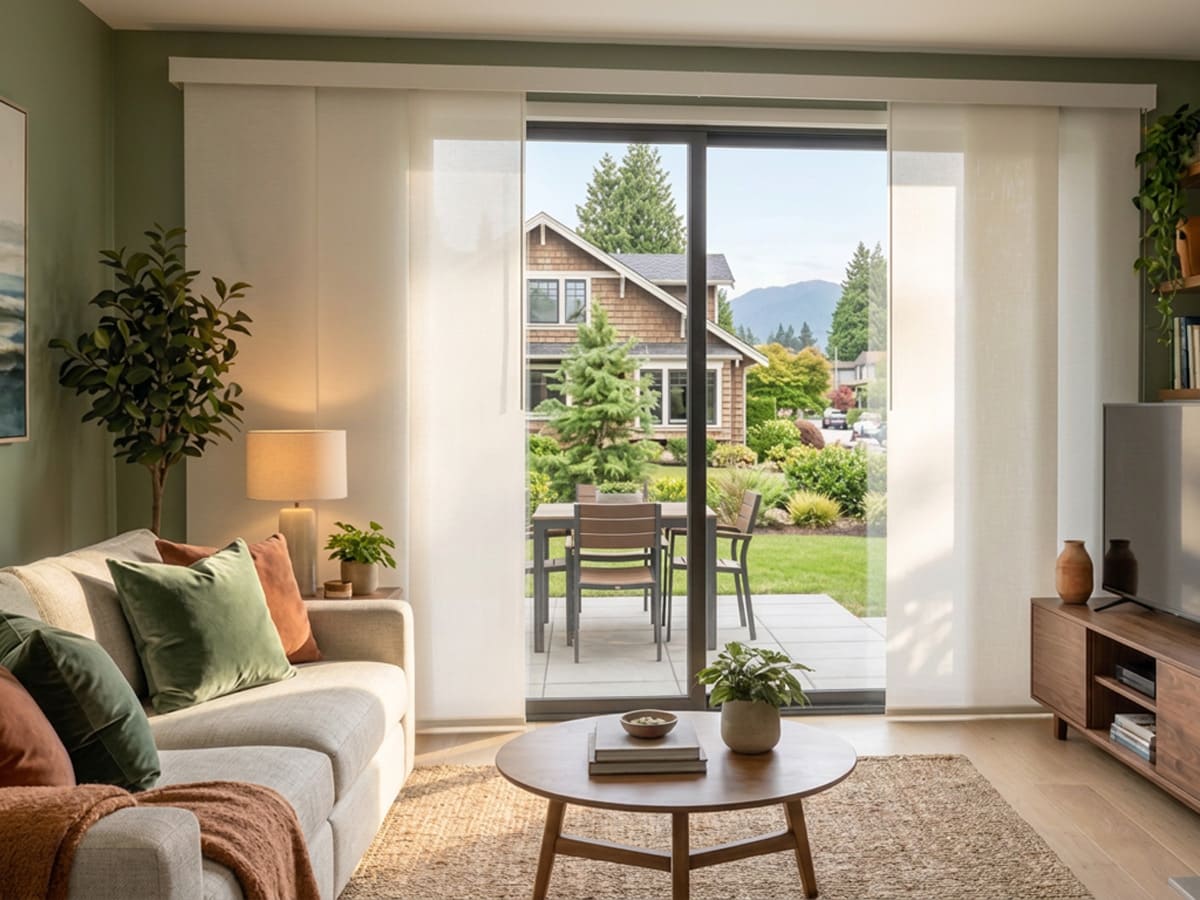
They work best for wide patio doors and homeowners who prefer a minimalist alternative to traditional vertical blinds.
Remember, the panels overlap when you open them, so they might cover part of the glass or doorway. Check how much space you have for stacking before you order.
3. Roller Shades for a Clean, Minimalist Look
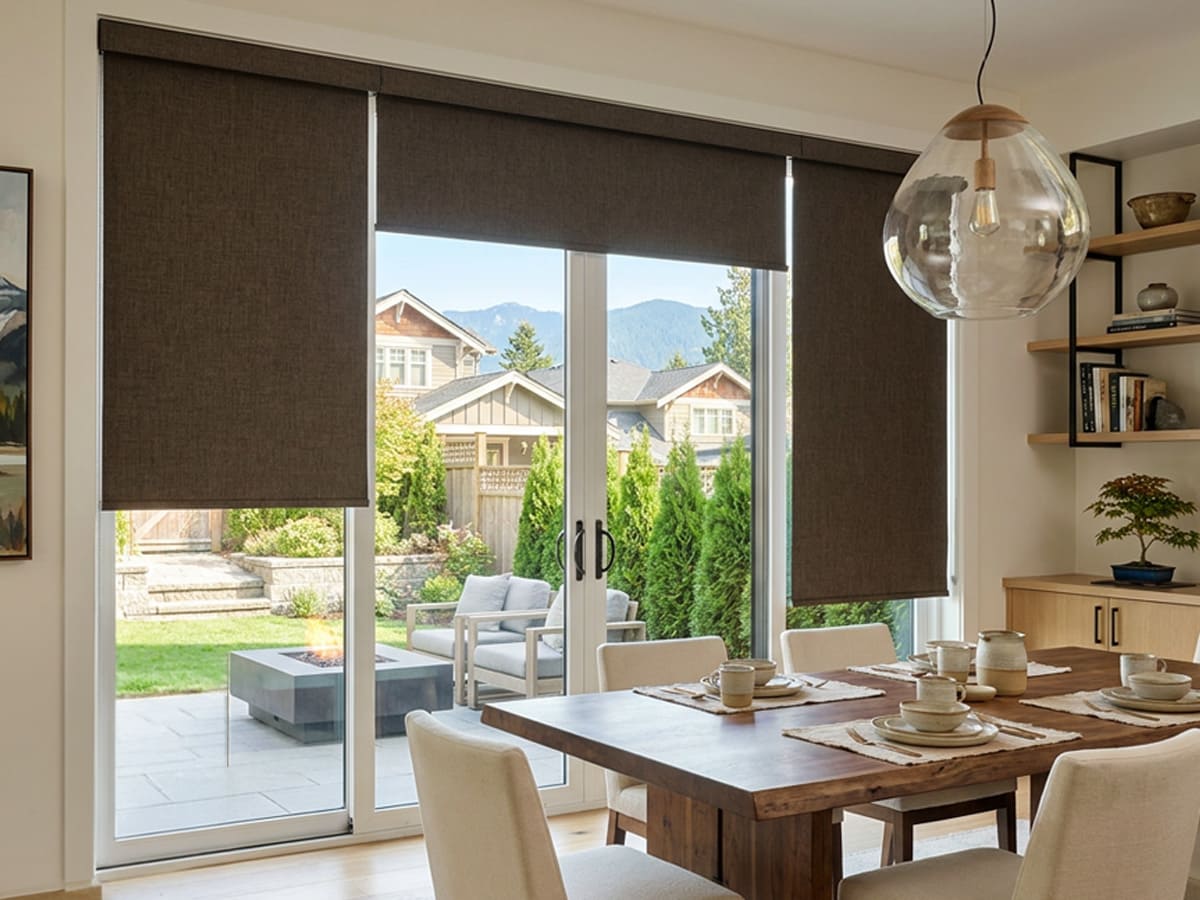
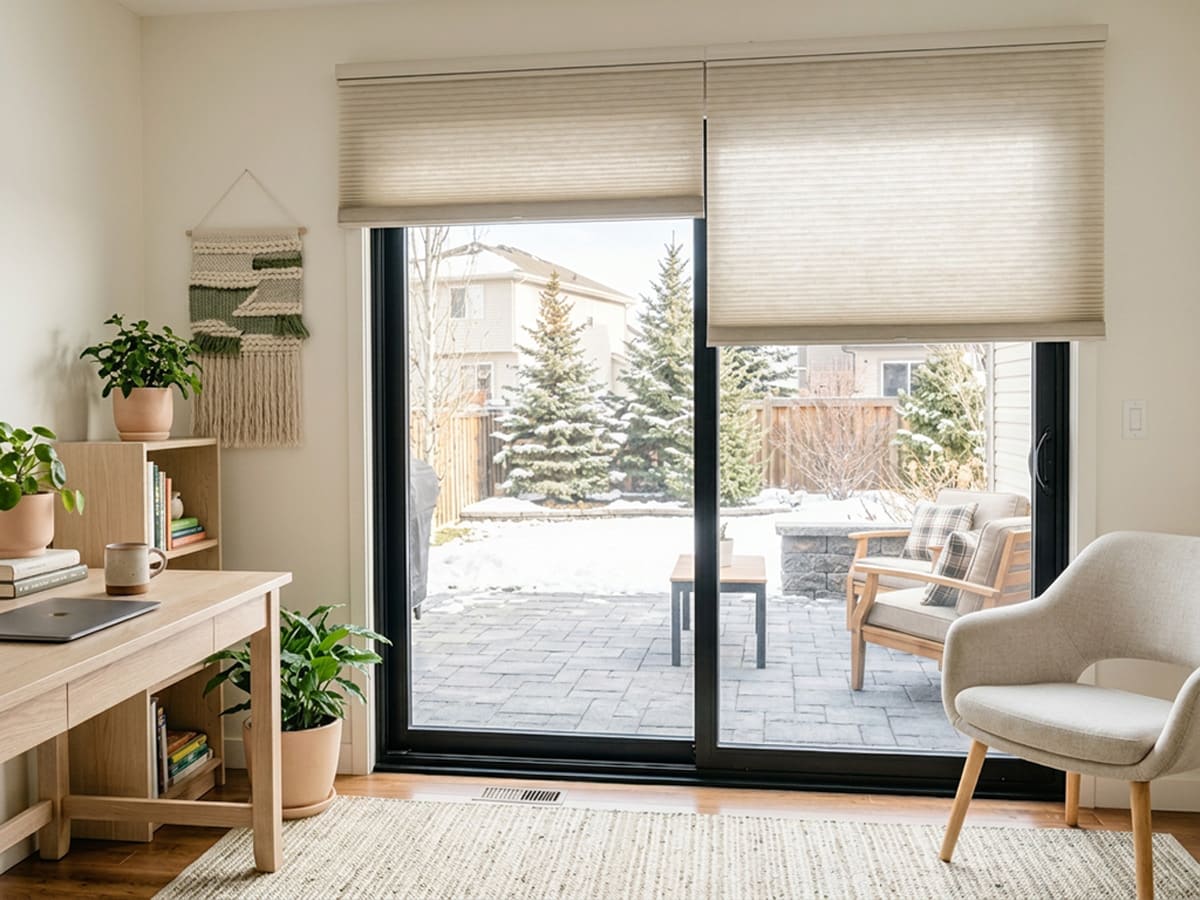
Roller shades offer a simple, contemporary appearance. The fabric rolls neatly into a tube above the door, leaving the glass unobstructed when fully raised.
For sliding patio doors, try using two separate shades instead of one big one. This way, you can lift the shade over the sliding panel while keeping the fixed panel covered for privacy.
Roller shades work best for modern living rooms and patio doors you don’t use frequently.
Remember, if you use one wide shade, you have to raise it high enough to clear the doorway. Two separate shades are more flexible, but they might leave a small gap where light can get through.
4. Cellular Shades for Additional Insulation
Cellular shades have a honeycomb structure that traps air within the fabric, creating an additional insulating layer over the glass. This is probably the most tested window covering for energy efficiency; research shows cellular shades can boost your home’s energy efficiency by up to 36%, which is a great benefit for patio doors with large glass areas that need that extra bump in thermal performance.
For sliding patio doors, look for a vertical cellular system that opens sideways instead of a regular shade that lifts from the bottom.
These models work best for homeowners who want extra insulation and a softer fabric look, especially in rooms with large glass doors.
However, keep in mind that vertical cellular systems are special products. Check the sizes and how they work, and make sure the covering opens fully so you can use your doorway easily.
5. Sheer Vertical Shades for Daylight and Privacy Control
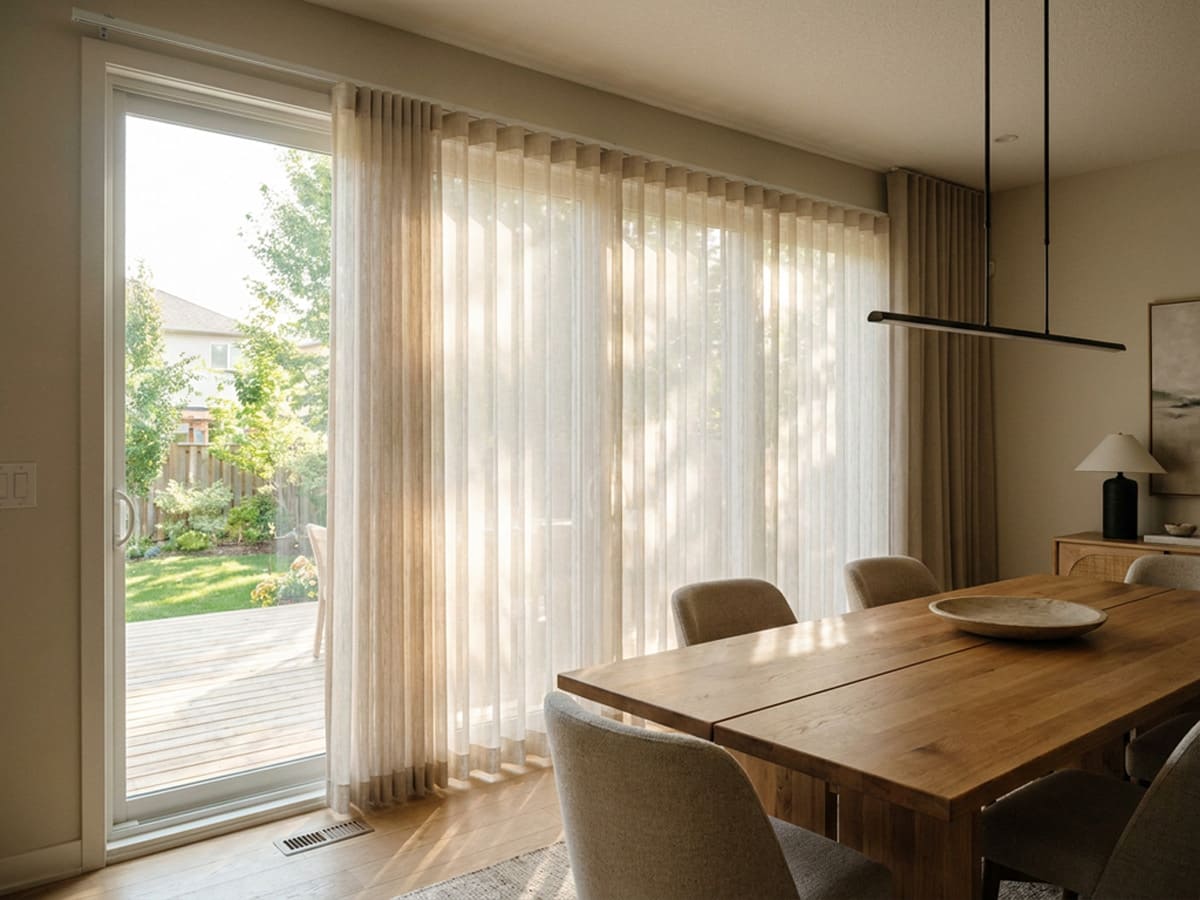
Sheer vertical shades combine the appearance of soft drapery with adjustable fabric vanes. You can rotate the vanes to control direct sunlight or slide the entire covering sideways to access the patio.
They work particularly well in living rooms where maintaining natural daylight matters, and in other shared spaces where homeowners want soft, filtered light.
Remember, sheer fabric alone doesn’t provide much privacy at night. Pick a system with adjustable vanes and check how private it is when closed before you buy.
Which Patio Door Blinds Work Best for Your Home?
The best blinds for your patio door depend on how you use the room, how much sunlight it gets, and how often you go outside. Here are our tips for common situations at home:
- Busy kitchens and high-traffic living rooms: Choose moisture-resistant PVC vertical blinds that wipe clean easily. A side-opening system keeps the entrance accessible, while adjustable vanes let you manage sunlight without moving the entire covering.
- Bedrooms with sliding balcony doors: Consider blackout roller shades with sufficient overlap around the frame to reduce light gaps. If you use the balcony frequently, two independently operated shades can let you uncover the sliding panel while keeping the fixed glass covered.
- Sunny, west-facing living rooms: Choose solar roller shades with a 1-3% openness factor to reduce strong afternoon glare. A 3% fabric offers a balance between glare control and outward visibility, while 1% provides greater sun protection at the expense of a clearer view. If your patio door receives partial shade and preserving the view matters more, consider 5% openness.
- Homes with young children or pets: Look for coverings with cordless or compliant operating systems. If you have active pets, consider a design without individual hanging vanes that they might brush against or disturb.
- Open-concept rooms with oversized patio doors: Panel-track blinds can provide broad fabric coverage without the visual clutter of numerous narrow vanes. Choose the stacking direction carefully, particularly if the door is close to a wall, cabinet, or frequently used walkway.
To keep your space coordinated, choose the patio door covering at the same time as the blinds for nearby windows. You can match fabrics or colours across different blind styles and still keep each opening working well.
How to Measure Sliding Patio Doors for Blinds
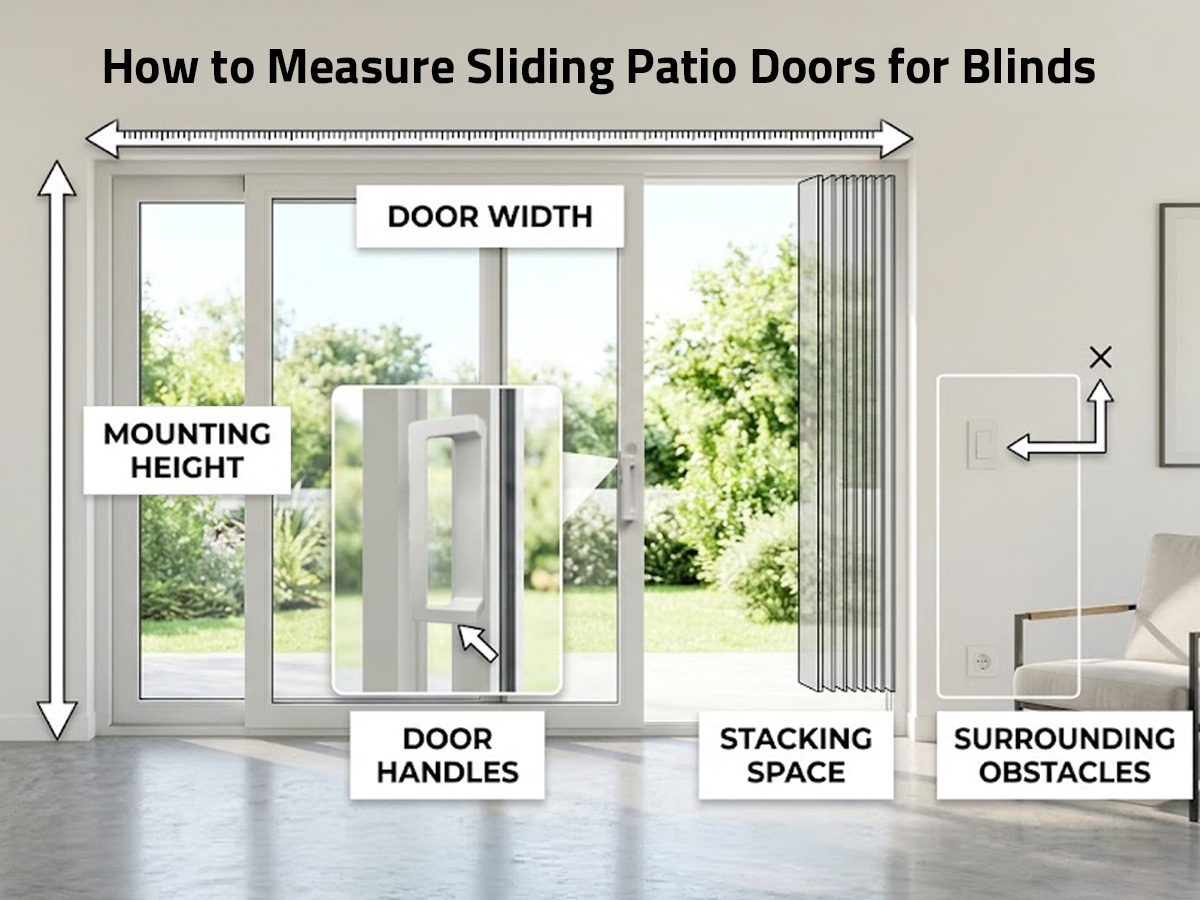
Accurate measurements are key for good light coverage and easy door access. Before you order home blinds, measure the whole patio door opening, including both the fixed and sliding panels, not just the glass.
For an outside-mounted covering, we recommend checking the following:
- Door width: Measure the full opening at the top, middle, and bottom. Check your blind manufacturer’s instructions for the required overlap beyond the frame.
- Mounting height: Measure from the proposed track or headrail position to the floor. Leave enough clearance for the covering to move freely without dragging.
- Door handles: Check how far the handle projects from the door and whether the covering will clear it during operation.
- Stacking space: Determine where the blinds will gather when opened. For vertical blinds and panel tracks, make sure the stacked covering does not obstruct the usable doorway.
- Surrounding obstacles: Check for nearby cabinets, light switches, furniture, and other features that could interfere with the installation.
At Ecoline, we offer custom blinds and shades tailored to your patio door’s exact dimensions. During your free consultation, our representative will take the necessary measurements and assess the available mounting space before you place an order. This helps ensure your new blinds fit properly and operate smoothly without obstructing the doorway.
Patio door width and blind coverage: use-cases
For outside-mounted blinds, the covering usually needs to extend beyond the door frame to reduce light gaps. The required overlap varies by product. For example, we usually recommend 2 inches of coverage on each side for vertical blinds and at least 4 inches per side for panel-track blinds on patio doors.
| Patio door width | Vertical blinds (+4″) | Panel-track blinds (+8″) |
| 60″ (5 ft) | 64″ | 68″ |
| 72″ (6 ft) | 76″ | 80″ |
| 96″ (8 ft) | 100″ | 104″ |
NOTE: These are illustrative examples only. Actual ordering dimensions and available product widths may vary.
Keep in mind, a wider covering does not always mean better access. If the panels stack over the sliding part, they can still block some of the entrance.
Light-Filtering vs. Blackout Blinds for Patio Doors
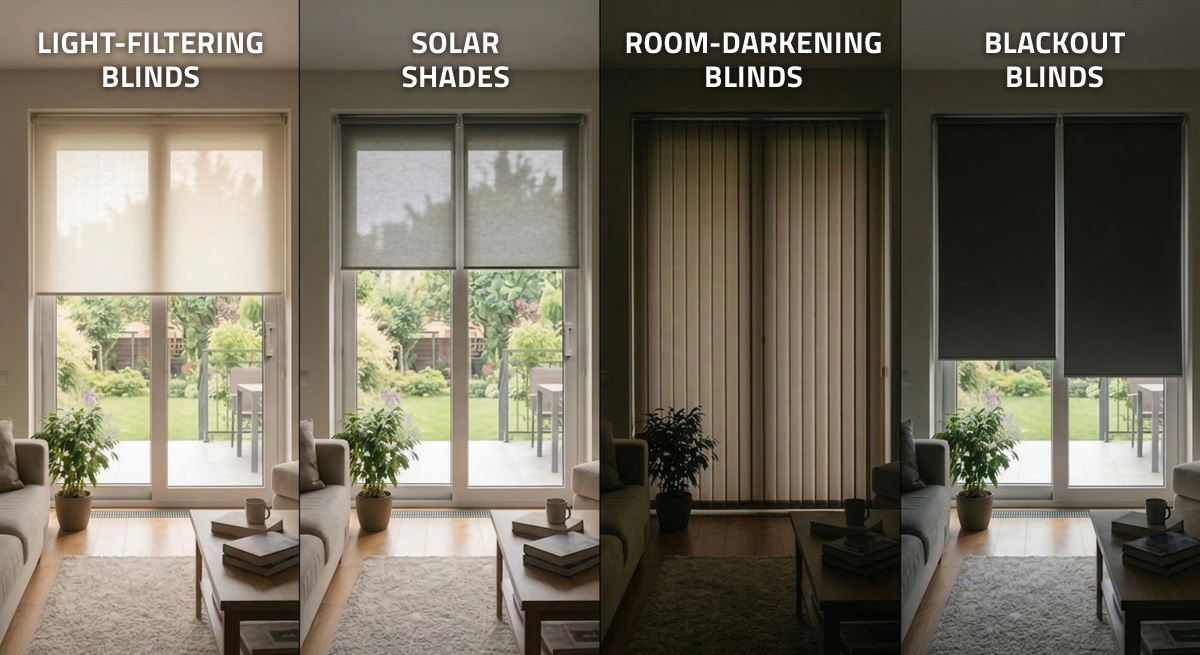
How much light you want to block matters as much as the blind style. For sliding patio doors, pick the fabric based on how you use the room and how much privacy you need during the day.
- Light-filtering blinds: Soften incoming sunlight while maintaining a bright, comfortable living space. They work well in kitchens, dining rooms, and living rooms where you want natural light without harsh glare.
- Solar shades: Reduce glare and provide varying degrees of outward visibility, depending on the fabric’s openness factor. They are particularly useful for sunny patio doors, but they generally do not provide nighttime privacy when interior lights are on.
- Room-darkening blinds: Block a substantial amount of incoming light without necessarily creating complete darkness. They are a practical option for bedrooms and media rooms where reducing outside light is important.
- Blackout blinds: Use opaque fabric to block light passing directly through the material. For bedrooms with sliding balcony doors, blackout roller shades or suitable vertical cellular systems can provide greater light control.
Can you achieve complete blackout with patio door blinds?
No. Even blackout fabric can leave light gaps around the edges of a patio door. For better darkness, use an outside-mounted covering with enough overlap past the frame. If possible, add side channels or other light-blocking accessories to help reduce these gaps.
For wide patio doors, also consider whether the covering has multiple panels or separate shades, as light can enter through the spaces between them.
How Much Do Blinds for Sliding Patio Doors Cost in Canada?
The price of blinds and shades depends on your door size, the material you choose, and how the blinds operate. Bigger doors usually need more fabric and stronger hardware, and blackout materials or motorized options can increase the cost.
At Ecoline, we offer custom window coverings in different configurations. Here are approximate costs based on a large 90″ × 90″ opening:
| Type | Starting price |
| Roller shades, light-filtering | $485 |
| Roller shades, blackout | $665 |
| Zebra shades, light-filtering | $390 |
| Cellular shades, light-filtering | $1,000 |
| Cellular shades, blackout | $1,200 |
| Vertical blinds | $615 |
NOTE: These are approximate prices. More detailed patio-door costs depend on product configuration, dimensions, and installation requirements. Contact us for a tailor-made quote.
To compare prices accurately, ask for quotes using the same door size, fabric, and blind installation needs. This way, you can see whether a higher price is due to a different material, better controls, or extra installation work.
Are Motorised Blinds Worth It for Sliding Patio Doors?
Motorised blinds can be a handy upgrade for big sliding patio doors, especially if the covering is heavy, hard to reach, or you need to adjust it often during the day.
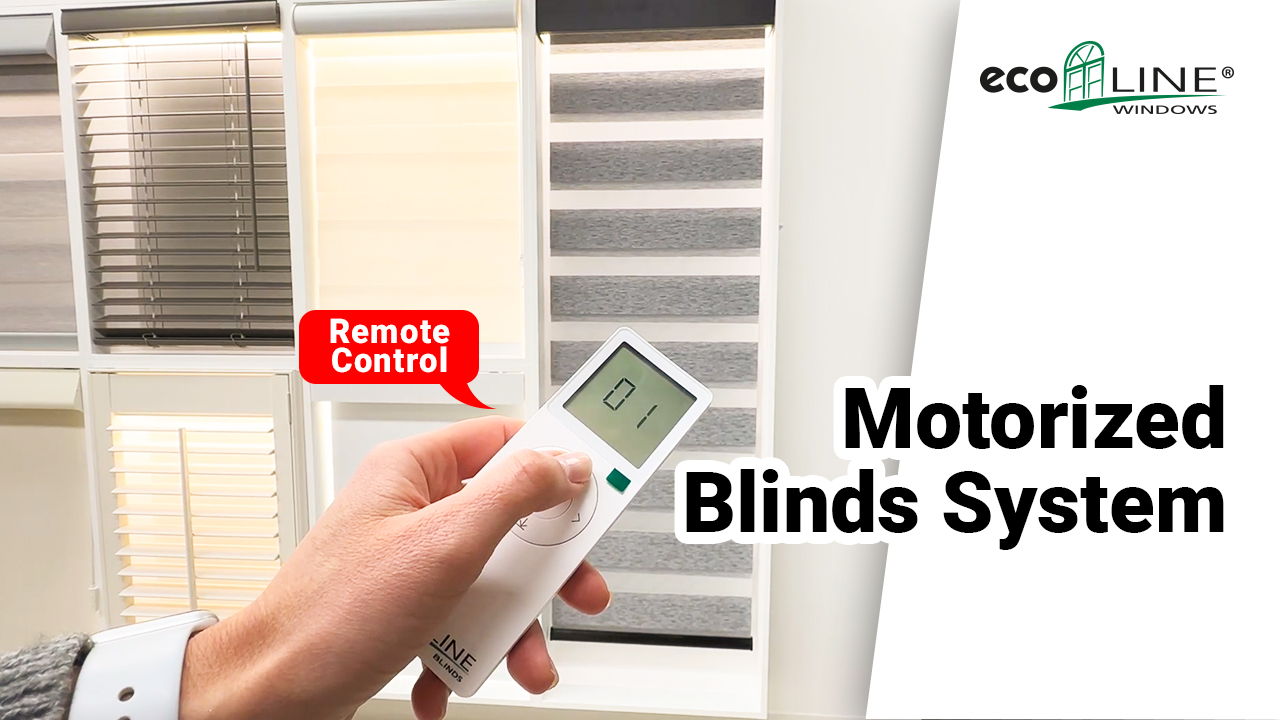
Depending on the system, motorised blinds can offer:
- Remote operation: Adjust the blinds without reaching for a wand or manually raising a large covering.
- Scheduled light control: Program compatible blinds to open or close at specific times, helping manage sunlight and privacy throughout the day.
- Cordless operation: Eliminate accessible operating cords, making the covering a practical option for households with young children or pets.
But just because blinds are motorised does not mean they are always the best choice for a sliding door. The blinds still need to open in a way that keeps the entrance easy to use.
If you use your patio door often, we recommend installing motorised vertical blinds or panel-track systems. For smaller doors, or if you don’t adjust the blinds often, manual blinds may be enough.
Wrapping Up
The best patio door blinds should give you privacy and light control without making the door hard to use. First, check how your door opens, where the blinds will stack, and how much space you have for mounting. Then compare materials, operation, and price to find what fits your home.
At Ecoline, we offer custom blinds and shades for all kinds of patio doors. Our team can help you pick a covering that fits your space, matches your style, and works with your daily routine.

![Thumbnail post: How Much Do Custom Window Blinds Cost in Canada? A Real Price Guide [2026]](https://www.ecolinewindows.ca/wp-content/uploads/blinds-cost-preview-375x183.png)

1750 Coast Meridian Rd #102,
Port Coquitlam, BC V3C 6R8
100, 17866 106A Avenue,
Edmonton, AB, Canada,
T5S 1V3
3307 Dunmore Rd SE #12,
Medicine Hat, AB,
Canada, T1B 3R2
2081 Merivale Rd #201, Ottawa, ON, Canada, K2G 1G9
by appointment only
108, 55 Akerley Blvd, Dartmouth,
NS, Canada, ВЗВ 1M3