


-RATED BY




Built in Canada
All Ecoline windows and doors are built in Ontario, Canada
- Top-of-the-line machinery (Forel, Gracco, Bottero) to produce the best products
- Over 60,000 sq. ft manufacturing plant
- Energy Star-rated and NAFS-11-tested
- Manufactured for local weather conditions
5 Best Bay Window Blinds: Styles, Fit & Design Inspiration
Oct 15, 2026
10 min read
21
Bay windows typically have three connected sections: a large fixed picture window in the middle and smaller casement or single-hung windows on each side. This setup can make picking the right blinds a bit trickier than with regular windows.
The best blinds for bay windows should match the window’s shape, offer the right balance of light and privacy, and fit well without blocking handles or window openings.
Roller, cellular, zebra, faux wood, and Roman coverings are all good options, each with its own benefits. Today, our experts break down five practical and stylish bay window blind ideas, explain where each one works best, and help you pick the right models.


Top-5 Custom Blinds for Bay Windows
| Type | Best Use Case | Starting Price (based on 50″ x 50″ model) |
| Roller Blinds | Modern interiors, unobstructed views, and simple light control | From $285 |
| Cellular Shades | Bedrooms, reading nooks, and improved thermal comfort | From $440 |
| Zebra Blinds | Living and dining rooms with adjustable light and privacy | From $260 |
| Faux Wood Blinds | Traditional interiors, kitchens, and easy maintenance | From $330 |
| Roman Shades | Elegant living rooms, bedrooms, and decorative bay-window seating areas | From $295 |
Note: The starting prices given are approximate only and depend on different details such as configuration, size, colours, fabrics, etc. Contact us to get a free quote tailored to your windows.

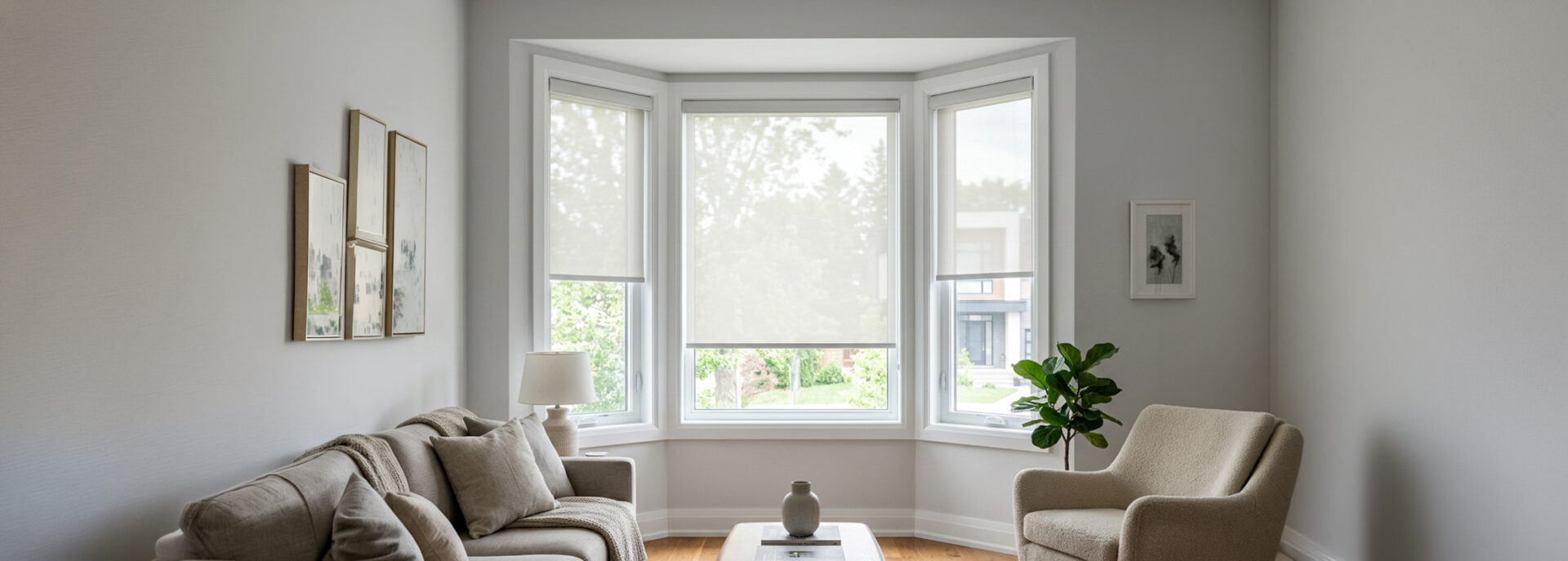
1. Roller Blinds for Bay Windows: Clean, Modern and Minimalist
If you enjoy the wide view from your bay window, roller blinds are a great choice. Their simple fabric panels roll up into small housings, so your window stays tidy, and lots of glass stays visible when the blinds are open.
For example, in a living room with a big picture window in the middle and two smaller windows on the sides, you can use separate roller blinds. This way, you can block sunlight on one side while keeping the center window open for the view.
Light-filtering fabrics soften glare without making the room feel closed off, while room-darkening or blackout fabrics offer better light control for bedrooms.
One detail to remember: the fabric is typically narrower than the complete roller mechanism, which can leave visible light gaps around the edges. These gaps may be especially noticeable where angled bay-window sections meet.
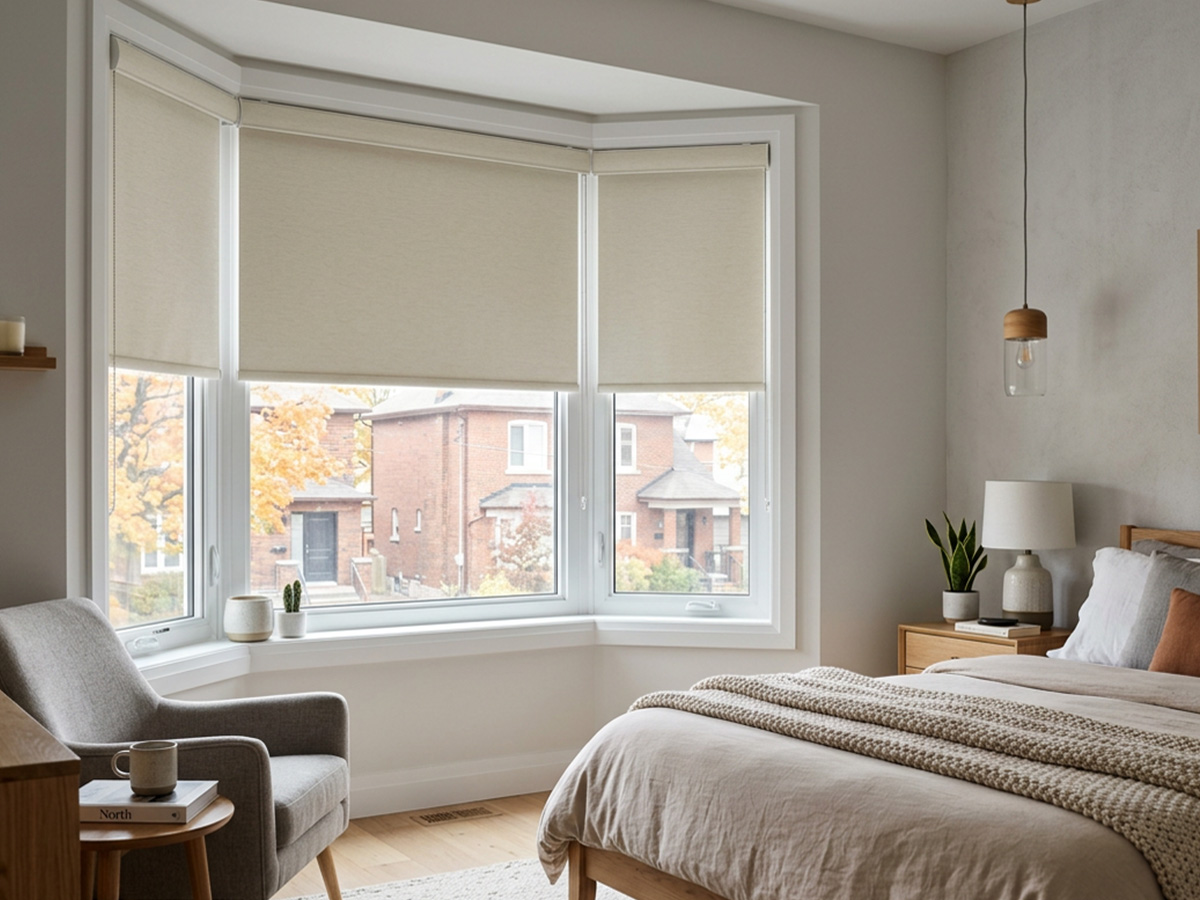
2. Cellular Shades for Bay Windows: Soft Light and Added Insulation
Bay windows have a lot of glass, so keeping your room comfortable can be a challenge, especially in Canada. Cellular shades help by trapping air in their honeycomb-shaped cells, adding an extra layer of insulation between your room and the window.
Their slim and light design also works well for bay windows with narrow side sections, where bigger coverings might look too bulky.
For example, if your bay window is a reading nook, light-filtering cellular shades can soften the sunlight and keep the area cozy. In bedrooms, room-darkening shades give you more control over light, though a little light might still come in at the edges.
Some cellular shades can be opened from the top or bottom, so you can let in daylight from above while keeping privacy below.
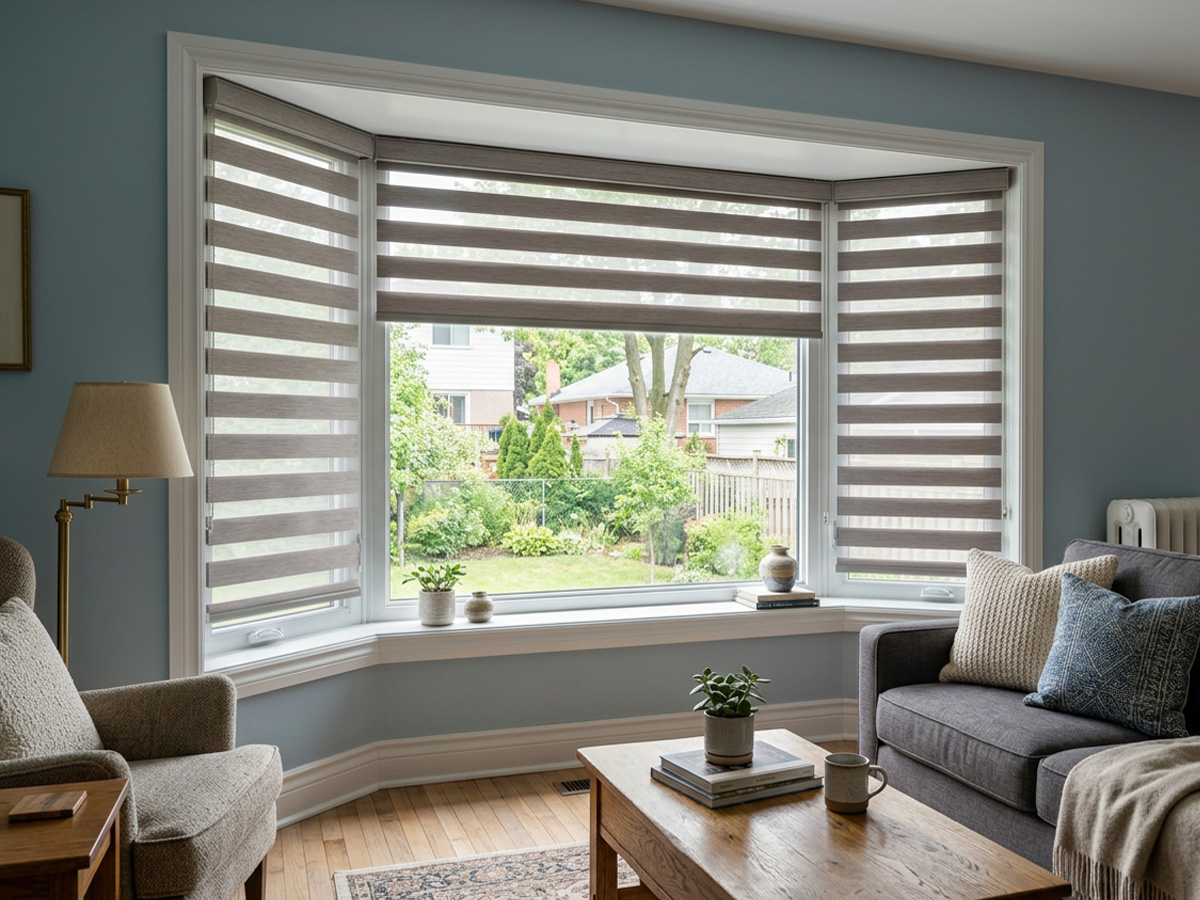
3. Zebra Shades for Bay Windows: Adjustable Light with a Contemporary Look
Zebra coverings come with alternating sheer and solid fabric bands. You can move the layers to control how much daylight comes in and how much you can see out, all without lifting the whole blind.
This makes them especially handy in a dining room or a living room facing the street, where you want sunlight during the day but more privacy at night.
Using matching zebra blinds on all three bay window sections gives a modern, coordinated look. Just keep in mind that the horizontal bands might not line up perfectly between blinds, especially if the windows are different sizes.
Another thing to note: zebra blinds offer different levels of privacy depending on how the fabric bands overlap. For privacy at night, make sure the solid bands cover enough, but there may still be some gaps at the sides.
4. Faux Wood Blinds for Bay Windows: Classic Style with Adjustable Slats
Faux wood blinds are a good choice if you like the look of classic wooden blinds but want something less sensitive to moisture. You can tilt the horizontal slats to control sunlight, cut down on glare, and keep your privacy while the blinds are down.
They look especially nice in box bay windows, where the straight lines and corners match the neat pattern of the slats.
Faux wood blinds are also practical for kitchen bay windows. The moisture-resistant slats are easy to wipe clean, so they work well in spots that get a bit humid or have cooking splashes.
The downside is that faux wood blinds can be heavy, and their thick slats make a bigger stack when you raise them. On smaller side windows, this stack might cover more glass than roller or cellular shades would.
The deep headrails also need enough space where blinds meet at the corners. For more details, check out our guide to faux wood window blinds.
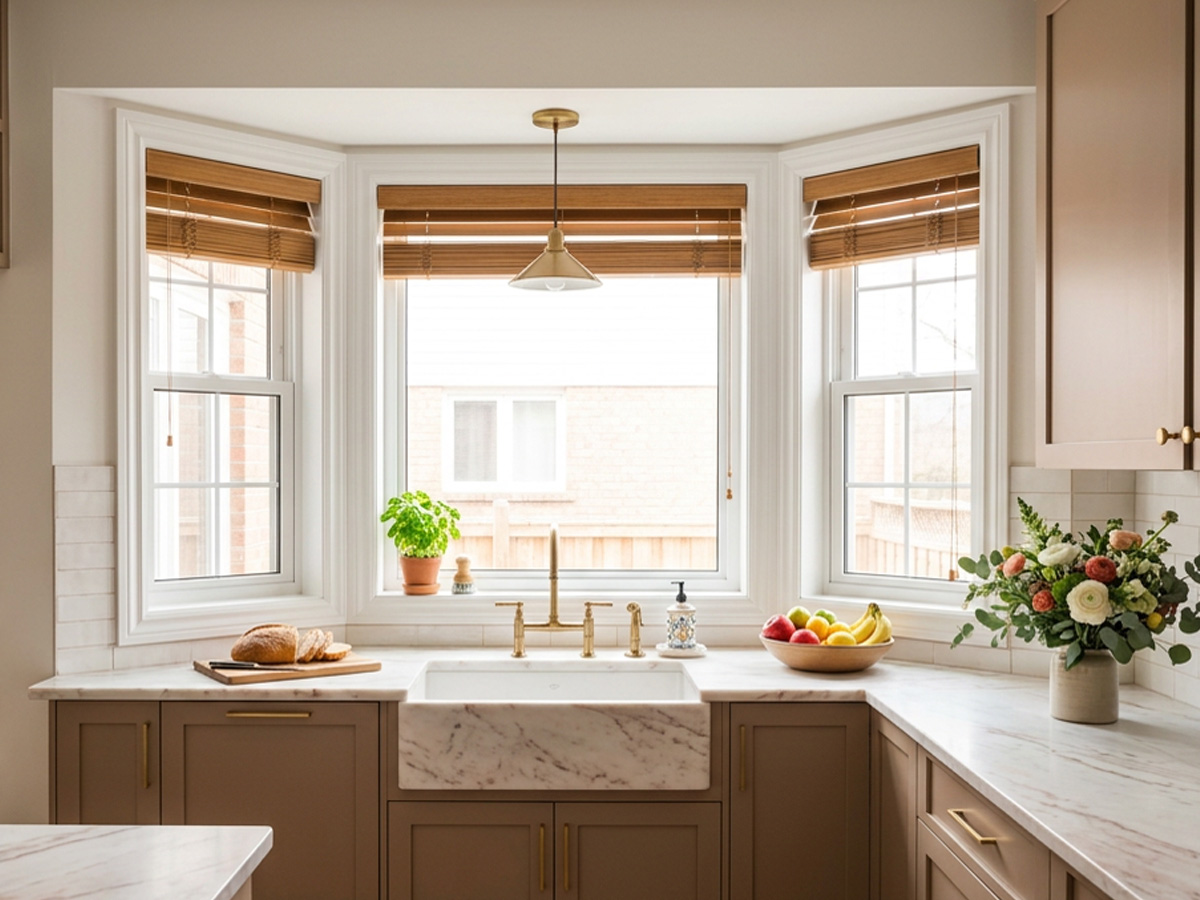
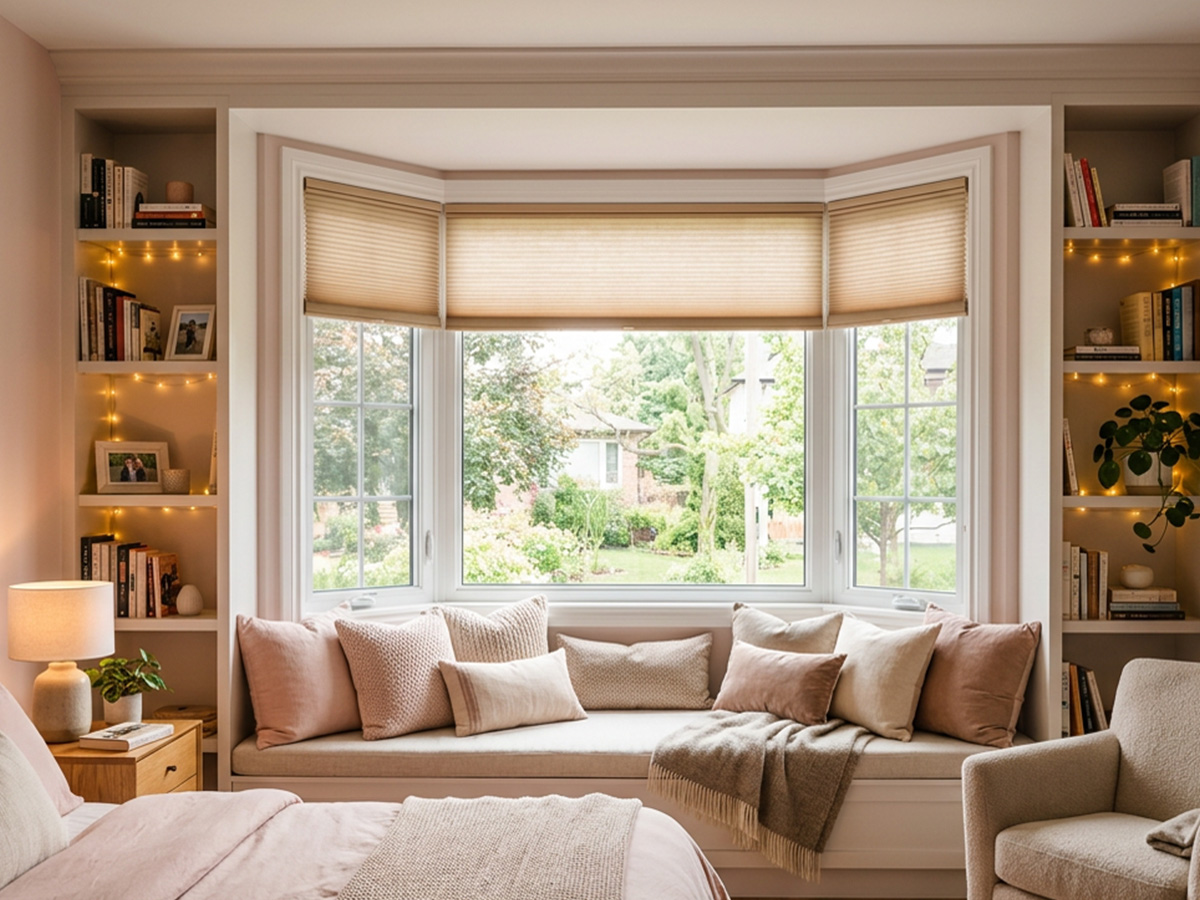
5. Roman Shades for Bay Windows: Soft Fabric and Elegance
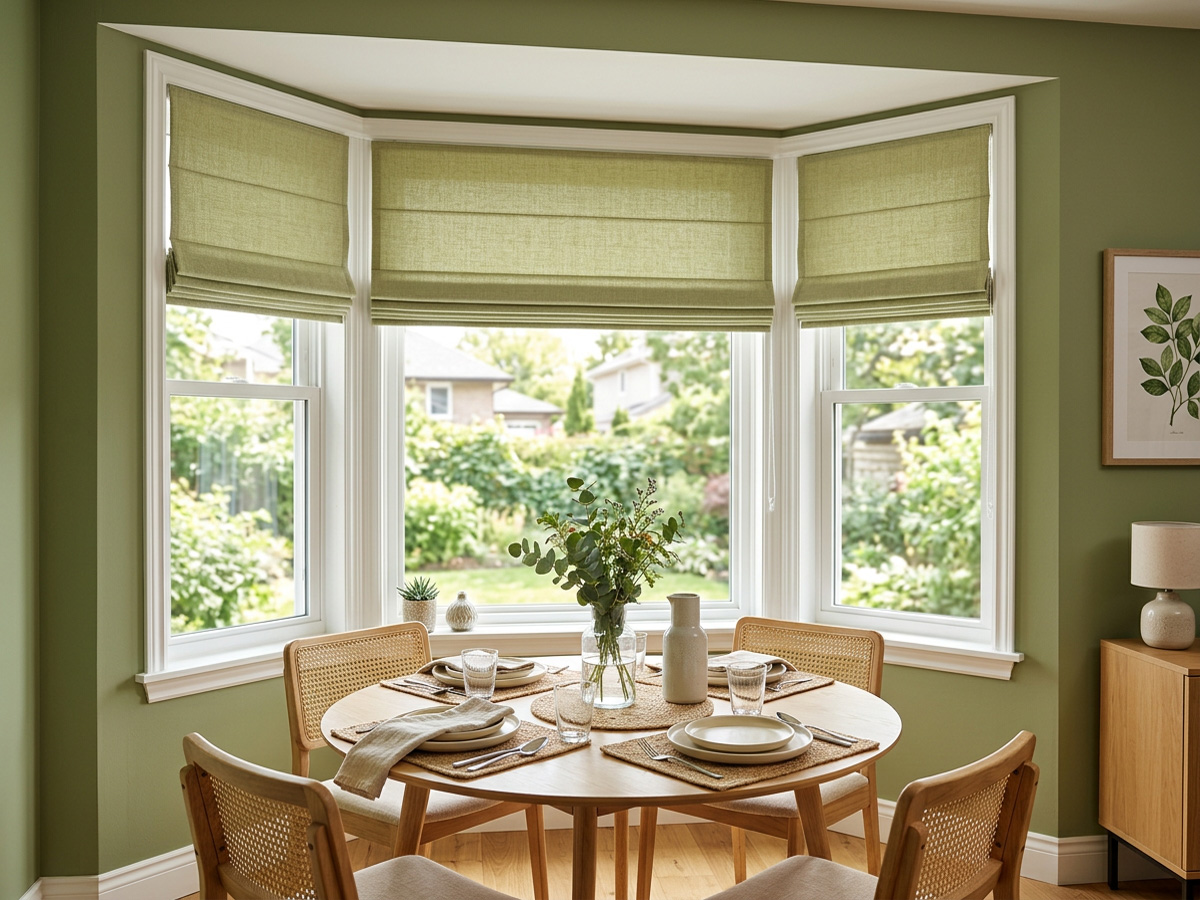
Roman shades give bay windows a different look. Instead of rollers or slats, they use soft fabric that folds up when raised, adding texture and a decorative touch to the room.
They look great in traditional living rooms, bedrooms, and bay window seating areas, especially if the fabric matches your furniture, cushions, or curtains.
A Roman shade on a large center window can be a nice focal point. Matching shades on the side windows give a consistent look, but each one should fit its own window size.
The main downside is the fabric stack. When you raise Roman shades, the folds take up some space at the top of the window. This is less of an issue on tall center windows but can be more noticeable on smaller side windows.
The fabric you choose also matters. Light-filtering linen fabrics give a softer look, while lined fabrics offer more privacy and block out more light.
Which Blinds Work Best for Your Bay Window Configuration?
The shape of your bay window is just one factor. How each window opens, where the handles are, and how much space you have for mounting all affect which blinds will work.
Most three-panel bay windows have a fixed picture window in the middle and casement, single-hung, or fixed windows on the sides. Box bay windows have approximately 90-degree corners, while angled bays connect the sections at wider angles.
Here’s a comparison of how different blinds work with common bay window setups.
| Bay window configuration | Best Window Covering Model | Key details to confirm before buying |
| Fixed picture centre + two casement windows | Roller, cellular, zebra | Clearance for cranks, handles, and opening sashes |
| Fixed picture centre + two single-hung windows | Cellular, roller, faux wood | Access to the operating sash and space for raised blinds |
| Three fixed window sections | All five styles | Privacy, light control, and corner clearance |
| Box bay window with 90° corners | Faux wood, Roman, cellular | Headrail depth and interference at square corners |
| Angled bay with limited mounting space | Compact roller or cellular systems | Bracket collisions and potential light gaps |
These are just starting points, not strict rules. For example, Roman shades can work with casement windows if there’s enough space to mount them and they don’t get in the way.
Do all three bay-window sections need separate blinds?
Not always. Three separate blinds are often practical because they fit the window’s shape and let you control each section on its own. Sometimes, you can use one covering across the whole bay if you have the right track or a custom setup.
For most homeowners, the best approach is to select the blind style first, then confirm that its mounting hardware works with the dimensions and angles of the individual sections.
What to Check Before Ordering Bay Window Blinds: Step-by-Step
Even the most attractive blinds for bay windows can look awkward or operate poorly if the mounting arrangement is incorrect. That’s why our experts provide a free measurement and check these five details before suggesting blind and shade options that work best for your bay windows:
- Identify the bay shape. Angled bays and box bays create different fitting challenges. Windows separated by wide sections of trim may be easier to treat individually than closely connected units.
- Check how each window opens. Casement windows may have projecting cranks or handles, while single-hung windows need accessible operating sashes. The blinds should not interfere with everyday window use.
- Measure how much space you have to mount the blinds. Roller blinds, zebra cassettes, faux wood headrails, and Roman shade hardware all need different amounts of room. The flat area for mounting is just as important as the window’s width.
- Watch out for the corners. In bays where windows are close together, the blind mechanisms can bump into each other. Make sure your measurements include the full size of the hardware, not just the glass, since this can affect gaps between blinds.
- Decide between inside or outside mounting. Inside-mounted blinds look more built-in but need enough depth in the window frame. Outside mounting gives you more flexibility if the recess is shallow, but you’ll still need enough space on the wall, trim, or ceiling for the hardware.
To check corner clearance, picture each blind’s headrail reaching toward the next window. Even if the blinds fit their own windows, the hardware might overlap where the windows meet.
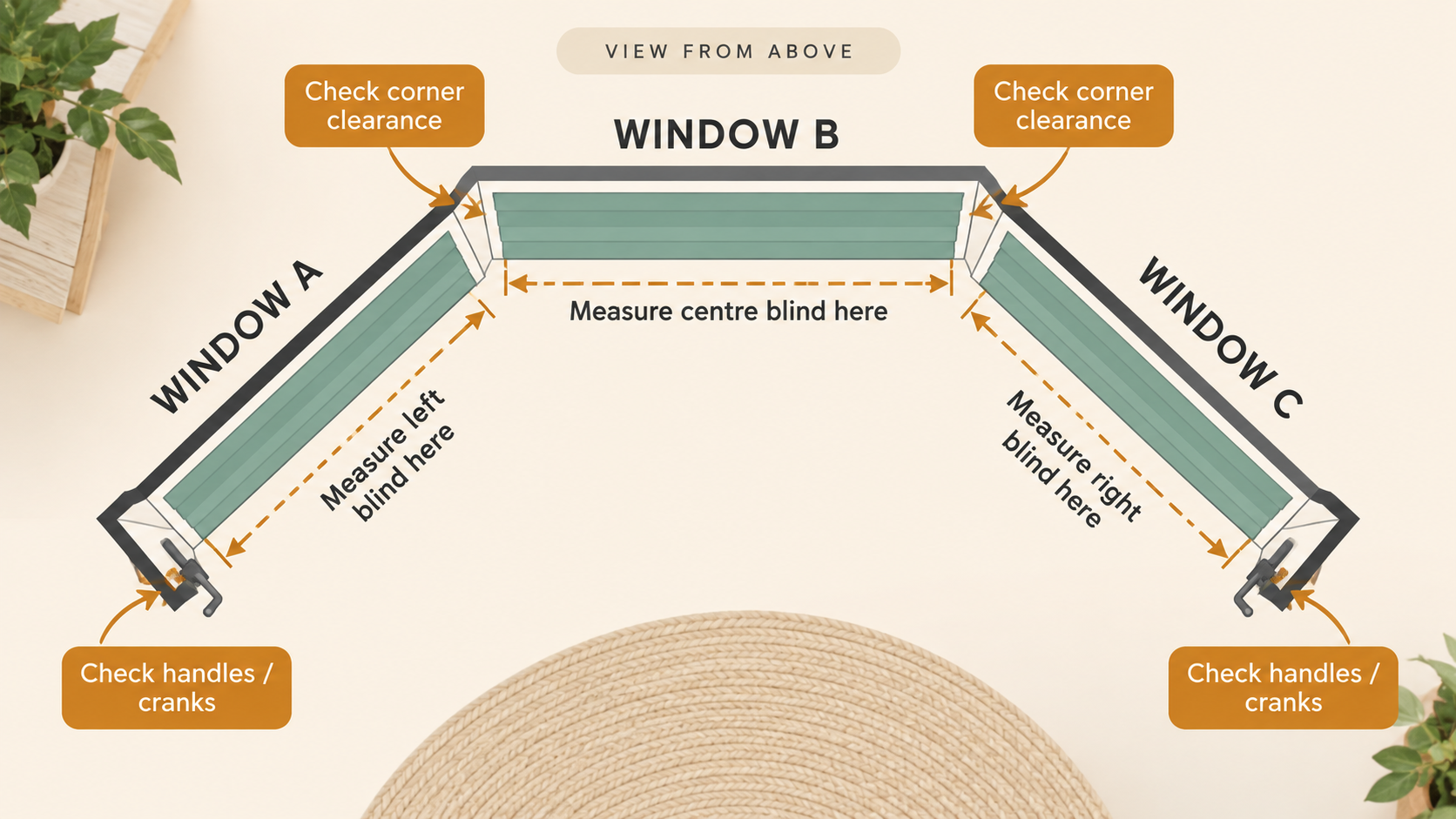
For tricky angled bay windows, getting a professional to measure can help you find the right mounting spots and avoid expensive mistakes. You can also check our window blinds installation guide for more tips on fitting.
A quick note on child safety: Canada has rules for corded window coverings. When choosing new blinds, look for cordless or safe operating systems that meet Canadian standards, especially if you have young children at home.
Choosing the Right Blinds for Your Bay Window
Begin by deciding on the style you like, then narrow your choices based on light control, privacy, and how your bay window works. Compact shades are great for tight corners, while Roman or faux wood blinds look best where you have more space to mount them.
Always make sure your final choice fits the size of each window section and leaves enough space for the blind hardware.
Want to learn more about window coverings? Explore our custom blinds and shades collection or book a consultation to find a style and fitting solution that works for your bay window.

![Thumbnail post: How Much Do Custom Window Blinds Cost in Canada? A Real Price Guide [2026]](https://www.ecolinewindows.ca/wp-content/uploads/blinds-cost-preview-375x183.png)

1750 Coast Meridian Rd #102,
Port Coquitlam, BC V3C 6R8
100, 17866 106A Avenue,
Edmonton, AB, Canada,
T5S 1V3
3307 Dunmore Rd SE #12,
Medicine Hat, AB,
Canada, T1B 3R2
2081 Merivale Rd #201, Ottawa, ON, Canada, K2G 1G9
by appointment only
108, 55 Akerley Blvd, Dartmouth,
NS, Canada, ВЗВ 1M3